Are Artificial Plants Fire-Retardant? Avoiding Fire Traps While Preserving Style
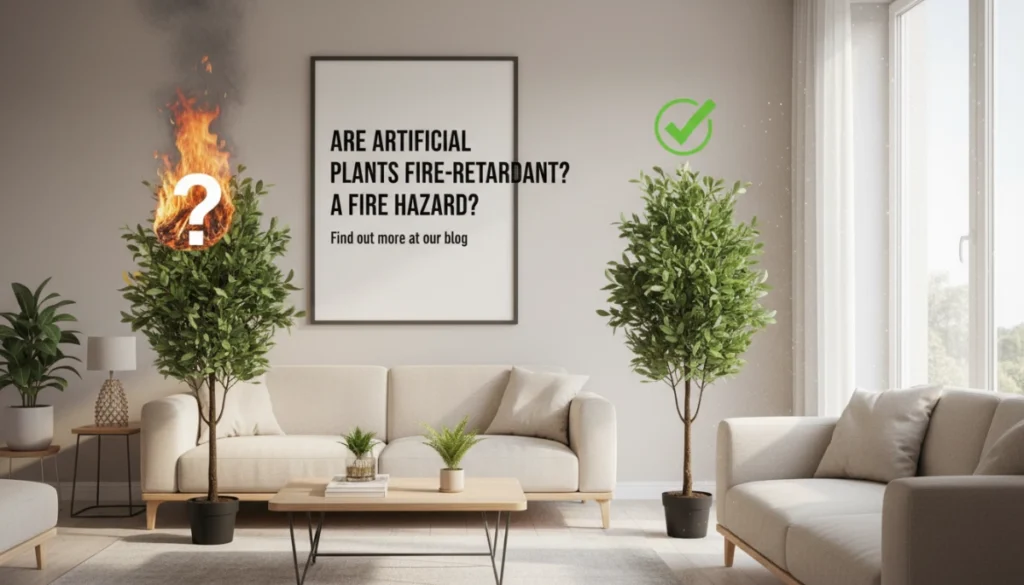
You might be asking yourself: Are Artificial Plants Fire-Retardant? or are you unknowingly installing a potential fire trap in your space?
Selecting greenery isn’t just about aesthetics; it’s about safety compliance and protecting your assets.
As an industry insider, I know that ignoring fire codes can be a costly and dangerous mistake.
Are artificial plants a fire hazard? The short answer is: they certainly can be if you choose the wrong materials.
In this guide, you’re going to learn the crucial differences between standard and fire-retardant artificial plants, how to navigate strict building regulations, and exactly how to keep your environment safe without sacrificing style.
Let’s get started.
Are Artificial Plants Fire-Retardant? Understanding the Basics
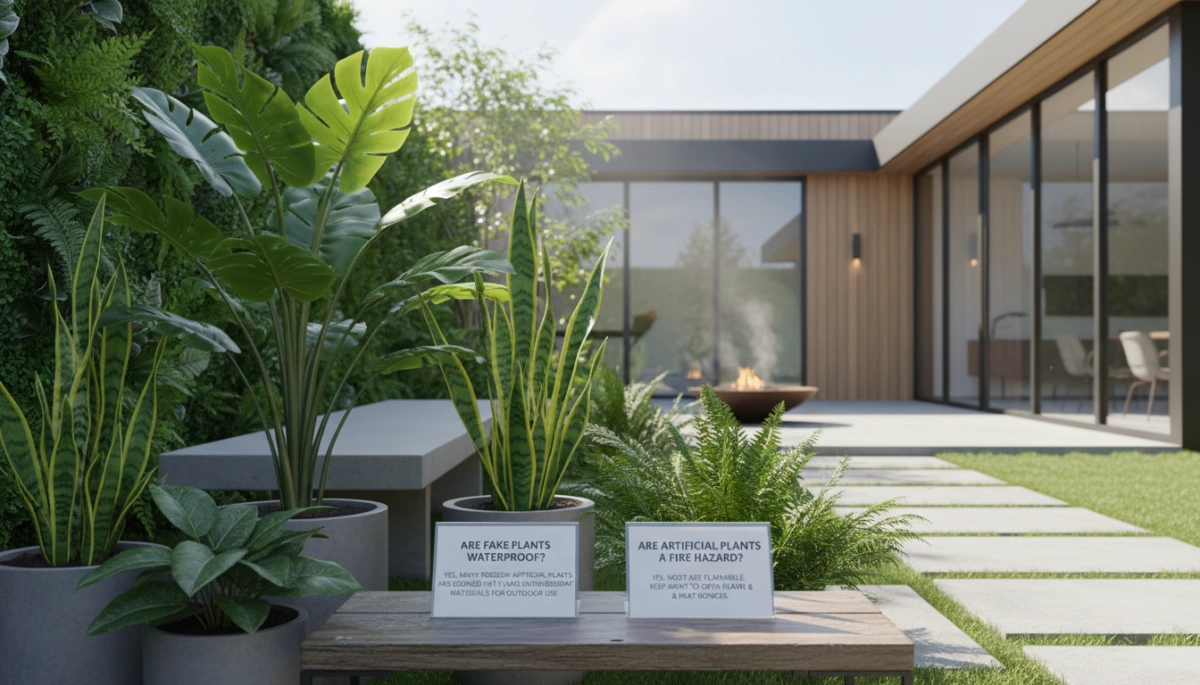
Safety is a non-negotiable priority in interior design and landscaping, especially for commercial spaces like hotels, airports, and offices. While the aesthetic appeal of greenery is undeniable, the materials used must meet stringent safety standards. Understanding the fire safety profile of artificial foliage is essential for project managers and business owners who need to balance beauty with compliance.
Are standard fake plants a fire hazard?
The answer depends entirely on the quality and manufacturing process of the product. Cheap, low-end artificial plants made from basic plastics without safety treatments can act as fuel in a fire. However, high-quality engineered greenery is designed specifically to mitigate this risk.
Interestingly, neglected live plants often pose a greater fire hazard than quality artificial ones. When live plants are not properly watered, they dry out, creating dead leaves and brittle branches that become highly flammable tinder. In contrast, premium artificial plants offer a stable safety profile:
- No drying out: They never become brittle or turn into dry fuel.
- Consistent material state: The risk level does not increase over time due to lack of maintenance.
- Controlled composition: High-grade Polyethylene (PE) and fiberglass trunks are selected for durability and safety.
What defines a fire-retardant artificial plant?
A fire-retardant artificial plant is engineered to resist ignition and actively slow down the spread of flames. This capability is not accidental; it is a result of advanced material science. For a product to be classified as fire-retardant, it must demonstrate specific behaviors when exposed to an open flame:
- Self-Extinguishing: Once the flame source is removed, the plant stops burning immediately.
- Non-Drip: The material should not melt into flaming droplets that could spread the fire to other surfaces.
- Low Smoke Emission: It produces minimal smoke, aiding visibility during an evacuation.
We utilize Inherently Fire Retardant (IFR) technology, where flame-retardant elements are infused directly into the raw materials—such as the PE foliage and silk fabrics—during the manufacturing process. This ensures the protection is integral to the plant, rather than just a superficial layer.
The difference between fire-retardant and fireproof
It is crucial to distinguish between “fireproof” and “fire-retardant” to manage expectations and ensure regulatory compliance.
- Fireproof: This term implies that an object is completely immune to fire and will never burn, regardless of the temperature or duration of exposure. In reality, very few materials are truly fireproof (e.g., concrete, certain metals).
- Fire-Retardant: This indicates that the material has been chemically treated or engineered to resist combustion. While it can burn under extreme conditions (e.g., prolonged exposure to high-temperature flames), it significantly delays ignition and prevents the rapid spread of fire.
For commercial decor, fire-retardant is the industry standard. It ensures that in the unlikely event of a fire, the artificial greenery will not act as an accelerant, providing valuable time for response and evacuation.
Types of Fire-Retardant Technologies for Faux Greenery
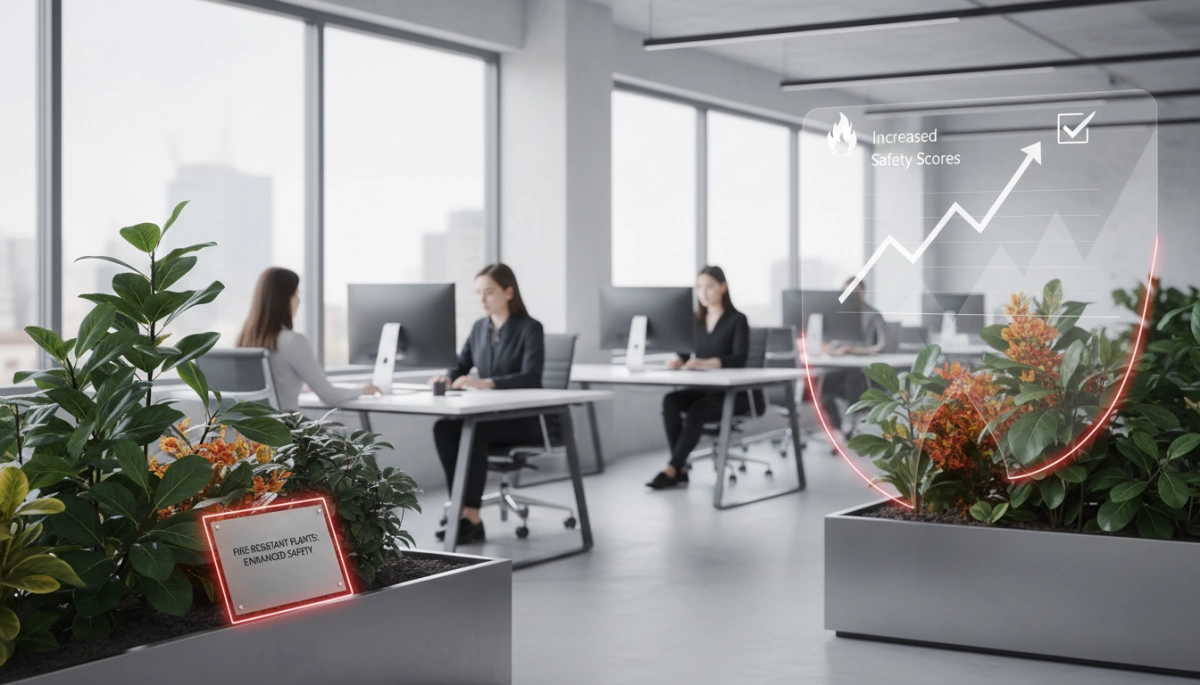
When sourcing fire-retardant artificial plants, it is crucial to understand that not all safety ratings are achieved the same way. In the industry, we generally categorize fire protection into two distinct manufacturing methods. Knowing the difference protects your investment and ensures your space meets safety codes without compromise.
Inherently Flame Retardant (IFR) materials
This is the gold standard for commercial-grade foliage. With Inherently Flame Retardant (IFR) technology, the fire-retardant chemicals are physically mixed into the raw materials—such as high-grade PE (Polyethylene) and fabrics—before the plant is ever molded.
Because the protection is infused directly into the DNA of the product, it offers permanent safety. The flame resistance will not wash off, fade, or degrade over time. At our level of manufacturing, we combine this with Real-Touch technology, ensuring that the safety additives do not make the leaves look waxy or plastic. This method allows the plant to be self-extinguishing, preventing it from becoming fuel for a fire.
Surface-treated Fire Retardant (FR) coatings
The alternative method involves applying a topical spray or dip to the finished product. This is often seen in lower-cost options or when retrofitting standard fake plants. While this creates a barrier against ignition, it is merely a surface layer.
Surface-treated FR coatings have significant downsides:
- Durability: The coating can wear off over time due to dust, friction, or UV exposure.
- Aesthetics: Heavy sprays can leave a sticky residue or a “tacky” sheen that ruins the realistic look of the foliage.
- Maintenance: Cleaning these plants often removes the fire protection, requiring regular re-application to remain safe.
Comparing IFR vs. FR: Which is better for your project?
For long-term installations in hotels, offices, or public spaces, the choice is clear. IFR faux greenery is the superior investment because it requires zero maintenance to maintain its fire rating. It handles cleaning and environmental changes without losing its safety properties.
Surface-treated options are generally only suitable for temporary setups, like short-term event decorations where longevity isn’t a factor. If you want artificial trees and plants that remain safe and look premium for years, always verify that the product is IFR. This ensures you aren’t just meeting code today, but keeping the environment safe for the future.
Key Benefits of Fire-Rated Artificial Plants
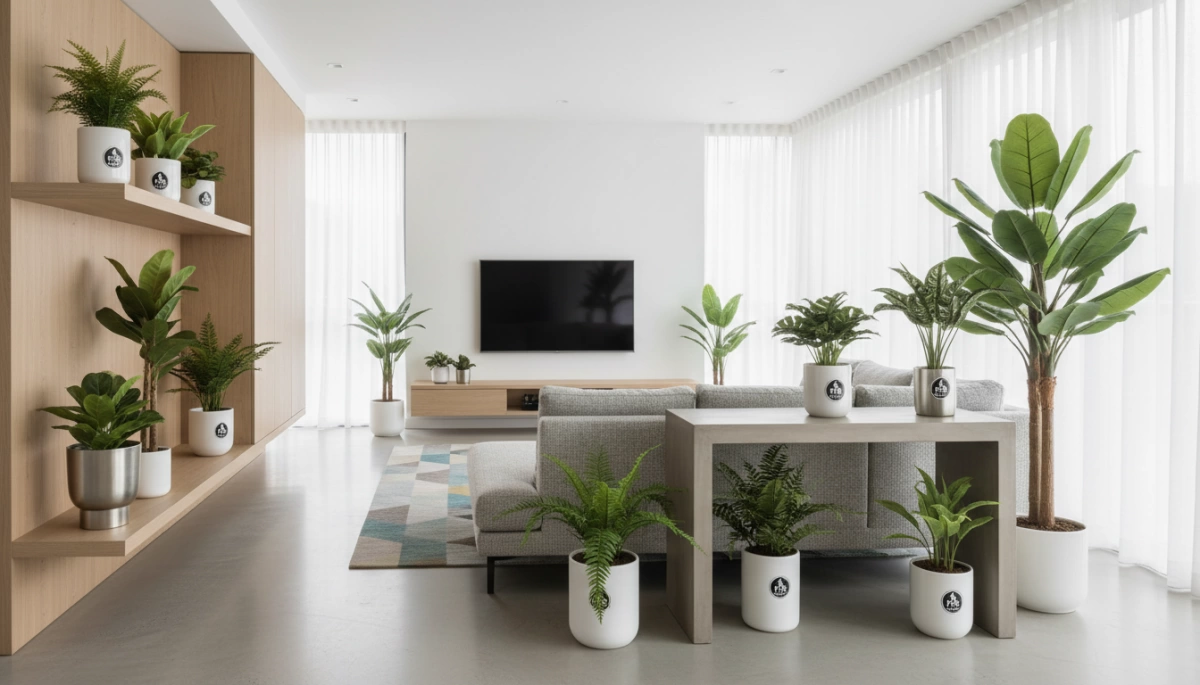
When asking “Are Artificial Plants Fire-Retardant?”, the answer lies in the specific manufacturing process. Choosing high-quality, fire-rated greenery isn’t just about aesthetics; it is a critical safety decision that outperforms both standard plastic plants and neglected live vegetation.
Enhanced safety for indoor environments
Many people assume live plants are safer, but that is a misconception. Live plants become a significant fire hazard when they are neglected, dry out, or die, effectively turning into flammable tinder in your space.
Our fire-rated artificial plants eliminate this risk entirely. Because they are engineered with Inherently Fire Retardant (IFR) technology, the flame-retardant properties are mixed directly into the PE (Polyethylene) and fabric raw materials. This means the plants are designed to be self-extinguishing. If exposed to a flame, they will not fuel the fire or spread it, making them a much safer alternative for high-traffic indoor areas.
Compliance with strict building fire codes
For commercial projects like hotels, airports, and shopping malls, adhering to safety regulations is non-negotiable. Standard, cheap fake plants often fail to meet these requirements and can be flagged by fire marshals.
We utilize advanced materials, including fire-resistant fiberglass for large tree trunks and treated foliage, to ensure compliance. Using certified fire-retardant plants ensures you meet necessary building codes without sacrificing the visual appeal of your design.
Comparison of Fire Risks:
| Feature | Neglected Live Plants | Standard Artificial Plants | Fire-Rated Artificial Plants |
|---|---|---|---|
| Ignition Risk | High (Dry leaves acts as tinder) | High (Standard plastic melts/burns) | Low (Resists ignition) |
| Flame Spread | Rapid | Rapid | Self-Extinguishing |
| Maintenance for Safety | High (Must be watered constantly) | None | None |
Peace of mind for commercial and residential use
Whether you are decorating a large commercial lobby or a residential living room, safety should never be a gamble. Are artificial plants a fire hazard? Only if you choose low-quality options.
By investing in IFR artificial greenery, you get the “set it and forget it” benefit. You don’t need to worry about the foliage drying out and becoming dangerous, nor do you need to worry about the fire protection washing off, as it is intrinsic to the material. This provides long-term peace of mind, knowing your decor is actively contributing to a safer environment rather than creating a potential liability.
Is it Mandatory to Use Fire-Retardant Plants?
Fire safety regulations for commercial and public spaces
For most commercial projects, adhering to fire safety regulations is not optional—it is a legal necessity. Local building codes and fire marshals often dictate strict requirements for interior decorations in public spaces such as hotels, airports, offices, and shopping malls. Unlike private residences, these high-traffic environments require materials that limit the spread of fire to ensure public safety. Using non-compliant greenery can lead to failed safety inspections, costly fines, and significant liability issues for business owners.
Understanding fire rating tests and certifications
When we talk about safety, we rely on rigorous testing rather than assumptions. Genuine fire-retardant artificial plants are subjected to flame tests to prove they are self-extinguishing. This means that if the plant is exposed to an open flame, it will not continue to burn or drip molten plastic once the fire source is removed.
- IFR Verification: We prioritize Inherently Fire Retardant (IFR) technology, where flame-retardant elements are infused directly into the PE (Polyethylene) or fabric raw materials during manufacturing, ensuring consistent protection.
- Documentation: Reliable suppliers should provide proof that their products meet specific flammability standards, confirming the material resists ignition and does not act as an accelerant.
When to choose fire-rated products over standard ones
While standard artificial plants may be acceptable for small, private residential decor, fire-rated products are the superior choice for any professional environment.
- Commercial Compliance: Essential for meeting safety codes in hospitality and corporate settings.
- High-Risk Zones: Crucial for installations near heat sources, complex lighting systems, or emergency exits.
- Eliminating Hazards: Unlike live plants, which become dangerous, flammable tinder when they are neglected, dry out, or die, high-quality fire-rated faux plants maintain their safety profile permanently without the risk of dead leaf accumulation.
How to Maintain the Safety of Your Fire-Retardant Plants
Even though our products are designed to be virtually maintenance-free, keeping them in top condition is essential for both aesthetics and safety. While you don’t need to water or prune them, a little attention ensures that the fire-retardant properties remain effective throughout the product’s lifespan.
Preventing dust accumulation to reduce flammability
One of the few maintenance tasks required for artificial greenery is managing dust. In commercial environments or high-traffic areas, dust layers can build up on leaves and branches over time. While the plant material itself is engineered to resist ignition, a thick layer of dust can act as kindling, potentially allowing a flame to travel across the surface.
To ensure artificial plants are not a fire hazard, we recommend a simple cleaning routine:
- Regular Dusting: Use a feather duster or a microfiber cloth to wipe down foliage bi-weekly.
- Compressed Air: For dense arrangements or green walls, canned air helps dislodge dust from hard-to-reach crevices.
- Visual Checks: Inspect the plants periodically to ensure debris or trash hasn’t accumulated in the planter base, which creates an unnecessary fuel source.
The impact of water and cleaning on fire treatments
When cleaning your faux greenery, it is critical to understand how the fire protection was applied. This is where the difference between cheap sprays and quality manufacturing becomes obvious.
- Inherently Fire Retardant (IFR): Our premium plants use IFR technology, where flame-retardant elements are mixed into the PE (Polyethylene) and fabric raw materials during production. This means you can wipe them down with a damp cloth or rinse them without washing away the protection. The safety feature is permanent.
- Surface-Treated Plants: Lower-quality options often rely on topical sprays. Using water or harsh chemical cleaners on these can strip away the fire-retardant coating, rendering the plant unsafe.
Always check the manufacturer’s guidelines before applying water or cleaning solutions. If you are unsure if your plants are IFR, stick to dry cleaning methods to maintain their fire rating.
Safety guidelines for using lights on artificial trees
Decorating artificial trees with string lights is common in retail and hospitality settings, but it introduces an electrical element that requires caution. Even with fire-retardant artificial plants, external heat sources must be managed correctly to prevent accidents.
Follow these best practices when illuminating your greenery:
- Switch to LEDs: Always use LED lights instead of incandescent bulbs. LEDs emit very little heat, significantly reducing the risk of scorching the foliage.
- Inspect Cords: Check light strands for frayed wires or damaged plugs before wrapping them around trunks or branches.
- Don’t Overload: Avoid connecting too many strands into a single outlet to prevent electrical overheating near the plant base.
- Timer Usage: Use timers to ensure lights are turned off when the building is unoccupied, eliminating risk during off-hours.
How to Choose a Reliable Fire-Retardant Plant Supplier
Selecting the right partner for your project is critical when dealing with safety requirements. Are artificial plants a fire hazard? They certainly can be if you source them from manufacturers who cut corners. A reliable supplier prioritizes both the aesthetic quality of the foliage and the chemical engineering required to make it safe for public spaces.
Verifying fire-rating test reports and documentation
Never rely on a verbal guarantee. When I source or manufacture fire-retardant artificial plants, I ensure that every batch is backed by legitimate technical documentation. For commercial projects, building inspectors will demand proof that the greenery meets specific safety codes.
A credible supplier should provide:
- Current Test Reports: Documentation showing the product has passed flammability tests relevant to your region (e.g., NFPA 701 for North America, BS 7175 for the UK/EU).
- Material Specifications: Clear indication that the product uses Inherently Fire Retardant (IFR) technology, where flame retardants are mixed into the PE (Polyethylene) or fabric during production, rather than just sprayed on.
- Scope of Certification: Confirmation that the test covers the specific components used, such as the leaves, trunk, and branch materials.
Evaluating material quality and product appearance
Safety should never come at the expense of beauty. One of the biggest complaints about fake greenery is that it looks “tacky” or overly plastic. High-end manufacturers use advanced Real-Touch technology to ensure the plants mimic the texture, color gradients, and movement of live vegetation.
What to look for in quality IFR plants:
| Feature | High-Quality IFR Plant | Low-Quality/Cheap Alternative |
|---|---|---|
| Texture | Realistic, detailed veins, soft touch | Shiny, smooth, hard plastic feel |
| Color | Natural gradients, matte finish | Unnatural neon greens, glossy reflection |
| Fire Tech | Inherently Fire Retardant (infused) | Surface spray (wears off over time) |
| Durability | UV protected, resists fading | Brittle, fades quickly in sunlight |
Requesting samples and testing for fire resistance
Before committing to a large order, I always recommend requesting a physical sample. This allows you to inspect the craftsmanship and verify the safety claims yourself.
- The Burn Test: While you should rely on official lab reports, a small sample test can demonstrate the self-extinguishing nature of the product. Quality IFR leaves will char but should not sustain a flame or drip burning plastic once the heat source is removed (always conduct this test in a safe, well-ventilated area with a fire extinguisher nearby).
- Check the Construction: For large artificial trees, examine the trunk. We use fiberglass trunks for larger specimens because they offer superior durability and fire resistance compared to standard plastic or natural wood cores that haven’t been treated.
- Touch and Feel: Ensure the foliage feels robust. Cheap materials often feel thin and paper-like, which not only looks bad but can act as kindling if not properly treated.
Frequently Asked Questions About Artificial Plant Safety
Can you make existing fake plants fire-retardant?
Yes, you can apply aftermarket fire-retardant sprays to standard artificial foliage, but there are limitations. These topical treatments create a barrier that inhibits combustion, helping to answer the concern: Are artificial plants a fire hazard? However, this is a temporary fix.
For the best results, we always recommend choosing Inherently Fire Retardant (IFR) greenery from the start. Unlike sprays, IFR technology mixes flame-retardant elements directly into the raw PE and fabric materials during manufacturing. This ensures the protection is uniform and doesn’t degrade over time.
How long does fire-retardant treatment last?
The lifespan of the fire protection depends entirely on the manufacturing method:
- IFR (Inherently Fire Retardant): This lasts for the entire lifetime of the product. Because the retardant is part of the material’s DNA, it won’t wash off, fade, or wear away.
- Topical Sprays: These typically last 1 to 5 years, depending on the environment. Exposure to sunlight, dust accumulation, and cleaning can strip away the coating. If you rely on sprays, you must re-apply them regularly to maintain safety compliance.
Are fire-retardant sprays safe for home use?
Most commercially available fire-retardant sprays are non-toxic once dried, but you should always verify the manufacturer’s safety data sheet (SDS). When applying them yourself, proper ventilation is crucial to avoid inhaling fumes.
However, purchasing pre-manufactured fire-retardant artificial plants is the safer, hassle-free option for residential spaces. With our IFR products, there are no chemical residues on the surface, making them safe for homes with pets and children while eliminating the risk of accidental ignition.