
Are Fake Plants Waterproof and Suitable for Outdoor Use?
High-quality artificial plants are engineered to serve as durable alternatives to live greenery, specifically designed to withstand environmental factors that often degrade or kill natural plants. Unlike live species that struggle with inconsistent watering, root rot, or seasonal droughts, artificial landscaping maintains a consistent, evergreen aesthetic regardless of moisture levels. Premium artificial plant manufacturers utilize advanced manufacturing techniques to ensure that exposure to rain or humidity does not compromise their structural integrity or visual appeal.
For context, consider Sarah, a homeowner in the Pacific Northwest where annual rainfall exceeds 60 inches. She struggled for 5 years with live azaleas and boxwood shrubs that repeatedly succumbed to root rot and mold—until she switched to waterproof outdoor artificial hedges. “I no longer spend every spring replacing dead plants or treating fungal growth,” she shared. “The artificial greenery looks just as lush in the wettest winter months as it does in summer.” This real-world experience underscores the practical value of water-resistant synthetic greenery for regions with harsh moisture conditions.
Understanding Water Resistance in Artificial Greenery
The “waterproof” nature of artificial plants stems from the materials used in their construction. Reputable manufacturers utilize high-grade plastics, polyester, and synthetic fibers that are inherently resistant to water absorption.
- Material Integrity: High-quality plastics repel water, preventing the swelling or warping often seen in natural organic matter.
- No Biological Decay: Unlike live plants, synthetic versions are immune to root rot, mold, and mildew caused by excess moisture.
- Maintenance-Free: There is no need for irrigation systems or manual watering, making them ideal for areas with heavy rainfall or drought conditions.
Difference Between Indoor and Outdoor-Rated Fake Plants
While many artificial plants look similar, their suitability for outdoor landscaping depends heavily on material composition. Outdoor-rated foliage is constructed to endure harsher conditions without becoming “tacky” or losing its realistic appearance—a common concern raised by consumers who associate older, low-quality artificial plants with a cheap, unnatural look.
Mark, a professional landscape designer with 15 years of experience, notes that a frequent client mistake is repurposing indoor silk artificial plants for outdoor use. “I’ve had clients bring in wilted, discolored silk ferns that were left outside for just one rainy season,” he explains. “Indoor plants lack the protective coatings and durable materials needed to handle outdoor moisture and temperature shifts.”
| Feature | Indoor-Focused Plants | Outdoor-Ready Landscaping |
|---|---|---|
| Material | Often delicate silk or untreated fabric | High-grade plastics and durable synthetics |
| Moisture Handling | May absorb water or spot | Repels water; rain acts as a cleaner |
| Durability | Protected from elements | Engineered to withstand seasonal changes |
| Structure | Lightweight stems | Reinforced structure for wind and rain resilience |
How Rain and Moisture Affect Different Materials
Rain and moisture affect artificial materials differently than they do live plants. For high-quality synthetic landscaping, water exposure is generally beneficial rather than harmful.
- Natural Cleaning: Rainfall helps wash away dust and pollen accumulated on the leaves, restoring the plant’s vibrant color without manual cleaning.
- Prevention of Degradation: Modern manufacturing eliminates the risk of materials breaking down quickly when wet. High-quality synthetics resist the browning and wilting that plague live plants during wet seasons.
- Aesthetic Preservation: Premium materials ensure that the product does not look “fake” or shiny after rain, maintaining a natural, matte texture that mimics organic growth patterns.
Key Features to Look for in Outdoor Artificial Landscaping
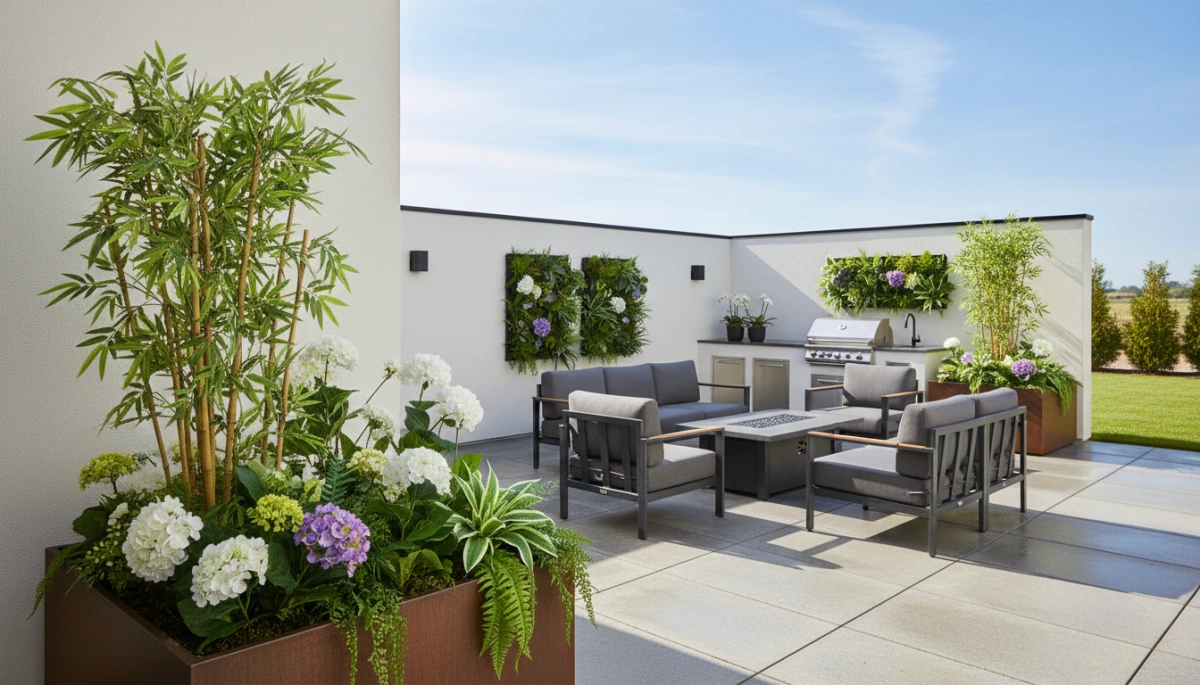
When selecting greenery for exterior spaces, it is crucial to understand that not all synthetic products are built the same. To ensure an investment lasts, industry experts emphasize focusing on specific manufacturing standards that separate high-end botanical replicas from cheap decorations. For those wondering, “Are fake plants waterproof for outdoor landscaping,” the answer lies in the quality of the materials used to resist environmental decay.
A common consumer misconception, addressed in numerous landscaping industry surveys, is that all artificial plants look tacky outdoors. However, modern waterproof outdoor artificial plants utilize color-matching technology and textured materials that closely mimic live greenery—so much so that many passersby cannot distinguish them from real plants without close inspection.
UV Resistance and Colorfastness
The sun can be just as damaging as rain. For outdoor applications, color stability is essential. Reputable manufacturers utilize advanced manufacturing techniques to ensure that the vibrant greens and natural color gradients of their plants do not fade rapidly under direct sunlight. Unlike live plants that may brown or yellow due to seasonal changes or lack of water, high-quality artificial plants maintain a consistent, “fresh” aesthetic year-round. This UV stability prevents the foliage from looking plastic or “tacky” after a few months of exposure.
Take the example of Carlos, a homeowner in Arizona where summer temperatures regularly exceed 100°F and UV radiation is intense. He installed artificial palm trees in his backyard 3 years ago, and they still retain their rich green color. “I was worried the sun would fade them within a year,” he says. “But they look just as good as the day I bought them—no cracking, no fading, and they never need to be watered in the desert heat.”
Weather-Resistant Materials and Construction
Durability is the core of premium outdoor artificial plant design. Leading manufacturers construct their outdoor lines using high-grade plastics and durable polyester blends capable of withstanding varying temperatures and wind. While silk is popular for indoors, it often lacks the resilience required for exterior landscaping. Outdoor-rated trees and shrubs are engineered to maintain their structural integrity, mimicking the organic growth patterns of real species while resisting the wilting and breakage often seen in live plants during harsh weather.
Comparison of Material Resilience:
| Feature | Standard Live Plants | High-Quality Artificial Plants |
|---|---|---|
| Water Reaction | Prone to root rot and overwatering | Waterproof materials resist rot and decay |
| Structural Integrity | Sensitive to wind and storms | Reinforced stems and durable foliage |
| Seasonal Look | Changes/dies in winter | Evergreen appearance in all climates |
Drainage and Mold Resistance in Outdoor Foliage
One of the primary reasons people switch to artificial landscaping is to avoid the biological issues associated with moisture— a pain point for many who have struggled with moldy live plants that trigger allergies or require constant chemical treatments. Real plants require precise drainage to prevent mold and fungus, which can trigger allergies. Premium synthetic materials are naturally resistant to moisture absorption. This means that even during heavy rainfall, the foliage does not become a breeding ground for mold or pests. The design allows water to run off the leaves easily, ensuring the plant remains clean and hygienic without the need for constant maintenance or chemical treatments.
Benefits of Using Waterproof Artificial Plants in Your Landscape
Low Maintenance and Consistent Year-Round Appeal
One of the main reasons homeowners switch to artificial greenery is to escape the endless cycle of gardening. Live plants are demanding; they require specific light conditions, regular watering, and constant pruning to look presentable. If care is neglected for even a week, they wilt or die.
Waterproof artificial plants eliminate these headaches entirely. They provide a consistent, vibrant aesthetic regardless of the season. Whether it is the middle of a dry summer or a rainy autumn, high-quality synthetic plants maintain a fresh, evergreen look without any effort. Homeowners get the visual benefits of a lush garden without the labor.
- No Watering: Save on water bills and irrigation systems.
- No Pruning: Shapes remain perfect without trimming.
- Evergreen Look: Foliage stays green even in winter.
Jenna, a busy working parent with two young children, sums it up best: “I always wanted a nice garden, but I never had the time to water or prune live plants after work and on weekends. The artificial waterproof hedges I installed last year look perfect 24/7— I don’t have to lift a finger, and they still make my yard feel welcoming.”
Durability in Harsh Weather and Extreme Climates
Live plants are sensitive to their environment. Too much sun burns them, and too much rain causes root rot. In contrast, outdoor-rated artificial plants are engineered to withstand environmental factors that typically destroy organic matter.
Leading manufacturers use high-grade materials like durable plastics and polyester blends that resist moisture and temperature fluctuations. These materials prevent the browning, wilting, and decay associated with live plants. Because they are waterproof, they do not succumb to mold or rot during heavy rainfall, making them ideal for areas where live plants struggle to survive.
Cost-Effectiveness Over the Lifetime of the Landscape
While the initial investment in premium artificial landscaping might be higher than buying a few potted live plants, the long-term savings are significant. Live landscaping is an ongoing expense involving water, fertilizers, pest control chemicals, and the replacement of dead plants.
Artificial plants are a one-time cost. Once installed, they require zero resources to maintain their appearance. Over the lifetime of the landscape, this durability translates into substantial savings.
Comparison of Long-Term Costs:
| Feature | Live Plants | Artificial Plants |
|---|---|---|
| Water Usage | High recurring cost | Zero |
| Maintenance | Fertilizers, pesticides, tools | Occasional rinsing |
| Replacement | Frequent (seasonal death) | Rare (long lifespan) |
| Resilience | Low (weather sensitive) | High (weather resistant) |
How to Choose the Best Artificial Plants for Exterior Use
Selecting the right greenery is the difference between a lasting landscape and a fading decoration. To ensure fake plants are waterproof for outdoor landscaping, industry experts recommend focusing on materials engineered to withstand the elements without looking tacky or losing their realistic appeal.
Identifying Outdoor-Specific Labels and Ratings
Not all artificial greenery is created equal. When browsing for a garden, consumers must look for products explicitly labeled for exterior use. Indoor plants often lack the necessary treatments to handle moisture and temperature shifts.
- Check the Description: Ensure the manufacturer specifies resistance to environmental factors.
- Verify Durability: Look for terms indicating the product can handle seasonal changes without browning or wilting.
- Avoid “Indoor-Only”: These products will likely degrade or develop mold when exposed to rain.
Selecting Quality Plastic vs. Treated Silk Materials
The material composition is the biggest factor in whether a plant remains waterproof and durable. While manufacturers use various materials, high-grade plastics are generally superior for full outdoor exposure compared to standard fabrics.
| Material | Water Resistance | Durability | Recommended Location |
|---|---|---|---|
| High-Grade Plastic | Excellent | High | Open gardens, areas with heavy rain |
| Polyester/Silk | Low | Low | Indoors or fully covered patios |
| Treated Synthetics | High | High | Direct sunlight and exposed landscaping |
Best Plant Types for Landscaping: Trees, Hedges, and Green Walls
For a maintenance-free and evergreen aesthetic, certain plant structures perform better outdoors. Industry experts recommend choosing robust forms that mimic hardy species:
- Artificial Hedges & Green Walls: These are typically made from dense, water-resistant synthetic mats that provide privacy and withstand rain easily.
- Faux Trees: Look for trees with reinforced trunks and plastic-based foliage to resist wind and water damage.
- Topiaries: Their compact structure often utilizes durable materials that maintain shape regardless of the climate.
Installation Tips for Artificial Plants in Outdoor Spaces
When determining are fake plants waterproof for outdoor landscaping, proper installation plays a massive role in their longevity and performance. While high-quality synthetic materials are engineered to resist moisture and decay, proper placement ensures they remain stable and look realistic regardless of the weather.
Techniques for Planting vs. Potting Artificial Greenery
Since artificial plants do not need soil for nutrients or water absorption, homeowners have far more flexibility than with live vegetation. However, stability is key.
- Potting: When using containers, there is no need for potting soil. Instead, use heavy materials like gravel, stones, or sand to weigh down the pot. This prevents the plant from tipping over while maintaining a clean, maintenance-free base.
- Direct Planting: Artificial trees can be installed directly into the ground. Experts recommend burying the base slightly deeper than the surface level and covering the surrounding area with real mulch or bark chips. This simple trick blends the synthetic stem with the natural environment, enhancing the realistic aesthetic.
Securing Plants Against Wind and Heavy Rainfall
High-grade plastics and polyesters are naturally resistant to water damage, but they are often lighter than live plants full of water. To ensure a landscape survives storms, follow these expert tips:
- Add Weight: If a plant is in a pot, place bricks or concrete blocks at the bottom of the container before inserting the plant.
- Ensure Drainage: Even though the plant itself is waterproof, containers should have drainage holes. This prevents water from pooling and becoming stagnant, which keeps the area hygienic and allergen-free.
- Secure the Stem: For taller artificial trees in open ground, ensure the earth is packed tightly around the base to resist strong wind gusts.
Integrating Fake Plants with Living Landscaping
One of the smartest ways to use artificial greenery is to mix it with live plants. This hybrid approach solves common landscaping pain points— a strategy often recommended by professional landscape designers for clients who want the best of both worlds.
- Target “Dead Zones”: Place artificial plants in areas where live plants consistently fail, such as corners with zero sunlight or areas with intense heat reflection.
- Consistent Aesthetics: Premium artificial products maintain a vibrant, evergreen look year-round, providing structure to a garden when seasonal live plants go dormant.
- Seamless Blending: Modern manufacturing eliminates the “tacky” look of the past. The detailed textures and natural color gradients allow these waterproof synthetics to sit right next to real flowers without looking out of place.
How to Maintain and Protect Your Outdoor Fake Plants
Many landscaping professionals note that while artificial landscaping is low maintenance, it isn’t “zero maintenance.” To keep an investment looking realistic and vibrant for years, a little bit of routine care is necessary. Since the materials are designed to withstand the elements, the process is straightforward and does not require a green thumb.
Cleaning and Rinsing to Prevent Dirt Buildup
Because fake plants are waterproof for outdoor landscaping, cleaning them is incredibly simple. Over time, dust, pollen, and mud will accumulate on the leaves, making the foliage look dull and obviously plastic.
Here is the go-to cleaning routine recommended by industry experts:
- Hose them down: Use a garden hose on a gentle setting to rinse off surface dust. Since the materials are water-resistant, there is no need to worry about rot.
- Wipe stubborn spots: For bird droppings or stuck-on dirt, use a damp microfiber cloth.
- Avoid harsh chemicals: Stick to water or a mild dish soap mixture. Bleach or strong solvents can strip the color and damage the UV coating.
Applying UV Protectant Sprays for Extra Longevity
Even the best outdoor artificial plants come with built-in UV resistance, but the sun is relentless. Over several years, that factory protection can start to wear down, leading to fading or a blueish tint on the leaves.
To extend the life of greenery, experts recommend applying a clear UV protectant spray.
- Test first: Spray a small, hidden area to ensure it dries clear and doesn’t alter the finish.
- Apply liberally: Coat the leaves and stems thoroughly.
- Frequency: Doing this once at the start of every summer season creates a powerful shield against sun damage.
Seasonal Care and Protecting Plants from Extreme Winter Weather
While high-quality synthetic plants are built to handle rain, extreme winter conditions require a different approach. Freezing temperatures can sometimes make plastic materials brittle, and heavy snow loads can snap branches.
Winter survival tips from landscaping professionals:
- Shake off snow: Gently brush off heavy snow accumulation to prevent the weight from bending or breaking the stems.
- Secure against wind: Winter storms bring high winds. Ensure artificial trees and hedges are firmly staked or weighed down.
- Store if necessary: If living in an area with sub-zero temperatures and owning portable potted fake plants, moving them into a garage or shed during the harshest weeks can significantly prolong their lifespan.
How Long Do Outdoor Artificial Plants Last?
When investing in a synthetic garden, the lifespan of the foliage is usually the first question on every homeowner’s mind. In the experience of landscaping professionals, high-quality outdoor artificial plants typically last anywhere from 2 to 5 years, depending heavily on the climate and the quality of the materials used. Cheaper silk options might only survive a single season, while premium poly-blend plastics can maintain their look for much longer.
The Impact of Sun, Rain, and Snow on Longevity
While many people ask, “Are fake plants waterproof for outdoor landscaping?” the reality is that water is rarely the primary destroyer of artificial foliage. High-quality outdoor plants handle rain and snow quite well because they are designed with moisture-resistant plastics and galvanized wire cores that resist rust.
The real challenge is the sun. UV radiation is the biggest factor in degrading synthetic materials. Over time, intense sunlight breaks down the chemical bonds in the plastic, leading to fading and brittleness. Snow can also pose a physical threat; heavy accumulation can bend or snap branches if the internal structure isn’t reinforced for outdoor use.
Signs That It’s Time to Refresh or Replace Your Plants
Even the best faux plants won’t last forever. Landscaping professionals frequently remind consumers to keep an eye out for specific visual cues that indicate the product has reached the end of its lifecycle.
Look for these warning signs:
- Discoloration: Leaves turning a strange shade of blue, purple, or grey indicates UV damage.
- Cracking and Brittleness: If the foliage snaps when touched or feels crunchy, the plastic has lost its flexibility.
- Chalky Texture: A powdery residue on the surface often means the material is breaking down.
- Loose Components: Leaves or fronds detaching frequently from the stems.
Tips for Extending the Life of Your Artificial Landscape
Homeowners can significantly stretch their investment by taking a few proactive steps. Treating an artificial landscape with care ensures it stays looking fresh for extra seasons.
- Apply UV Protection: Use a clear UV-resistant spray annually to add a protective layer against sun damage.
- Rotate Your Plants: If plants are potted, rotate them occasionally so one side doesn’t take the brunt of the sun all day.
- Secure During Storms: In areas with heavy wind or snow, secure plants properly or move portable pots under cover to prevent physical breakage.
- Regular Cleaning: Wash off dust and debris; dirt can trap heat and accelerate degradation.