
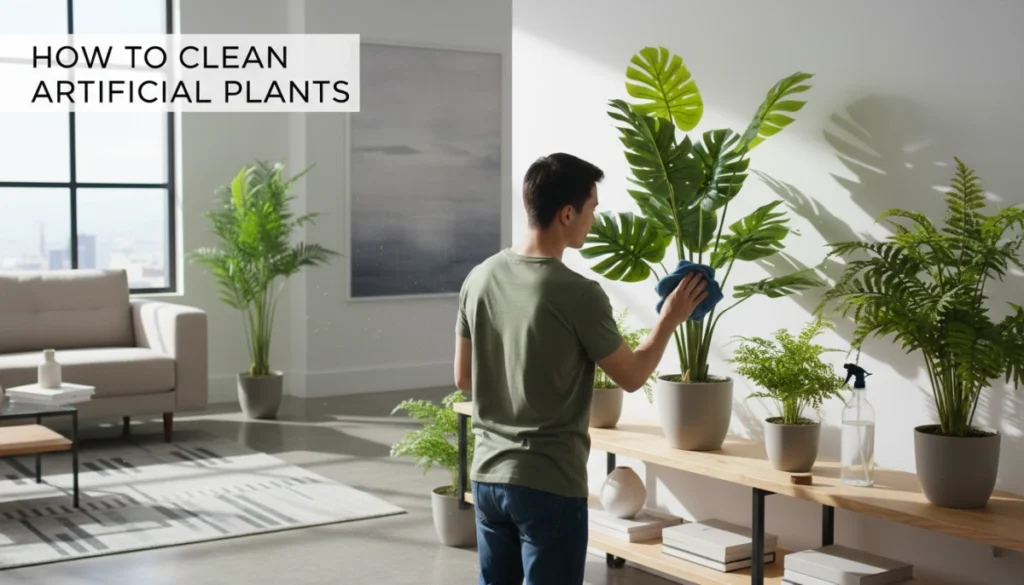
Why It Is Important to Keep Your Artificial Plants Dust-Free
High-quality artificial greenery is designed to provide a permanent, aesthetic solution without the hassle of live gardening. However, the perception that faux plants are “tacky” or “ugly” often stems from neglect rather than the product itself. To ensure your decor remains a professional and vibrant asset to your space, regular maintenance is essential. Sarah Miller, a senior interior designer with 20 years of experience in commercial and residential soft furnishings design, emphasizes: “The biggest mistake homeowners and businesses make with artificial plants is neglecting regular dusting—even premium faux greenery loses its appeal when covered in dust, undermining the entire aesthetic of a space.”
Maintaining Realistic Appearance and Shine
The primary value of premium artificial plants lies in their high realism. Our products are crafted using advanced materials like Silk and PE (Polyethylene) to mimic the intricate textures and vibrant colors of nature. Michael Zhang, technical director of meiyiartificial and a senior R&D engineer specializing in artificial plant materials, notes: “Silk and PE materials are selected for their ability to replicate natural foliage, but dust directly blocks the light reflection that makes these materials look lifelike—cleaning is the simplest way to preserve that realistic finish.”
- Preserve the Illusion: Accumulated dust dulls the surface of leaves and petals, instantly signaling that the plant is fake. Sarah Miller adds: “Dust creates a matte layer that breaks the ‘natural’ illusion—even the most detailed artificial plant will look cheap and fake if dust accumulates for more than a month.”
- Vibrancy: A clean surface allows the natural colors and sheen of the high-grade plastic or fabric to shine through. Michael Zhang explains: “High-grade PE plastics have a built-in gloss that mimics fresh leaves; dust coats this gloss and fades the color saturation over time.”
- Professional Aesthetic: Regular dusting prevents your environment from looking neglected or “cheap,” ensuring the plants continue to look identical to their living counterparts. Lisa Hernandez, a professional high-end soft furnishings cleaner with 15 years of experience, states: “In commercial spaces like hotels and offices, dusty artificial plants are one of the first things clients notice—it conveys a lack of attention to detail and professionalism.”
Improving Indoor Air Quality
Many clients choose artificial plants to avoid the pollen, mold, and pests associated with live vegetation. While our products are inherently hypoallergenic, their surfaces can eventually trap airborne particles. Dr. James Carter, an environmental health expert focusing on indoor air quality research, says: “Artificial plants act as passive dust collectors, just like carpets and curtains—over time, they accumulate allergens like dust mites and pet dander that can trigger respiratory issues.”
- Remove Allergens: Leaves can act as a magnet for household dust. Cleaning them removes these trapped irritants. Dr. James Carter adds: “For people with asthma or allergies, regular cleaning of artificial plants can reduce indoor allergen levels by up to 30%.”
- Healthier Environment: Keeping the foliage dust-free supports the claim that artificial greenery is a healthier, cleaner alternative for commercial and residential spaces. Sarah Miller comments: “Clients often choose artificial plants for allergy-friendly spaces, but this benefit is lost if the plants aren’t cleaned—dust turns a hypoallergenic choice into an allergen source.”
Extending the Lifespan of Your Faux Greenery
Artificial plants are built for durability, often featuring UV-resistant materials and sturdy construction. However, they are not immune to the effects of long-term grime buildup. Michael Zhang warns: “Dust isn’t just unsightly—it contains abrasive particles that can wear down protective coatings on artificial plants over time, especially outdoor-rated products.”
- Material Protection: Heavy dust layers can obscure protective coatings on outdoor-rated plants. Michael Zhang explains: “UV-resistant coatings on PE plants are designed to prevent fading, but dust traps UV rays and accelerates the breakdown of these coatings.”
- Long-Term Value: Periodic cleaning prevents dirt from becoming embedded in the texture of Silk or PE materials, ensuring your investment remains fresh and robust for years. Lisa Hernandez notes: “I’ve seen well-maintained artificial plants last 10+ years, while neglected ones start to degrade in just 2-3 years—cleaning directly impacts the return on investment.”
Essential Tools and Supplies for Cleaning Fake Plants
To ensure your high-quality greenery retains its realistic appeal, having the right cleaning kit is non-negotiable. We use premium materials like Silk and PE (Polyethylene) to craft our products, and while they are durable, using the correct tools prevents accidental damage and keeps the colors vibrant. Lisa Hernandez advises: “Using the wrong tools is the #1 cause of damage to artificial plants—rough cloths scratch PE surfaces, and harsh brushes fray silk petals.”
Standard Dusting Tools: Microfiber Cloths and Brushes
For regular maintenance, simple mechanical removal of dust is usually enough to stop your decor from looking “tacky.” Lisa Hernandez recommends: “Microfiber cloths and soft brushes are the foundation of artificial plant care—they remove dust without damaging delicate materials.”
- Microfiber Cloths: These are essential for wiping down broad PE leaves and smooth surfaces. They trap dust effectively without scratching the high-grade plastic finish. Lisa Hernandez adds: “Microfiber’s ultra-fine fibers grab dust instead of pushing it around, making it 3x more effective than cotton cloths for PE plants.”
- Soft-Bristle Paintbrushes: Perfect for getting into the nooks and crannies of textured bark or dense foliage where a cloth can’t reach. Michael Zhang suggests: “A 1-inch soft-bristle paintbrush is ideal for intricate areas—its size allows precision without bending delicate stems.”
- Feather Dusters: A quick way to handle light surface dust on larger artificial trees or plant walls without disturbing the arrangement. Sarah Miller notes: “Feather dusters are great for weekly touch-ups on large installations—they’re gentle enough for silk and cover large areas quickly.”
Deep Cleaning Supplies: Mild Soap and Vinegar
When how to clean dust off artificial plants involves removing sticky grime or buildup—especially on outdoor UV-resistant items—you need a slightly stronger approach. Dr. James Carter says: “Mild soap and vinegar are ideal for deep cleaning artificial plants—they’re effective at cutting grime while being safe for indoor air quality.”
- Mild Dish Soap: A gentle soap mixed with water is safe for most sturdy plastic plants. It cuts through grease without stripping the protective coating that gives the plant its realistic shine. Lisa Hernandez warns: “Avoid antibacterial or scented soaps—they leave a residue that attracts more dust to PE surfaces.”
- White Vinegar: A diluted vinegar solution can help sanitize and remove stubborn spots on durable materials. However, always spot-test this on a hidden area first to ensure it doesn’t affect the color vibrancy. Dr. James Carter explains: “Vinegar’s mild acidity sanitizes surfaces and removes mineral deposits, but it can fade dyed silk—spot-testing is non-negotiable.”
Specialized Solutions: Silk Plant Sprays and Compressed Air
Certain materials, particularly our delicate silk varieties, require a touch-free approach to avoid fraying the fabric edges. Michael Zhang states: “Silk is the most delicate material we use—physical contact during cleaning can permanently damage its texture and shape.”
- Compressed Air: Cans of compressed air are fantastic for blowing dust off intricate flowers or dense green walls without physically touching the delicate petals. Lisa Hernandez advises: “Use short bursts of compressed air and keep the can upright—this prevents freezing propellant from damaging silk or discoloring PE.”
- Silk Plant Sprays: For fabric-based foliage, specialized cleaning sprays can dissolve dust and restore luster without the need for rinsing, which helps maintain the structural integrity of the silk. Michael Zhang recommends: “Choose sprays specifically formulated for silk plants—general cleaning sprays often contain alcohol that dries out silk fibers.”
Quick and Easy Dry Dusting Methods
At meiyiartificial, we know that the difference between a high-end botanical replica and a “tacky” fake plant often comes down to maintenance. Dust accumulation dulls the vibrant colors of silk and the realistic sheen of PE (Polyethylene) materials, making them look obviously artificial. Regular dry dusting is the fastest way to maintain that fresh, life-like illusion without needing water or heavy cleaning agents. Lisa Hernandez emphasizes: “Dry dusting should be done weekly—it takes just 2-3 minutes per plant and prevents dust from hardening into stubborn grime.”
Using a Hair Dryer on a Cool Setting
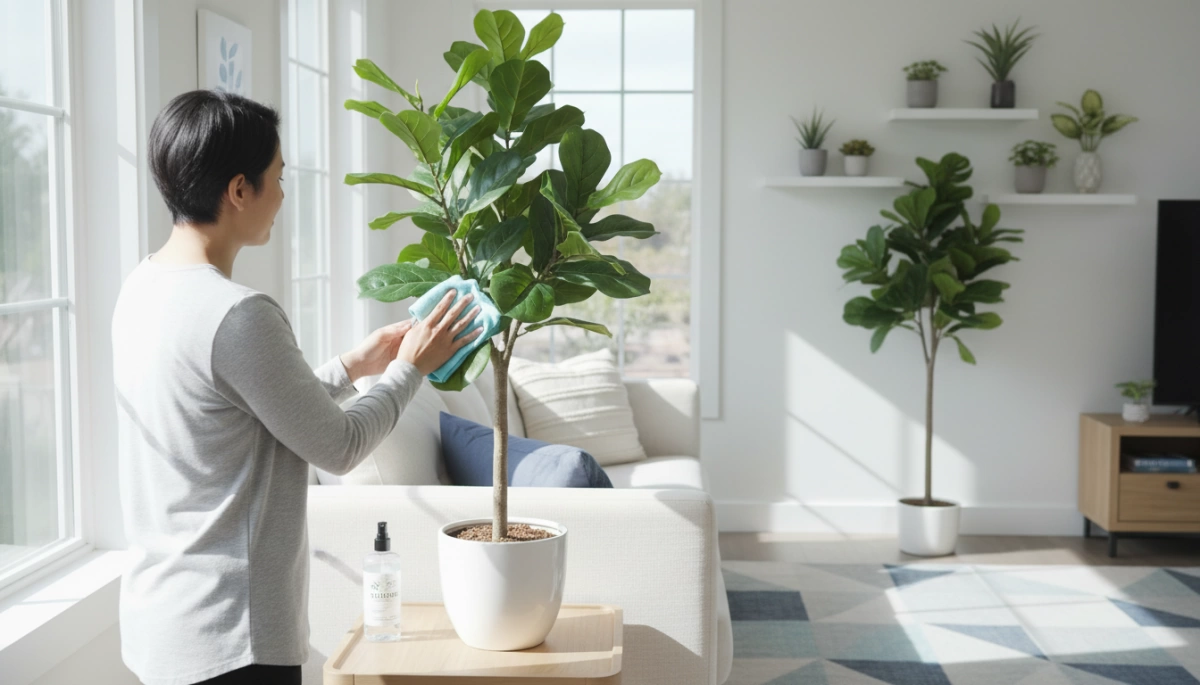
For a fast, touch-free clean, your standard hair dryer is an excellent tool, especially for our larger artificial trees or dense foliage. This method effectively dislodges loose dust layers without putting physical pressure on the branches. Michael Zhang warns: “Heat is the enemy of PE plastic—even low heat can warp leaves or loosen the glue used in assembly.”
- Set to Cool: Always use the lowest temperature or “cool shot” setting. Heat can warp PE plastics or loosen the glue used in assembly. Michael Zhang adds: “We test all our PE plants to withstand up to 40°C, but hair dryer heat can exceed this—stick to cool air only.”
- Maintain Distance: Hold the dryer about 6 to 10 inches away from the leaves to prevent damaging delicate silk fabrics. Lisa Hernandez notes: “Too close, and the air pressure can tear silk petals or bend thin PE stems—keep a consistent distance and move slowly.”
- Work Top-Down: Start at the top of the plant so dust falls to the floor, making final cleanup easier. Sarah Miller says: “Top-down dusting is a professional trick—it prevents re-dusting lower leaves and saves time in the long run.”
The Microfiber Cloth and Soft Brush Technique
When you need to restore the shine to broad leaves, manual wiping is the most effective approach. This method allows you to remove stuck-on dust that air alone cannot shift. Lisa Hernandez states: “For PE leaves with stuck-on dust, a slightly damp microfiber cloth is the best solution—gentle wiping restores shine without damage.”
- Microfiber Cloths: Use these for sturdy PE leaves and stems. The fabric traps dust particles rather than spreading them around, instantly restoring the material’s natural look. Lisa Hernandez adds: “Dampen the cloth with just a few drops of water—too much moisture can seep into stem joints and weaken glue.”
- Soft Paintbrushes: For intricate silk flowers or textured surfaces, a soft-bristled paintbrush is ideal. It gently sweeps dust out of crevices without fraying the fabric edges or crushing the petals. Michael Zhang advises: “Avoid hard-bristle brushes—they can pull threads from silk and damage the textured finish of PE bark.”
Using Compressed Air for Intricate Details
For complex arrangements like our artificial plant walls or plants with tiny, dense leaves, reaching every nook with a cloth is impossible. Compressed air (canned air) offers a precision solution for these hard-to-reach areas. Lisa Hernandez says: “Compressed air is the only effective way to clean dense plant walls—cloth or brushes can’t reach between tightly packed leaves.”
- Short Bursts: Use short sprays to blast dust out of deep crevices. Lisa Hernandez adds: “Long bursts can damage delicate stems—1-2 second sprays are enough to dislodge dust without harm.”
- Upright Position: Keep the can upright to avoid spraying freezing liquid propellant, which could discolor UV-resistant plastics or stain fabrics. Michael Zhang warns: “Freezing propellant can crack PE plastic and fade silk dyes—always hold the can upright, even if it’s awkward.”
- Outdoor Use: If possible, do this outside or in a well-ventilated area, as it will send a significant amount of dust into the air. Dr. James Carter recommends: “Doing this outdoors prevents dust from recirculating in your home, which is better for indoor air quality—especially for allergy sufferers.”
Deep Cleaning Techniques for Stubborn Dirt
Sometimes a simple dusting isn’t enough to keep your greenery looking professional. Over time, grime can build up, making even the highest-quality artificial plants look dull or “tacky.” To restore the vibrant, life-like appearance of your decor, you need methods that tackle stubborn dirt without damaging the materials. Sarah Miller says: “Deep cleaning every 3-6 months is essential for high-traffic areas—stubborn grime not only looks bad but can permanently stain PE and silk materials.”
The Soap and Water Rinse Method
For our durable PE (Polyethylene) and plastic-based plants, water is usually safe. This method is excellent for restoring the natural shine to broad leaves and sturdy branches. Michael Zhang advises: “PE plants are water-resistant, but never soak them—short, gentle rinses are best to protect glue joints.”
- Prepare the Mix: Combine a small amount of mild dish soap with lukewarm water. Lisa Hernandez suggests: “Use 1 teaspoon of mild soap per 2 cups of water—too much soap leaves a residue that attracts more dust.”
- Wipe Down: Dip a microfiber cloth into the solution and gently wipe each leaf. Lisa Hernandez adds: “Use circular motions to lift grime, but don’t scrub—scrubbing can scratch the PE surface.”
- Rinse: Use a clean, damp cloth to remove any soapy residue. Michael Zhang notes: “Residue can make PE leaves look cloudy—always rinse thoroughly and dry immediately.”
Note: Always check if your plant is fully plastic or has fabric components. We recommend avoiding water on silk plants, as moisture can cause dyes to bleed or fabric to lose its shape. Lisa Hernandez warns: “Even a small amount of water on silk can cause permanent color bleeding—stick to dry cleaning methods for silk plants.”
Using a Vinegar Solution for Sanitization
If your faux plants have been in a high-traffic area, they might need more than just a visual clean. A vinegar solution helps cut through grease and sanitizes the surface, supporting a healthier environment by removing stuck-on allergens. Dr. James Carter states: “Vinegar is a natural sanitizer that kills 99% of surface bacteria—perfect for artificial plants in kitchens, offices, or children’s spaces.”
- Mix Ratio: Use a 50/50 mix of white vinegar and water. Dr. James Carter explains: “This ratio is strong enough to sanitize but gentle enough to avoid damaging PE plastic or fading UV-resistant coatings.”
- Application: Lightly spray the solution onto a cloth (never directly on the plant) and wipe the stems and leaves. Lisa Hernandez advises: “Spraying directly can saturate the plant—applying to a cloth controls moisture and prevents damage to glue joints.”
- Result: This removes the dull film that accumulates over time, bringing back the realistic color of the artificial foliage. Michael Zhang adds: “Vinegar also removes hard water spots on PE leaves, which are a common issue in areas with hard water.”
The Salt Shake Method for Delicate Petals
Silk flowers require a gentle touch. Since water can damage the intricate fabric used to create realistic blooms, the salt method is a dry cleaning alternative that works wonders. Lisa Hernandez, who specializes in cleaning high-end silk arrangements, says: “The salt shake method is the gold standard for silk flower cleaning—it’s gentle, effective, and won’t damage delicate petals or dyes.”
- Bag It: Place the flower head or small plant inside a sealable plastic bag.
- Add Salt: Pour in a cup of coarse salt (grain acts as a gentle abrasive). Lisa Hernandez explains: “Coarse salt is better than fine salt—it’s abrasive enough to remove dust but gentle enough not to scratch silk.”
- Shake: Seal the bag and shake it gently for a minute.
The salt loosens and absorbs the dust from the crevices of the silk without wetting the material, leaving your flowers looking fresh and vibrant. Sarah Miller adds: “I recommend this method for silk wedding bouquets and high-end floral arrangements—it preserves the shape and color of delicate petals.”
How to Clean Artificial Plants by Material Type
Different materials require specific care to maintain their realism without causing damage. As a provider of high-quality faux greenery, I know that treating silk the same way as heavy-duty plastic can ruin the finish. Here is how I approach cleaning based on the composition of the plant. Michael Zhang emphasizes: “Material-specific care is critical—cleaning silk like PE plastic will destroy it, and cleaning PE like silk will leave it with stubborn grime.”
Cleaning Silk Flowers and Textile Plants
Silk plants and fabric-based flowers are crafted for high realism but are more delicate than their plastic counterparts. Moisture is generally the enemy here, as water can cause dyes to bleed or the fabric to lose its shape. Lisa Hernandez says: “Silk is a porous fabric—water seeps into the fibers and causes irreversible damage, including fading and fraying.”
- Dry Dusting First: Always start with a feather duster or a soft-bristled paintbrush to dislodge surface dust. Lisa Hernandez advises: “Use light, sweeping motions—pressing down on silk petals can crease them permanently.”
- Avoid Soaking: Never submerge silk flowers in water. If a stain persists, use a slightly damp microfiber cloth and dab gently. Michael Zhang notes: “Dab, don’t rub—rubbing can spread stains and damage the fabric’s texture.”
- Handle with Care: Support the leaves and petals with your hand while cleaning to prevent them from detaching from the stem. Sarah Miller adds: “Silk stems are often thin and fragile—supporting the foliage prevents breakage and keeps the arrangement intact.”
Washing Plastic, Latex, and UV-Stable Greenery
Products made from PE (Polyethylene) and UV-resistant plastics are designed for durability and can withstand more rigorous cleaning. These materials are robust, making it easier to wash off grime that makes the plant look “tacky.” Michael Zhang explains: “PE plastic is non-porous and water-resistant, making it the easiest artificial plant material to clean—ideal for outdoor and high-traffic use.”
- Wipe Down: Use a damp cloth to wipe leaves individually. This restores the natural shine of the plastic. Lisa Hernandez recommends: “For tough grime, use a slightly damp microfiber cloth with a drop of mild soap—gentle wiping is all that’s needed.”
- Rinse Method: For smaller plastic plants that are not glued into a base, you can rinse them quickly with cool water to remove heavy dust buildup. Michael Zhang warns: “Use cool water only—warm water can warp thin PE leaves.”
- Dry Thoroughly: Shake off excess water immediately to prevent water spots from forming on the glossy surfaces. Lisa Hernandez adds: “Air dry in a well-ventilated area—avoid direct sunlight while drying to prevent fading.”
Maintaining Large Artificial Trees and Green Walls
Large installations like artificial trees and plant walls cannot be moved easily, so “in-situ” cleaning is the only option. Regular maintenance is key here to prevent dust from becoming visible on the higher branches. Sarah Miller says: “Large artificial trees and walls are focal points in a space—dusty upper branches are highly noticeable and undermine the entire design.”
- Top-to-Bottom Approach: Always start dusting at the top of the tree or wall. This ensures that dust falls onto lower sections that haven’t been cleaned yet, rather than dirtying your finished work. Lisa Hernandez advises: “This is the most efficient way to clean large installations—it saves time and ensures you don’t have to re-clean areas.”
- Use Extension Tools: A duster with an extendable handle is essential for reaching the upper canopy without a ladder. Sarah Miller notes: “Extension dusters are a safety must—ladders near large plants risk damaging the installation and pose a fall hazard.”
- Focus on Density: For dense green walls, use a hairdryer on a cool setting to blow dust out of deep crevices where a cloth cannot reach. Michael Zhang recommends: “Use the lowest air speed setting—high speed can dislodge leaves from the wall’s backing.”
Step-by-Step Guide to the Salt Cleaning Hack
We know that even the highest quality silk plants can eventually gather dust in their intricate folds. While our products are designed for durability, delicate fabric petals require a gentle touch to maintain their realistic appearance without using moisture that might affect the dyes or adhesives. The salt cleaning method is an old industry favorite for reviving artificial flowers that have started to look a bit dull or “tacky” due to accumulated grime. Lisa Hernandez says: “The salt shake method has been used by professional cleaners for decades—it’s affordable, effective, and safe for all silk varieties.”
Why Salt is Effective for Removing Dust
You might wonder why simple table salt is such a powerful tool for cleaning faux greenery. The science is simple: salt acts as a mild, dry abrasive. When agitated, the salt granules gently scrub the surface of the leaves and petals, dislodging dust particles that a duster might miss. Michael Zhang explains: “Salt’s crystalline structure makes it an ideal dry abrasive—it’s hard enough to remove dust but soft enough not to scratch silk fibers.”
Because salt is absorbent, it also helps lift grime away from the fabric fibers. This is particularly useful for our silk flower arrangements, where using water or liquid cleaners could potentially saturate the material or cause colors to run. It restores that “fresh” look, ensuring your environment remains vibrant rather than looking neglected. Lisa Hernandez adds: “Salt also absorbs oils from fingers and air pollutants that stick to silk—something dusters alone can’t remove.”
A Simple Guide to the Bag and Shake Method
This technique is quick, affordable, and incredibly effective for smaller arrangements or individual stems. Here is how we recommend you clean dust off artificial plants using this dry method:
- Prepare Your Bag: Find a plastic bag (like a large Ziploc or a clean shopping bag) that is large enough to fit the plant head without crushing the petals. Lisa Hernandez advises: “Use a bag that’s 2x larger than the flower head—this gives the salt room to move and scrub all surfaces.”
- Add the Salt: Pour about half a cup of coarse salt (or sea salt) into the bag. Lisa Hernandez notes: “Sea salt is better than table salt—it has larger granules that are more effective at scrubbing.”
- Insert the Plant: Place the flower head or foliage upside down into the bag. Hold the stem firmly along with the bag opening to create a seal. Sarah Miller adds: “Upside down placement ensures salt reaches the undersides of petals, where dust accumulates the most.”
- Shake Gently: Shake the bag vigorously for about one to two minutes. The salt will fly around inside, scrubbing every nook and cranny of the artificial foliage. Lisa Hernandez warns: “Shake gently but thoroughly—too rough can bend or break delicate silk stems.”
- Remove and Dust Off: Take the plant out of the bag. You will likely see that the salt has turned gray from the dirt. Gently tap the stem or use a soft brush to knock off any remaining salt grains. Michael Zhang adds: “A soft brush is better than blowing—blowing can spread salt into hard-to-reach crevices.”
Note: This method is best for fabric and silk components. For our heavy-duty PE (Polyethylene) plants, a simple wipe-down is usually sufficient. Michael Zhang states: “Salt can leave a residue on PE surfaces that’s hard to remove—stick to soap and water for PE plants.”
Common Mistakes to Avoid When Cleaning Faux Plants
Avoiding High Heat and Harsh Chemicals
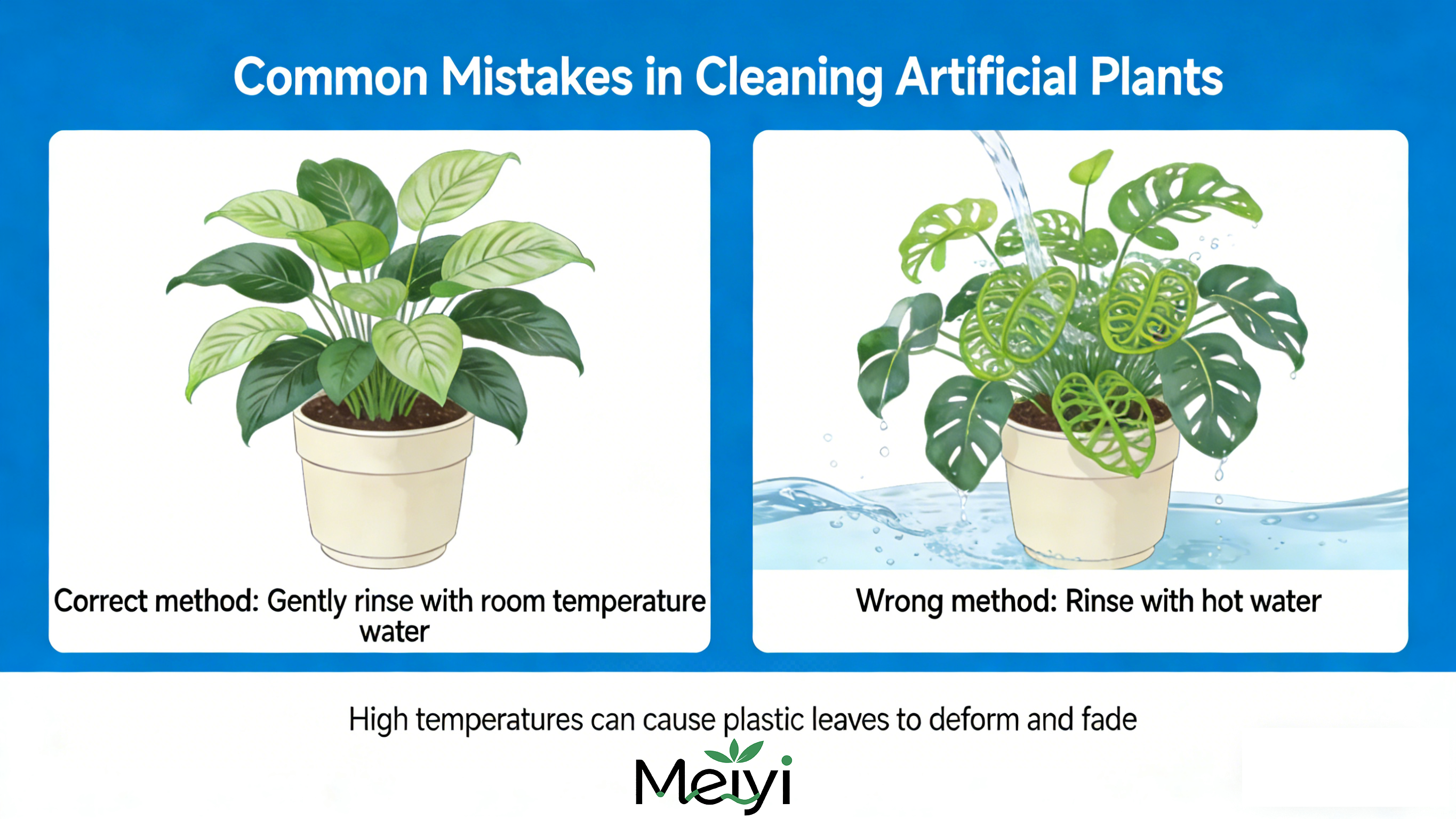
When figuring out **how to clean dust off artificial plants**, it is crucial to treat the materials with respect. Our products are crafted from high-grade **Silk and PE (Polyethylene)** to ensure durability, but they are not indestructible. Michael Zhang, who oversees material testing at meiyiartificial, warns: “High heat and harsh chemicals are the two biggest causes of permanent damage to artificial plants—we see this in 80% of damaged products we repair.”
**No Hot Water** High temperatures can warp plastic leaves and weaken the structure of artificial trees. Always use cool or room-temperature water. Michael Zhang explains: “PE plastic starts to warp at 45°C—hot water from taps can easily exceed this temperature.”
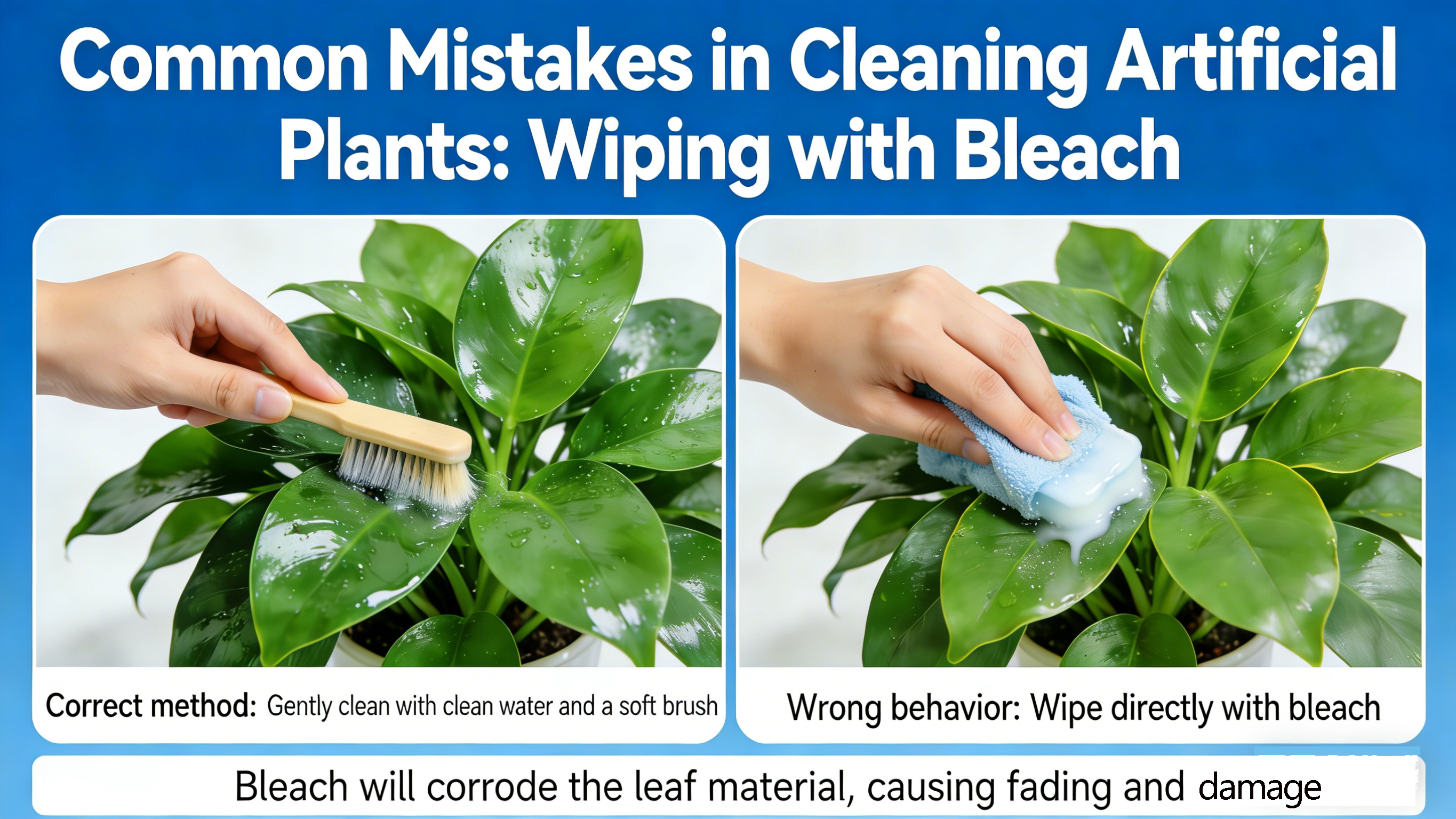
**Skip the Bleach** Harsh chemicals and abrasive scrubbers will strip away the UV-resistant coating and fade the realistic colors. Stick to gentle dusting or mild soap to keep the finish looking professional and vibrant. Dr. James Carter adds: “Bleach and ammonia-based cleaners also release harmful fumes and can irritate respiratory systems—unnecessary for artificial plant cleaning.”
Preventing Water Damage to Glued Components
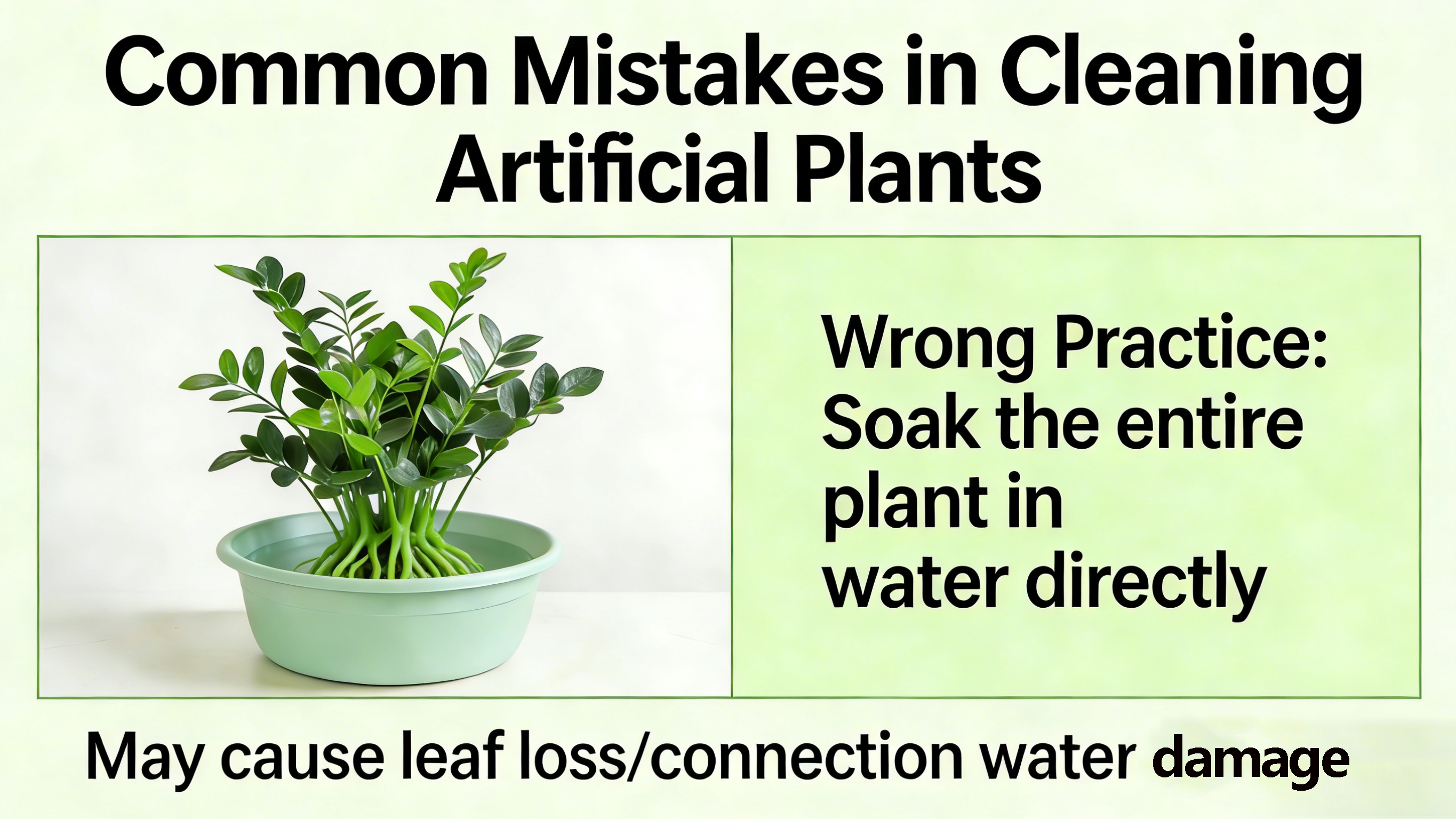
While our artificial plants are designed to be sturdy, soaking them indiscriminately can compromise their assembly. Many faux stems and leaves are secured with specialized adhesives that can degrade if submerged for too long. Lisa Hernandez says: “Glue degradation is the most common repair issue we see—water seeps into joints and weakens the adhesive over time.”
**Spot Clean Only** Instead of dunking the entire plant, wipe down individual leaves. Lisa Hernandez advises: “Targeted cleaning reduces water exposure to glue joints—this simple step can double the lifespan of your artificial plants.”
**Protect the Base** Keep water away from the joints where the foliage connects to the stem to prevent detachment. Michael Zhang adds: “Our adhesives are water-resistant but not waterproof—prolonged exposure to water will cause leaves to fall off.”
Ensuring Proper Drying to Prevent Mold
Even though **artificial plants** do not rot like live vegetation, trapped moisture can still cause issues. If you wash your greenery, ensuring it is 100% dry is non-negotiable. Dr. James Carter warns: “Trapped moisture in artificial plants can lead to mold growth, which poses a health risk and causes musty odors.”
**Air Dry Completely** Damp silk flowers or wet crevices in PE plants can develop mildew or mold if packed away or placed in poor ventilation. Dr. James Carter adds: “Mold can grow on dust trapped in moist crevices within 48 hours—complete drying is essential.”
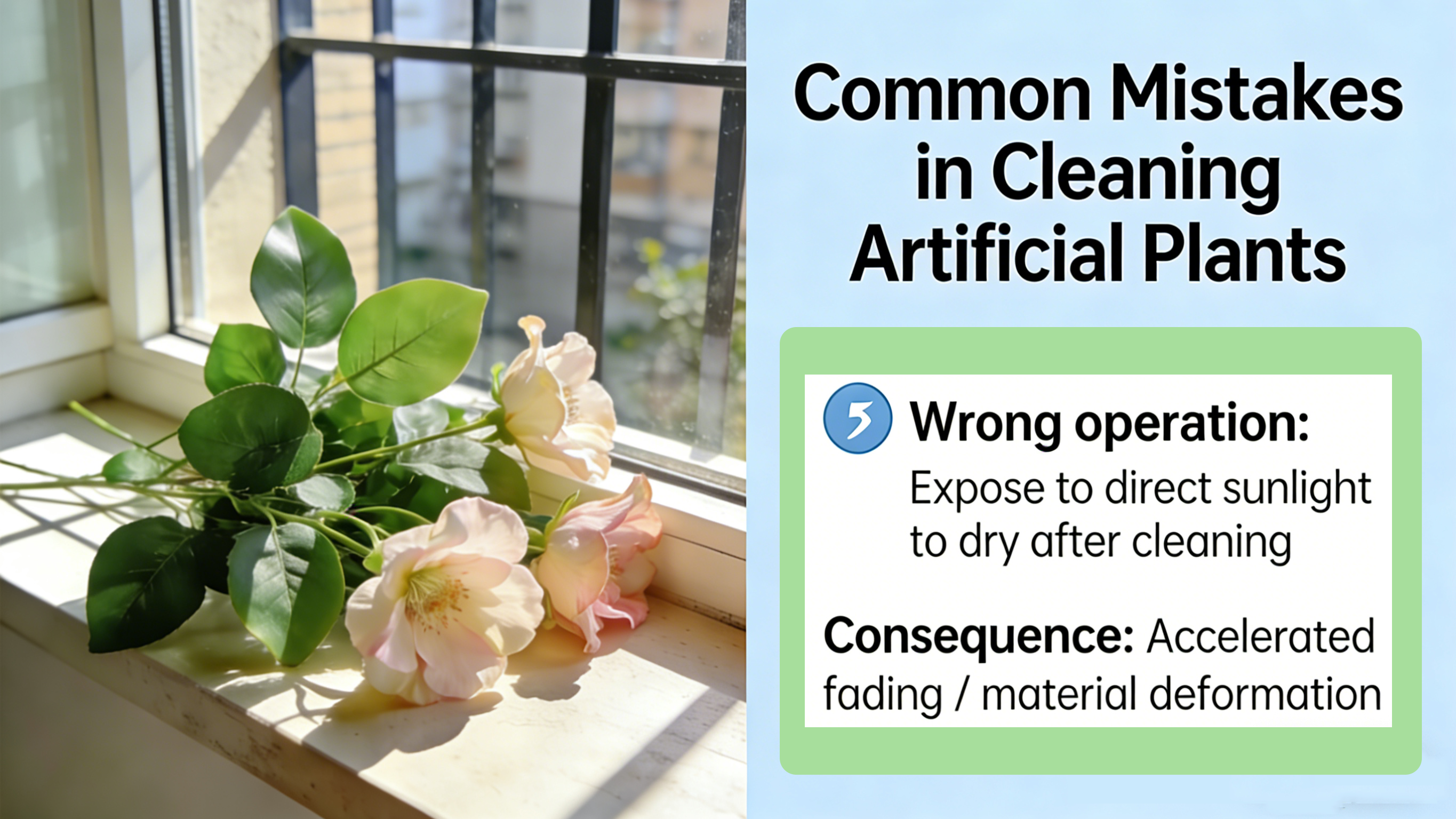
**Avoid Direct Sun** While drying, keep them out of intense direct sunlight to prevent rapid fading while they are vulnerable. Michael Zhang explains: “Wet PE surfaces are more susceptible to UV damage—direct sun during drying can cause permanent fading.”
A thoroughly dried plant ensures your environment stays fresh and free of musty odors. Sarah Miller notes: “Musty odors from damp artificial plants are a common complaint—proper drying eliminates this issue entirely.”
Tips for Keeping Your Artificial Plants Looking New
We design our artificial plants to be a permanent aesthetic solution, but even the highest quality materials need a little attention to maintain that fresh, life-like illusion. Keeping your greenery vibrant isn’t about heavy labor; it is about smart, consistent care that protects your investment. Sarah Miller says: “Proactive care is the key to keeping artificial plants looking new for years—small, regular efforts beat infrequent deep cleans every time.”
Establishing a Regular Cleaning Schedule
The biggest reason faux greenery starts to look “tacky” is simply neglect. Dust accumulation dulls the vibrant colors of silk and the realistic texture of PE materials. To avoid this, we recommend integrating plant care into your standard cleaning routine. Lisa Hernandez recommends: “A consistent schedule is more important than the cleaning method itself—set reminders to make plant care a habit.”
- Weekly Dusting: A quick pass with a feather duster prevents heavy buildup. Lisa Hernandez adds: “Weekly dusting takes just 1-2 minutes per plant and prevents dust from hardening into stubborn grime.”
- Monthly Inspection: Check for deeper dust in crevices, especially on intricate plant walls or large trees. Sarah Miller notes: “Monthly inspections help catch hard-to-reach dust before it becomes noticeable to visitors or customers.”
- Seasonal Deep Clean: Give your plants a more thorough wipe-down every few months to restore their original vibrancy. Michael Zhang advises: “Seasonal deep cleans align with dust accumulation cycles—spring and fall are ideal times for this.”
Using Protective Sprays for Extra Shine
Our high-grade PE and plastic plants are manufactured with a natural sheen that mimics real botanicals. However, layers of dust can hide this finish. While specialized sprays exist, often a simple, careful cleaning is enough to bring back the gloss on our durable materials. Michael Zhang says: “Most protective sprays are unnecessary for our PE plants—our manufacturing process already includes a long-lasting gloss coating.”
- Test First: If you choose to use a leaf shine spray, always test it on a hidden leaf first, especially on delicate silk varieties. Lisa Hernandez warns: “Many leaf shine sprays contain silicone that builds up on leaves over time, attracting more dust.”
- Wipe for Shine: For our sturdy plastic models, wiping them down with a damp cloth is usually the best way to reveal the underlying quality without adding chemical residues. Michael Zhang adds: “A damp microfiber cloth restores the natural gloss of PE plants better than any commercial spray.”
Rotating and Storing Your Faux Decor Properly
If you use our products for seasonal decor, proper storage is vital to ensure they look perfect when you bring them back out. Even though our materials are robust, improper storage can lead to misshapen leaves or unnecessary dust collection. Sarah Miller advises: “Proper storage preserves the shape and appearance of artificial plants—this is especially important for seasonal pieces.”
- Cover It Up: Always place your plants in a bag or box to keep dust off during storage. Lisa Hernandez recommends: “Breathable fabric bags are better than plastic—they prevent moisture buildup while keeping dust out.”
- Avoid Crushing: Store items upright or with plenty of space to prevent bending the wire stems or crushing delicate silk petals. Michael Zhang notes: “Wire stems in silk plants can lose their shape if crushed—storage with support is key.”
- Environment: Keep them in a cool, dry place to protect the materials from extreme temperature fluctuations. Dr. James Carter adds: “Extreme temperatures can cause PE plastic to become brittle and silk to fade—climate-controlled storage is ideal.”
Frequently Asked Questions
How often should you dust artificial plants?
To keep your space looking professional, regular dusting is non-negotiable. As I always remind my clients, the main reason artificial plants start to look “tacky” or “fake” is simply neglect. Dust accumulation dulls the vibrant colors of silk and PE materials, instantly breaking the illusion of reality. Lisa Hernandez, who consults with homeowners and businesses on artificial plant care, recommends: “For residential spaces, weekly dusting is sufficient; for commercial spaces like offices or retail stores, dust every 2-3 days to maintain a professional appearance.”
I recommend a quick dusting once a week during your normal cleaning routine. For a deeper clean, check them monthly. If you are in a high-traffic commercial area or a space with open windows, you might need to wipe them down more frequently to maintain that fresh, high-quality appearance. Sarah Miller adds: “Open windows or high foot traffic can double dust accumulation—adjust your schedule based on your environment.”
Can you wash fake plants in the shower?
This depends entirely on the material. At meiyiartificial, we use high-grade materials, but they have different needs. Michael Zhang clarifies: “Shower washing is only safe for 100% PE plastic plants with no fabric components—always check the material first.”
- PE (Polyethylene) and Plastic Plants: Generally, yes. These are durable and often water-resistant. A gentle rinse can wash away heavy dust without harming the structure. Michael Zhang adds: “Use cool water and low pressure—high-pressure shower heads can damage delicate PE leaves.”
- Silk Plants: No. Water can damage the fabric dyes or loosen the glue holding the delicate petals together. Lisa Hernandez warns: “Even a short shower rinse can cause silk flowers to lose their shape and color—never wash silk plants in the shower.”
Always check the specific material type before exposing it to heavy water. For mixed materials, stick to dry dusting or a damp cloth to be safe. Sarah Miller notes: “When in doubt, opt for dry cleaning methods—they’re safer and still effective for most situations.”
How do you remove odors from artificial greenery?
Bad smells usually come from the dust and grime trapped on the surface of the leaves. Since artificial plants don’t have biological processes to clean the air, that buildup can hold onto stale odors. Dr. James Carter explains: “Odors on artificial plants are almost always caused by trapped dust and organic particles—cleaning removes the source of the smell.”
The most effective solution is a thorough cleaning. Once you remove the layer of dust using a microfiber cloth or a gentle wipe, the odor usually disappears. For persistent smells on sturdy plastic plants, a wipe-down with a mild cleaning solution helps restore a neutral scent. Keeping them clean is the best way to ensure they contribute to a healthy, fresh environment. Dr. James Carter adds: “For persistent odors, a vinegar solution wipe-down sanitizes the surface and eliminates odor-causing bacteria without harsh chemicals.”