
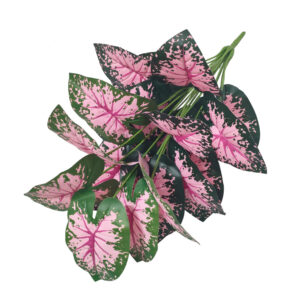
You might be tempted by the promise of a zero-maintenance garden…
But you’ve also likely seen the glaring drawbacks of fake plants outdoors—the unnatural neon leaves and the plastic shine that fails the “eye test” from the sidewalk.
As an industry insider, I know that while the convenience is appealing, the debate over artificial vs real plants landscaping is complicated.
Why do so many homeowners ultimately stick with living greenery?
Some fear the disadvantages of faux greenery, like UV fading artificial plants turning blue in the sun.
Others worry about the environmental impact fake plants leave behind or the high upfront cost artificial greenery requires to actually look good.
In this guide, we’re going to break down the honest reasons why people do not use artificial plants for landscaping and reveal exactly when premium solutions—like those from meiyiartificial—are the only exception to the rule.
Let’s get to the root of the problem.
Aesthetic Limitations: The ‘Uncanny Valley’ of Landscaping
When we evaluate artificial vs real plants landscaping, the biggest hurdle is often visual. We call this the “Uncanny Valley” of landscaping—that unsettling feeling when something looks almost real, but your brain knows it’s a fake. While modern manufacturing has improved, the unnatural appearance of fake hedges and trees remains a primary reason people stick to living flora.
Static Appearance Lacks Life
Real landscapes are dynamic; they breathe, grow, and react to the environment. Disadvantages of faux greenery become obvious when you realize the landscape is frozen in time.
- No Seasonal Change: A bright green fern looks out of place in the dead of winter.
- Lack of Movement: Even in a breeze, stiff plastic stems often fail to sway naturally like organic branches.
- Zero Growth: The satisfaction of watching a garden mature is completely lost.
Overly Perfect Symmetry
One of the main reasons why fake plants look tacky is that they are too perfect. Nature is beautifully imperfect, with random variations in leaf size, color, and direction. Mass-produced synthetic plants often suffer from “clone syndrome,” where every shrub in a row is an exact replica of the next. This hyper-symmetry fails the “eye test” from the street, signaling immediately that the foliage is plastic.
Cheap Versions vs. Premium Reality
There is a massive aesthetic gap between budget options and professional-grade materials.
- Cheap Options: Often have a high-gloss plastic shine and visible seams that look fake instantly.
- Premium Options: High-end UV-resistant polyethylene (PE) can mimic natural textures and matte finishes, bridging the gap significantly.
However, even with high-quality materials, the lack of organic imperfections can make drawbacks of fake plants outdoors hard to ignore for purists who value the authenticity of a living garden.
Durability and Weathering Concerns
When I discuss the drawbacks of fake plants outdoors, the conversation almost always turns to longevity. Unlike living flora that heals and adapts, artificial landscaping starts degrading the moment it is installed. The sun is the primary enemy here; even high-end synthetic materials can be affected by long-term exposure to ultraviolet radiation.
UV Fading and Material Breakdown
Nothing screams “fake” louder than a hedge that has turned a strange shade of blue or grey. UV fading artificial plants is a common issue, especially in the southern United States where the sun is relentless. While premium options are better, cheaper materials become brittle and crack under thermal stress.
- Discoloration: Pigments break down, causing vibrant greens to look washed out or unnaturally neon.
- Brittleness: Plasticizers evaporate over time, leading to leaves that snap off during storms.
- Heat Issues: Heat retention synthetic plants can make your yard feel like an oven. Unlike real plants that cool the air through transpiration, plastic absorbs heat, raising the ambient temperature of your patio.
Instability in Wind and Rain
Real plants have root systems that anchor them deep into the soil. Artificial plants do not. Without heavy-duty installation or concrete footings, I have seen entire faux shrubs blown across the yard during heavy storms. While delicate styles like Persian fern greenery are stunning in protected spaces, relying on standard faux landscaping in high-wind areas often results in displacement and damage, leading many homeowners to stick with traditional planting.
Hidden Maintenance Requirements
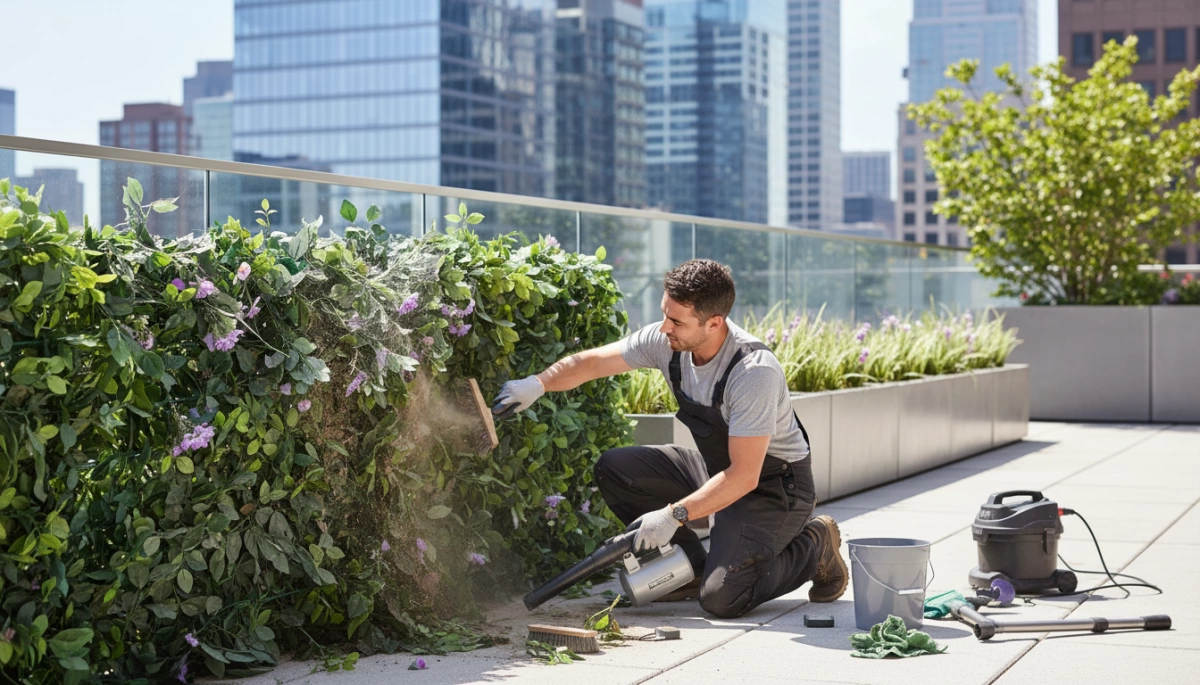
One of the biggest misconceptions driving the maintenance myths of faux outdoor plants is the idea of “zero upkeep.” Many homeowners avoid artificial landscaping precisely because they realize that “fake” doesn’t mean “self-cleaning.” While you save on watering and pruning, you trade those tasks for cleaning and dusting.
Dust Accumulation and Debris
Unlike living plants that shed old leaves and grow new, clean ones, synthetic foliage is static. Dust accumulation on faux foliage is a significant drawback.
- Static Cling: Plastic materials often generate a static charge that actively attracts dust, pollen, and road grime.
- Manual Washing: Rain isn’t always enough. In fact, light rain can turn dust into mud spots, requiring you to manually hose down or scrub the leaves to restore their vibrancy.
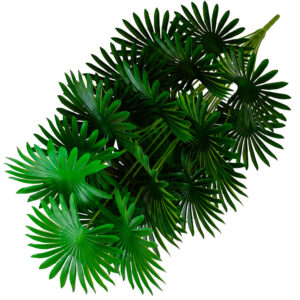
- Debris Traps: Intricate structures, such as those found on artificial fan palms, can catch falling leaves and twigs, which must be picked out by hand since they won’t decompose or fall away naturally.
The Irony of Weed Control
Installing artificial plants does not sterilize the ground. Weeds are persistent and will grow around the base of any installation. People often find themselves in the ironic position of weeding around a plastic bush or spraying herbicides near a “maintenance-free” lifelike faux maidenhair fern. Without a root system to outcompete weeds for water and nutrients, the soil around faux plants can actually become a haven for unwanted growth if not heavily mulched or treated.
Real vs. Faux: The Cleaning Comparison
| Feature | Real Plants | Artificial Plants |
|---|---|---|
| Self-Cleaning | Rain washes leaves; old leaves shed naturally. | Rain often leaves water spots; requires hosing down. |
| Surface Texture | Waxy or fuzzy surfaces repel some dirt. | Textured plastic traps dust and pollen. |
| Renewal | New growth replaces damaged/dirty foliage. | Damage and dirt accumulation are permanent without intervention. |
| Surroundings | Roots help suppress some weed growth. | No root competition; weeds thrive at the base. |
For many, the realization that they will still be working in the yard—cleaning plastic instead of nurturing nature—is a primary reason to stick with living landscaping.
Environmental Impact of Fake Plants
For homeowners deeply committed to sustainability, the ecological footprint of synthetic landscaping is often a primary deterrent. While I provide high-quality faux options, I recognize that environmental impact fake plants have on the local ecosystem is a valid concern for green-minded individuals. Unlike living gardens that actively contribute to the environment, synthetic alternatives remain biologically inert.
Major Ecological Drawbacks
- Plastic Waste and Landfills: Most artificial foliage is manufactured from polyethylene (PE), PVC, or other petro-chemicals. These plastic waste artificial plants are non-biodegradable. Once they fade or wear out after their 5-10 year lifespan, they end up in landfills where they persist for centuries rather than composting back into the soil.
- Lack of Pollinator Support: A significant downside is the lack of pollinator support in artificial landscaping. Real gardens provide essential nectar and pollen for bees, butterflies, and birds. While our artificial greenery creates a lush visual backdrop, it offers no food source or habitat for local wildlife, effectively creating a “green desert” for biodiversity.
- Absence of Ecosystem Services: Living plants perform critical tasks like purifying the air, sequestering carbon, and stabilizing soil with their root systems to prevent erosion. Synthetic plants cannot absorb water or reduce runoff, meaning they fail to provide the cooling and drainage benefits inherent to natural vegetation.
Practical and Functional Issues
Beyond the look and feel, there are serious mechanical downsides to covering a yard in plastic. One of the biggest reasons homeowners steer clear of synthetic landscaping is the disruption of natural water cycles. Real root systems break up the earth, allowing rain to permeate deep into the ground. In contrast, the solid backing found on many faux installations creates a barrier. This often leads to drainage issues fake plants yard setups are notorious for, where water pools on the surface instead of absorbing, potentially causing mold growth or flooding near the foundation.
Heat Retention and Ambient Temperature
If you live in a warm climate, the thermal properties of plastic are a dealbreaker. Living plants naturally cool the surrounding air through transpiration, acting as nature’s air conditioning. Synthetic materials do the opposite. The heat retention synthetic plants exhibit is significant; they absorb solar radiation and radiate it back out.
- Surface Temperature: In direct sunlight, plastic leaves and turf can become hot enough to burn skin or paws.
- Ambient Heat: Large areas of faux greenery can create a “heat island” effect, making patios uncomfortable to use during summer afternoons.
Soil Health and Resource Competition
Installing artificial flora isn’t just about what you see above ground; it’s about what happens below. Covering the soil with non-porous materials blocks oxygen and nutrients from reaching the earth, effectively killing the soil microbiome over time. Furthermore, poor placement can harm existing greenery. While a decorative artificial fan palm leaves vine is designed for walls where it won’t interfere with nature, installing dense synthetic ground cover near living trees can suffocate their root zones. This blocks necessary rainfall and creates competition for space, often to the detriment of the living plants you want to keep.
High Upfront Cost of Artificial Greenery vs. Long-Term Value
One of the primary reasons homeowners steer clear of synthetic options is the high upfront cost of artificial greenery. To achieve a look that doesn’t scream “plastic” from the sidewalk, you must invest in premium, UV-stabilized products. Cheap alternatives might save money initially, but they degrade rapidly, turning brittle or discolored within a season or two, forcing you to buy replacements far sooner than expected.
While high-end synthetics eliminate water bills, the initial capital required often exceeds the cost of installing a traditional landscape. Understanding the ROI of professional landscaping is critical here.
Property Value Impact of Artificial Landscaping
There is also a genuine concern regarding the property value impact of artificial landscaping. Real estate agents often note that while a neat lawn is good, extensive use of obvious faux plants can be perceived as “tacky” or suggest that the underlying soil is neglected.
- Curb Appeal Risk: Buyers may view plastic hedges as a cleanup project rather than a feature.
- Asset vs. Liability: Mature real trees add thousands to property value; old fake trees are just waste.
- Alternative Options: Investing in drought-tolerant living plants (xeriscaping) often provides a better return on investment than covering a yard in plastic.
Cost Comparison: Faux vs. Real
| Factor | Premium Artificial Plants | Drought-Tolerant Real Plants |
|---|---|---|
| Initial Investment | High (Quality materials are pricey) | Low/Medium (Seeds/starters are cheap) |
| Long-Term Value | Depreciates (Eventually fades/breaks) | Appreciates (Grows larger/fuller) |
| Replacement Cycle | Every 5–10 years | Self-sustaining / Perennial |
| Perception | Static decoration | Living ecosystem |
When Artificial Plants Still Make Sense
As office worker AMEI OSJON said, “I’ve killed so many live plants. I travel a lot for work, and they’re withered when I get home.” Therefore, artificial plants are important for busy people; they offer the best protection for living plants.
While fake plants outdoors have various drawbacks, high-quality synthetic materials can provide practical solutions in certain situations. The misconception about maintenance must also be corrected. Our deep-seated belief in maintenance-free systems leads us to avoid even monthly dusting or simple cleaning. This isn’t a problem with artificial plants themselves, but rather with misleading marketing by unscrupulous sellers. We don’t advocate replacing entire lawns with plastic plants, but clever strategies can solve long-standing landscaping challenges without compromising the building’s appearance.
The Misconception About Artificial Plant Maintenance
The misconception about maintenance must also be corrected. Our deep-seated belief in maintenance-free systems leads us to avoid even monthly dusting or simple cleaning. This isn’t a problem with artificial plants themselves, but rather with misleading marketing by unscrupulous sellers.
Far too many cheap artificial plant brands peddle the myth of “set-it-and-forget-it” as a core selling point—promising that their products require zero upkeep, no matter the environment. They omit critical details about how dust accumulation, rainwater residue, or pollen buildup can turn a once-realistic faux plant into a dull, lumpy eyesore in just a few months. Homeowners and business owners buy into this lie, then grow frustrated when their investment loses its luster, blaming the artificial plants instead of the false promise that led to neglect.
As landscaping enthusiast and blogger Mia Carter from California put it in a recent post: “I bought a set of fake outdoor ferns last year because the label said ‘100% maintenance-free.’ I stuck them on my patio and forgot about them. By fall, they were caked in dust and bird droppings, and the leaves looked stiff and discolored. I thought faux plants were garbage—until a friend told me I just needed to rinse them off once a month.” Her experience echoes the sentiment of countless others who’ve been let down by deceptive marketing, not by the products themselves.
The truth is: high-quality artificial plants do need minimal, intentional care—it just looks nothing like the rigorous routine required for real foliage. Unlike real plants that demand watering, pruning, fertilizing, and pest control, professional-grade faux greenery only asks for two simple things: regular light cleaning to preserve its appearance, and occasional inspections to check for wear (like loose leaves or UV damage). A quick rinse with a garden hose every 3–4 weeks can wash away dust and grime; a gentle wipe with a damp cloth works for indoor pieces. For outdoor plants in dusty or coastal areas, a monthly spritz with mild, eco-friendly soap (followed by a rinse) prevents salt buildup or dirt from settling into leaf crevices.
This level of upkeep is negligible compared to the effort of reviving a wilting real plant or replacing dead foliage—and it’s the key to making artificial plants last 8–12 years, rather than 1–2. As commercial property manager Javier Rodriguez from Texas shared on a landscaping forum: “We use artificial hedges around our retail centers, and we used to replace them every two years until we started a monthly cleaning schedule. Now the same hedges are going on year five, and they still look brand new. The ‘maintenance-free’ lie cost us thousands in replacement costs before we figured it out.”
The problem isn’t that artificial plants require care—it’s that unethical sellers erase this small responsibility to make a quick sale. They rely on consumers’ desire for convenience, then abandon them when the product fails to live up to an impossible standard. Meanwhile, reputable manufacturers of premium artificial plants are transparent about maintenance needs: they include care instructions with every purchase, recommend cleaning frequencies based on location (indoor vs. outdoor, dry vs. humid), and even offer UV-protective sprays to extend lifespan.
Correcting this misconception is critical to redefining how we view artificial greenery. It’s not about “maintenance-free”—it’s about low-maintenance, stress-free. A few minutes a month of cleaning isn’t a burden; it’s an investment that ensures your artificial plants keep enhancing your space for years to come. The next time you see a “no upkeep required” label, pause: if a seller isn’t willing to be honest about basic care, they’re probably cutting corners on quality too.
Ideal Scenarios for Faux Greenery
Sometimes, nature just won’t cooperate. In these instances, artificial vs real plants landscaping isn’t about replacing nature, but supplementing it where living plants fail.
-
-
- Deep Shade Areas: Covered patios, north-facing corners, or spaces under dense overhangs often kill real foliage. A premium, shade-loving replica can brighten these dead zones. A premium replica—crafted to mimic shade-loving ferns or sun-tolerant succulents—can brighten these “dead zones” without the cycle of planting and replacing failed real plants.
- Drought-Restricted Zones or Water-Scarce Regions: In areas with strict water bans or limited access to irrigation, maintaining lush greenery with real plants is not just costly, but unsustainable. High-end faux options provide consistent color and texture without wasting a drop of water, aligning with water conservation goals rather than contradicting them.
- Low-Maintenance Needs for Busy Lifestyles: For homeowners juggling caregiving, health challenges, or packed schedules—who love greenery but lack the time for weeding, pruning, or troubleshooting plant health—well-made artificial plants eliminate the stress of “keeping plants alive.” They offer the visual comfort of greenery without the hidden upkeep that often comes with real plants (like pest control or seasonal adjustments).
- Commercial Or High-Traffic Space: Businesses often prefer the consistency of artificial boxwoods or hedges to define walkways without paying for weekly gardening crews. Businesses, schools, or public areas need landscapes that stay neat and welcoming year-round. Artificial boxwoods, hedges, or potted plants provide consistent aesthetics without the cost of weekly gardening crews, reducing labor expenses and ensuring safety (no loose branches or overgrown foliage in high-traffic zones).
- Transitional or Climate-Challenged Areas: For covered porches or sunrooms where temperature fluctuates, placing a realistic artificial fiddle leaf fig tree can add immediate height and greenery without the risk of root rot or leaf drop. Covered porches, sunrooms, or coastal regions with salt spray often have fluctuating temperatures, humidity, or harsh elements that kill real plants. A realistic artificial fiddle leaf fig, olive tree, or grass cluster adds immediate height and greenery without the risk of root rot, leaf drop, or salt damage.
-
A netizen named smeth said, “All my plants are fake. My cat still tries to eat them, but it would be terrible if they were real. And I’m not good at growing real plants, so fake plants are a must-have in my house. They don’t look cheap or fake at all.”
Choosing Professional-Grade Quality (To Address Common Concerns)
-
-
- Prioritize UV Stabilization & Durability: Look for products with UV inhibitors mixed directly into the resin (not just sprayed on) to prevent fading, cracking, or that “plastic-y” blue tint. High-quality synthetics designed for outdoor use can last 8–12 years (far longer than cheap alternatives), reducing replacement frequency and waste.
- Opt for Realistic Materials & Construction: Choose “Real Touch” polyethylene (PE) or polyurethane (PU) over shiny silk or brittle plastic—these materials mimic the texture of real leaves (soft, slightly matte) and flex naturally in wind. Premium options also feature steel cores, varied leaf shapes, and gradient coloring (not uniform green) to mimic organic growth.
- Consider Eco-Conscious Manufacturing: Many professional-grade artificial plants are made with recycled materials or are fully recyclable at the end of their lifespan. This addresses the “non-biodegradable” concern by reducing single-use plastic waste and closing the circular economy loop.
- Minimize Hidden Maintenance: High-quality artificial plants resist dust and grime; a quick rinse with water (no harsh chemicals) once or twice a year is enough to keep them looking fresh. Unlike cheap alternatives, they don’t require frequent cleaning or replacement—making them truly low-maintenance.
-
The Hybrid Approach: The Best of Both Worlds
-
-
- Plant drought-tolerant, native real plants (like lavender, sedum, or native grasses) in the foreground—they support pollinators, absorb water, and add natural scent and movement.
- Use high-quality artificial plants in hard-to-reach back corners, deep shade, or areas where real plants consistently fail (like narrow walkways or rooftop gardens with limited soil). The real plants mask the static nature of the faux ones, while the artificial plants fill gaps without competing for resources.
- For homeowners concerned about property value: A strategic mix of real and faux (not an all-artificial landscape) keeps curb appeal high—neighbors and buyers notice the care put into the overall design, not just the type of plants.
-
Final Thoughts: It’s About Balance, Not Replacement
Landscaping is deeply personal—it’s about creating a space that fits how you live, not just how it “should” look. For the busy parent juggling work, kids, and health challenges, as one Reddit user shared, “I have three young kids and barely have time to teach them to use the toilet, let alone water plants. Faux greenery lets me have a tidy yard without the guilt of killing real ones.” A few well-placed artificial potted plants mean no more stress over withered foliage or missed watering schedules; it means coming home to a space that feels calm and inviting, without adding another task to an already full plate.
For the homeowner in a drought-stricken region, the choice is even more urgent. As a user from a water-scarce area noted, “Our local water rates are through the roof, and we’re under constant drought bans. I love greenery, but I can’t justify wasting water on a lawn that dies anyway.” High-quality faux hedges or grass clusters offer a way to keep their yard lush without draining precious resources—an act of conservation, not contradiction.
Business owners, too, have very practical needs. A café manager commented, “We need our outdoor patio to look neat year-round for customers, but hiring a gardener weekly eats into our budget. Artificial boxwoods keep the space polished without the hassle of pruning or pesticide use.” For them, faux plants aren’t a compromise on aesthetics; they’re a smart solution that balances curb appeal with operational efficiency.
Pet owners and allergy sufferers also find solace in artificial options. One user with a curious cat explained, “My kitty eats every live plant I bring home—lilies, pothos, even succulents. Faux plants let me enjoy greenery without worrying about her getting sick.” Similarly, an allergy sufferer shared, “Real grass and flowers make me sneeze nonstop, but I hate a barren yard. High-quality faux plants give me the green space I want without the runny nose.”
At the same time, we recognize that artificial plants can’t replicate the ecological magic of real ones—their ability to feed pollinators, purify air, or soften urban heat islands is irreplaceable. That’s why the most thoughtful landscapes don’t choose one over the other: as many gardening enthusiasts suggest, “Plant native drought-tolerant shrubs in the front where they can support bees, and use faux plants in the shaded back corner where real ones never survive.” This hybrid approach honors both nature’s needs and our own—proving that sustainability and practicality don’t have to be at odds.
Critics of artificial plants often point to cheap, tacky options that fade quickly or look unnatural—and rightfully so. But today’s professional-grade synthetics are a world away from the brittle plastic shrubs of the past. As a user who tested both cheap and premium faux plants put it, “I used to hate fake plants because they looked so fake, but the UV-stabilized ones I bought last year still look fresh after two summers—you can’t even tell they’re not real unless you touch them.” Crafted with realistic textures and eco-conscious materials (including recycled plastics and recyclable components), they address the most common complaints: durability, appearance, and environmental impact. When chosen mindfully, they’re not a disposable trend, but a long-lasting investment that reduces waste by minimizing the cycle of planting and replacing failed real plants.
Ultimately, the best landscape is one that works for you—whether that’s a yard full of real flowers, a few strategic artificial pieces, or a blend of both. It’s about letting go of the pressure to “do landscaping right” and instead focusing on what brings you joy, calm, and functionality. Artificial plants don’t have to be a compromise; they can be a thoughtful choice that complements nature, adapts to your life, and turns your space into something meaningful.In the end, it’s not about real vs. fake—it’s about creating a landscape that feels like yours: balanced, intentional, and full of life, in whatever form that takes.