

The Psychology of Green: Why Nature Works
Biophilic design is more than a trend; it is a fundamental shift in how we approach workplace well-being strategies. We recognize that humans possess an innate biological connection to nature. When we sever that connection in sterile office environments, stress rises and performance drops. By reintroducing natural elements, we tap into deep psychological mechanisms that foster a healthier, more efficient workforce.
Visual Connection to Nature and Brain Function
The human brain responds instantly to the presence of greenery. Research indicates that a visual connection to nature—even through hyper-realistic replicas—can lower blood pressure and reduce sympathetic nervous system activity.
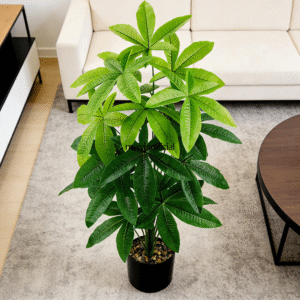
- Visual Fidelity: Our 1.2m Artificial Monstera Deliciosa utilizes high-quality PEVA leaves to mimic the vivid colors and clear textures of natural growth.
- Neurological Response: This visual realism is crucial; the brain perceives the “natural” patterns, triggering a relaxation response that purely synthetic, low-quality decor cannot achieve.
Beating Mental Fatigue with Attention Restoration
In a high-pressure corporate landscape, directed attention fatigue is a productivity killer. According to Attention Restoration Theory (ART), viewing nature allows the brain to recover from cognitive exhaustion.
- Restorative Breaks: Placing a Nordic style Monstera in a breakroom or near a desk provides a “soft fascination” stimulus.
- Sustained Focus: The realistic, intricate leaf structures offer a visual resting spot, helping employees reset their focus without leaving their desks.
- Mental Fatigue Recovery: This passive interaction with nature-inspired decor helps replenish cognitive resources required for complex problem-solving.
The Happiness Factor: Well-being Statistics
Employee retention and environment are inextricably linked. Statistics consistently show that workspaces incorporating biophilic elements see a significant uptake in self-reported happiness and creativity.
- Productivity Boost: Studies suggest productivity can increase by up to 15% in green environments.
- Stress Reduction: Stress reduction in the workplace is measurable when “green” visual cues are present.
By integrating durable, maintenance-free office plants, businesses invest in psychological comfort that pays dividends in staff satisfaction. We provide the aesthetic benefits of nature without the logistical burden, ensuring the workspace remains a source of inspiration rather than stress.
Biophilic Influence on Landscape Decoration
When we integrate biophilic design into a workspace, we move beyond simple decoration; we start shaping the environment to influence behavior and mood. Effective commercial interior landscaping transforms a sterile office into a dynamic ecosystem. It is not just about filling empty corners; it is about using nature-inspired elements to define how a space feels and functions.
Zoning and Flow: Beyond the Potted Plant
In modern open-plan offices, defining zones without building walls is crucial. We use artificial landscape decoration to create natural barriers that guide foot traffic and provide privacy.
- Height Matters: Our 1.2m (3.94 ft) Artificial Monstera Deliciosa is the ideal height for this. It is tall enough to screen a seated employee, offering a sense of enclosure, but low enough to maintain sightlines across the room when standing.
- Space Optimization: With a compact pot diameter of 15cm, these plants fit easily between desks or along walkways without eating up valuable floor space.
- Stability: The weighted cement-filled pot ensures the plant acts as a sturdy anchor in high-traffic areas, preventing accidental tipping while directing the flow of movement.
Nordic Style Interior Design: Minimalism Meets Warmth
The global trend toward Nordic style interior design relies heavily on the balance between minimalism and organic warmth. A stark, white office can feel clinical, but adding a nature-inspired workspace element softens the edges.
The Monstera Deliciosa is a staple of this aesthetic. Its bold, architectural silhouette complements clean lines and neutral color palettes. By using high-quality materials like PEVA for the leaves, we ensure the plant looks hyper-realistic. This visual fidelity maintains the integrity of the design—you get the lush, green “pop” required for the Nordic look without the clutter or mess of soil and water maintenance.
Adding Texture and Depth with Leaf Shapes
A successful biophilic office design relies on visual complexity. Flat, uniform surfaces cause visual fatigue. We introduce texture through the intricate, split-leaf design of the Monstera. The vivid colors and clear textures of the PEVA leaves mimic natural growth patterns, giving the eye a place to rest and recover.
To create a truly immersive environment, we often recommend layering different types of foliage. While the broad leaves of the Monstera serve as a focal point, combining them with finer textures, such as UV resistant faux camellia and eucalyptus, adds depth to the landscape. This variety mimics a real forest floor, enhancing the psychological benefits of the greenery and making the artificial landscape feel more authentic and engaging.
Artificial vs. Live: The Smart Biophilic Choice
The “Biophobic” Risk of Dying Plants
Nothing kills workplace morale faster than a row of brown, wilting plants. In design psychology, a dying plant can trigger “biophobia”—a negative reaction that signals neglect and increases stress rather than reducing it. Live plants often struggle in office environments due to aggressive air conditioning and low light. Our artificial Monstera Deliciosa eliminates this risk entirely. It remains permanently lush and vibrant, ensuring the landscape decoration consistently signals vitality. This reliability prevents the subconscious anxiety caused by decaying organic matter.
Visual Fidelity: Why Realism Matters
To effectively reduce mental fatigue, the brain must perceive the greenery as authentic. Cheap, shiny plastic breaks the illusion and lowers the perceived value of the space. We prioritize visual fidelity by using high-quality PEVA (polyethylene vinyl acetate) for the leaves. This material captures the clear textures, natural droop, and vivid colors of a real Monstera. Standing at 1.2m (3.94 ft), the plant is scaled perfectly for human interaction, providing a convincing visual connection to nature that supports the “Nordic style” aesthetic without looking artificial.
Maintenance-Free Office Plants and Productivity
Real plants require a “maintenance tax” on your time—watering schedules, pest control, and pruning. Maintenance-free office plants remove these logistical burdens, allowing facility managers and employees to focus on productivity rather than horticulture.
- Zero Watering: No risk of water damage to carpets or electronics.
- No Sunlight Needed: Perfect for interior meeting rooms or corners away from windows.
- Stability: The 15cm pot is weighted with cement, preventing accidental tipping in busy areas.
You can create a comprehensive green ecosystem by pairing floor plants with artificial hanging vines for high shelves, ensuring a green view from every angle without the hassle of reaching high spots for watering.
Comparing Costs: ROI of Faux vs. Live
| Feature | Live Plants | Meiyi Artificial Monstera |
|---|---|---|
| Initial Cost | Variable | One-time Investment |
| Ongoing Care | High (Water, Fertilizer, Labor) | None (Occasional Dusting) |
| Lifespan | Unpredictable | Long-lasting (Fade Resistant) |
| Placement | Restricted by Light | Anywhere (Indoor/Outdoor) |
Investing in durable faux greenery benefits the bottom line by delivering the psychological perks of biophilic design without the recurring costs, making it the smarter choice for commercial interior landscaping.
Strategies for Biophilic Landscape Decoration
Understanding how does the biophilic design influence landscape decoration and employee productivity & happiness requires moving beyond random placement. We need to implement strategic zoning that maximizes visual impact while minimizing maintenance overhead. Here is how we apply commercial interior landscaping principles using high-quality artificial flora.
Creating Green Focal Points in Reception Areas
- Ideal Height: Our 1.2m (3.94 ft) Artificial Monstera Deliciosa stands at the perfect height to anchor a space without overwhelming the front desk.
- Visual Impact: The vivid colors and realistic PEVA leaf textures create an immediate “nature connection,” signaling a calm, professional environment.
- First Impressions: A fade-resistant, evergreen plant ensures the company image is never tarnished by wilting leaves or brown spots.
Biophilic Dividers for Noise Reduction
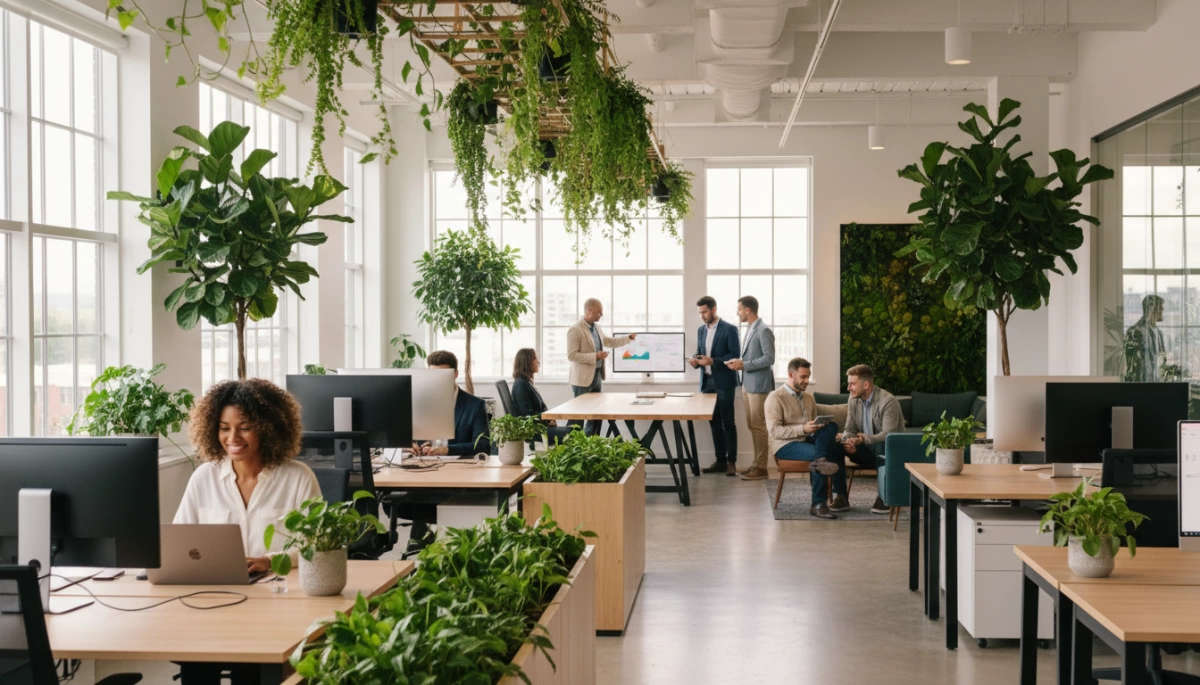
Open-plan offices often suffer from visual chaos and noise distractions. Using rows of planters as “green screens” is a core tenet of biophilic office design.
- Visual Privacy: The broad, split leaves of the Monstera provide excellent visual screening, creating semi-private zones that help employees focus.
- Psychological Barriers: While artificial plants don’t dampen sound exactly like acoustic foam, the perception of a barrier reduces anxiety and improves concentration.
- Stability: With a cement-filled plastic pot (15cm diameter), these plants are stable enough to be placed in high-traffic corridors to guide foot flow.
Ensuring Green Views from Every Desk
- Desktop Proximity: Because our Monstera requires zero watering and no sunlight, it can be placed safely near electronics and documents without the risk of water damage or mold.
- Compact Footprint: The 15cm pot diameter allows for placement on filing cabinets or in tight corners, ensuring every team member has a “green view” within their peripheral vision.
- Consistent Aesthetic: Unlike live plants that grow unpredictably, these maintain their Nordic minimalist shape, keeping the office looking tidy and uniform.
Mixing Materials for a Complete Ecosystem
A successful nature-inspired workspace relies on texture variety. Monotony can lead to visual fatigue, so we recommend layering different botanical styles.
- Texture Contrast: Pair the large, glossy leaves of the Monstera with finer textures. For example, placing small clusters of realistic Instagram-style artificial chamomile flowers on nearby tables adds a delicate, soft contrast to the bold tropical foliage.
- Material Harmony: The PE trunk and realistic growth patterns of our Monstera complement natural materials like wood desks, stone flooring, and glass partitions.
- Color Palette: Stick to the “Nordic Style” palette—deep greens, bright whites, and natural wood tones—to maintain a professional, uncluttered look.
Frequently Asked Questions
Can artificial plants really improve productivity?
Yes, they absolutely can. The core principle of biophilic office design is the visual connection to nature, which triggers a psychological response rather than a biological one. Seeing greenery, even if it is faux, lowers cortisol levels and reduces mental fatigue.
Our 1.2m Artificial Monstera Deliciosa uses high-quality PEVA material to replicate the vivid colors and texture of a live plant. This provides the necessary visual stimulus to restore attention spans without the distraction of maintenance. Unlike live plants that might droop or turn yellow, faux greenery benefits the workspace by maintaining a consistent, stress-free aesthetic that keeps the team focused on their tasks, not on plant care.
What is the best placement for office greenery?
- Corners and Dead Space: Use the compact 15cm pot diameter to fill empty corners, turning dead space into a calming visual anchor.
- Visual Dividers: Place plants between desks. The 120cm (approx. 47.2 inches) height of our Artificial Monstera Deliciosa Plant is perfect for creating privacy at eye level for seated employees while maintaining an open feel.
- Reception Areas: A bold Nordic style interior design piece in the lobby sets a professional, welcoming tone immediately.
How does landscape decoration affect employee retention?
Employee retention and environment are deeply linked. Workers are less likely to leave a company that invests in their physical comfort and mental health. A sterile, grey office can subconsciously signal a lack of care, whereas a thoughtful commercial interior landscaping plan signals that you value the daily experience of your staff.
By integrating durable, realistic decor, you create a “home away from home” atmosphere. This reduces burnout and increases overall job satisfaction. Using maintenance-free office plants ensures the environment remains pristine and inspiring year-round, reinforcing a positive corporate culture without adding to the facilities management workload.
How we support you:
🌿 Performance: 98% Highly realistic, low maintenance, no watering, no seasonal damage.
🛡️ Safety: Fire Retardant & UV Resistance options to meet strict commercial codes.
🏭 Capability: OEM/ODM custom designs with Flexible MOQ supporting projects of all scales.
Looking to elevate your next landscaping or interior project? Connect with us for a consultation. At Meiyi, we specialize in providing high-end, realistic greenery solutions tailored for both residential and commercial real estate.