
But have you ever stopped to ask: what is the fire retardant rating of artificial plants?
As an industry professional, We know that choosing the right decor goes way beyond aesthetics. Navigating strict building codes and ensuring absolute safety is crucial for any successful project, and the wrong choice can turn a beautiful installation into a serious hazard.
But what do classifications like Class B vs. Class C fire ratings actually mean? And are flame-resistant plants completely fireproof?
In this post, you’re going to learn exactly how to navigate artificial plant fire rating classifications and choose the safest options, step by step.
From breaking down the testing standards to understanding the critical difference between Inherently Flame Retardant (IFR) foliage and topical fire-retardant sprays, I’ve put together a complete list of everything you need to know.
So if you’re looking to guarantee compliance, protect your high-traffic environments, and get total peace of mind, this guide is for you.
Let’s dive right in.
Introduction to Fire Retardant Artificial Plants
Integrating greenery into commercial and residential spaces should never compromise safety. Understanding the flammability of faux foliage is critical for protecting your property, minimizing risk, and meeting strict building codes in the United States.
Can Fake Plants Catch on Fire?
Yes, absolutely. Traditional faux greenery is highly combustible. Standard artificial foliage is primarily constructed from petroleum-based materials that act as fuel during a fire hazard. The most common flammable materials include:
- Polyester and Fabric: Ignites rapidly and spreads flames quickly across the surface.
- PVC and Molded Plastics: Melts under high heat, drips, and releases toxic, hazardous black smoke.
Without specialized treatments, standard fake plants are a severe fire hazard in both homes and public environments.
What Are Fire-Rated Artificial Plants?
Fire-rated artificial plants are specialized decorative elements engineered to resist ignition and slow the spread of fire. When architects and property managers ask, what is the fire retardant rating of artificial plants?, they are referring to a certified, tested classification that dictates exactly how well the foliage withstands open flames.
These premium plants are either treated with specialized chemicals or manufactured with flame-retardant materials built directly into the plant’s structure. They are designed to meet rigorous safety standards required for commercial use.
Are Flame-Resistant Plants Completely Fireproof?
No, they are not completely fireproof. It is a vital distinction to make for safety planning:
- Fireproof: A material that will never burn under any circumstances, such as solid steel or concrete. Plastic and fabric cannot be fireproof.
- Flame-Resistant (or Fire-Retardant): A material that will burn when exposed to a direct, continuous flame, but will actively self-extinguish and stop the fire from spreading once the primary heat source is removed.
Flame-resistant plants do not act as an accelerant. Instead, they drastically slow down the burn rate, severely limit smoke production, and buy critical time during an evacuation emergency.
Understanding Artificial Plant Fire Rating Classifications
When managing commercial or high-end residential projects in the United States, navigating building codes is a top priority. Understanding fire classifications ensures your space looks incredible while staying fully compliant with local safety regulations.
What is the Fire Retardant Rating of Artificial Plants?
If you are wondering, what is the fire retardant rating of artificial plants?, it is a standardized safety metric that measures how well synthetic foliage resists ignition, limits the spread of flames, and controls smoke production. We use these ratings to guarantee that our faux greenery meets the strict safety standards required by fire marshals and building inspectors for public and commercial spaces.
Understanding Class B vs. Class C Fire Ratings
In the US market, you will often see materials graded by their flame spread index (FSI). Here is the straightforward difference:
- Class B: Offers high flame resistance. It significantly slows down the spread of a fire. This is our go-to recommendation for commercial interiors, restaurants, offices, and public assembly areas.
- Class C: Offers moderate flame resistance. It is standard for basic residential use or low-risk, lightly trafficked areas where strict commercial codes do not apply.
Fire Classification Breakdown Explained (e.g., B – S2, D0)
You might also come across the international European standard (EN 13501-1), which provides a more detailed breakdown of a plant’s fire performance. Here is what those letters and numbers actually mean:
- Combustibility (B, C, etc.): The main letter indicates fire resistance. Class B means very limited contribution to a fire.
- Smoke Production (S): Rated from s1 (little to no smoke) to s3 (heavy smoke). Excessive smoke is a major hazard, so lower numbers are always better.
- Flaming Droplets (D): Rated from d0 (no dripping molten plastic) to d2 (heavy flaming droplets). A d0 rating is crucial to prevent fires from spreading to the floor.
How Are Artificial Plants Tested for Fire Safety?
To earn these ratings, artificial plants go through brutal, independent laboratory testing. Technicians place the foliage in a controlled test chamber and expose it directly to an open flame. They measure three main things:
- How fast the foliage ignites.
- How quickly the flames spread across the leaves and stems.
- How much smoke and toxic gas is released.
Whether we are outfitting a massive corporate lobby or simply evaluating smaller accent pieces like artificial rose bud miniature roses for everyday decor, understanding these testing protocols ensures we only put the safest products on the market. Plants that pass these tests do not just burn away; they self-extinguish once the heat source is removed, giving occupants vital time to evacuate.
How Artificial Plants Are Made Fire Retardant
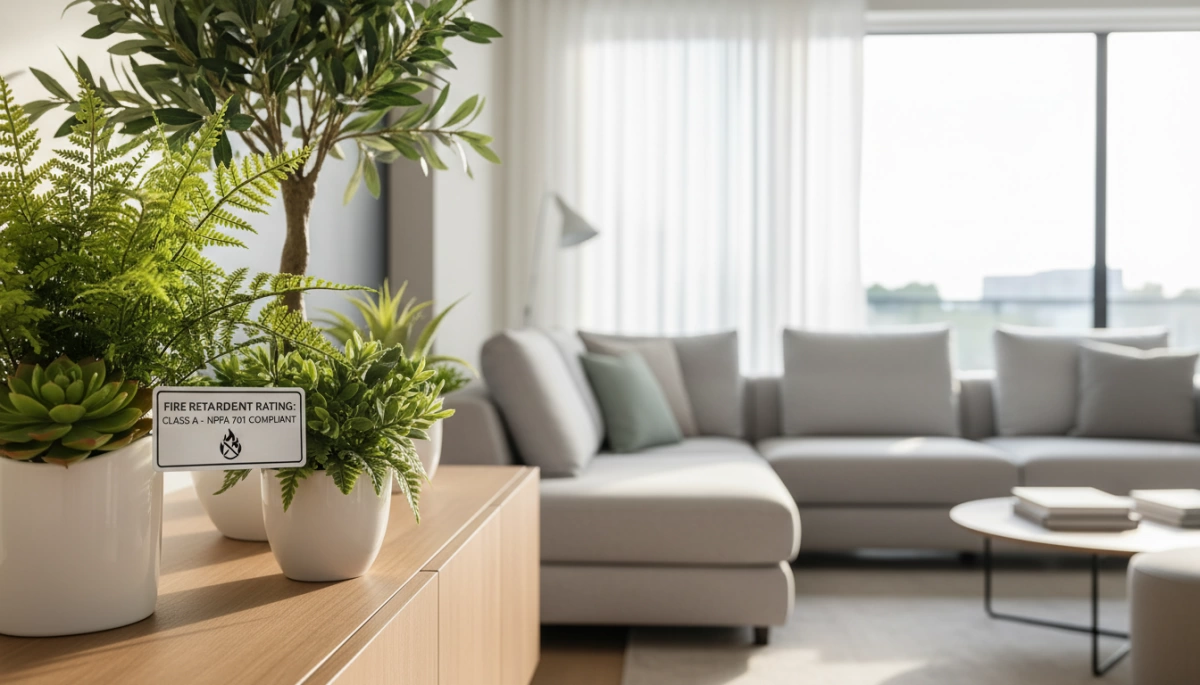
When clients ask me, “What is the fire retardant rating of artificial plants?“, my first response is always that the rating completely depends on the manufacturing process. There are two primary ways we make faux greenery safe and compliant with strict US fire codes.
Inherently Flame Retardant (IFR) Artificial Plants
With Inherently Flame Retardant (IFR) plants, we mix the fire-resistant chemicals directly into the raw resin and fabric before the leaves and stems are even molded.
- Permanent Protection: The fire resistance is baked into the material’s DNA. It won’t wash off, wipe away, or degrade.
- Zero Maintenance: You never have to re-treat the plant.
- Commercial Grade: This is the standard you need for permanent, high-traffic installations like overhead hanging bushes in hospitality venues or office buildings.
Fire-Retardant Sprays and Topical Coatings (FR)
The alternative is using a topical Fire Retardant (FR) spray. In this method, a chemical coating is applied to the outside of the foliage after the plant is already manufactured.
- Surface Level Only: The protection only sits on the outside of the leaves.
- Wears Off Over Time: Dusting, cleaning, or handling the plant will eventually remove the coating.
- Needs Reapplication: You must re-spray the plants regularly to keep them legally compliant.
- Residue: Topical sprays can sometimes leave a sticky or white, dusty film on the greenery.
IFR vs. FR Coatings: Which is the Safer Choice?
For long-term safety and peace of mind, IFR is the absolute safest choice. Topical sprays work in a pinch for temporary weekend events or trade shows. However, for permanent decor—whether you are outfitting a hotel lobby or placing a high-end artificial fiddle leaf fig tree in a luxury living room—you need the guaranteed reliability of IFR.
| Feature | IFR (Inherently Flame Retardant) | FR (Topical Spray) |
|---|---|---|
| Application Method | Infused into raw materials | Sprayed onto the surface |
| Lifespan | Permanent for the life of the plant | Temporary; wears off quickly |
| Maintenance | Low required | Needs regular re-spraying |
| Ideal Application | Long-term commercial & residential | Temporary events & displays |
Benefits of Choosing Fire-Resistant Fake Plants
Understanding the fire retardant rating of artificial plants is essential before bringing large-scale greenery into any project. Investing in properly rated faux foliage isn’t just an aesthetic upgrade—it is a critical safety measure.
Safety and Strict Compliance with Building Codes
- Guaranteed Compliance: Pass safety inspections seamlessly and avoid costly fines or mandatory removal of uncertified decor.
- Active Fire Prevention: Certified flame-rated materials are engineered to self-extinguish, actively slowing down the spread of a fire rather than fueling it.
- Reduced Liability: Shield your business and property owners from negligence claims by utilizing proven, commercial-grade safety materials.
Durability and Long-Lasting Protection
Whether you are anchoring a modern office corner with an artificial Monstera deliciosa plant or styling a sophisticated wedding venue with artificial simulated eucalyptus, the safety protection of IFR foliage is permanent.
Commercial and Residential Application Scenarios
Understanding what the fire retardant rating of artificial plants is helps you make the right choice for your specific environment.
| Application Area | Key Benefit of Fire-Resistant Faux Plants |
|---|---|
| Hotels & Hospitality | Ensures continuous, 24/7 safety for large volumes of guests. |
| Restaurants & Bars | Fully complies with strict local fire codes near dining areas. |
| Hospitals & Clinics | Delivers zero-maintenance, sterile decor that aligns with life-safety rules. |
| Retail & Shopping Malls | Protects high-value inventory by actively minimizing fire spread risks. |
Buying Guide: Selecting and Maintaining Safe Faux Plants
How to Check for Valid Fire Safety Certifications
Don’t just take a supplier’s word for it; ask for the official paperwork. When evaluating the fire retardant rating of artificial plants, look for:
- Official Test Reports: Compliance with standards like NFPA 701 or ASTM E84.
- Spec Sheets: Check manufacturer’s tags for explicit fire-safe labeling.
See Our Fire Retardant Performance in Action
Video 1: IFR Foliage Burn Test
Video 2: Flame Retardancy Test Of Areca Palm leaves
How we support you:
🌿 Performance: Low maintenance, no watering, no seasonal damage.
🛡️ Safety: Fire Retardant & UV Resistance options to meet strict commercial codes.
🏭 Capability: OEM/ODM custom designs with Flexible MOQ supporting projects of all scales.
Looking to elevate your next landscaping or interior project? Connect with us for a consultation. At Meiyi, we specialize in providing high-end, realistic greenery solutions tailored for both residential and commercial real estate.