

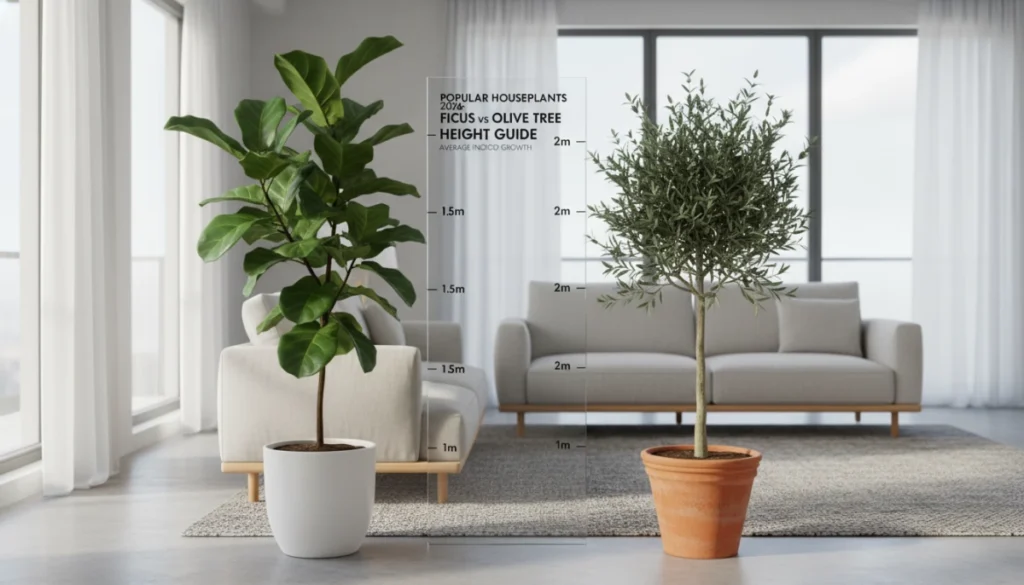
You might already know that adding a statement tree can completely transform the character of a room…
But as we look toward 2026, are you struggling to identify exactly which houseplants will dominate the market this year?
To assist you in making forward-thinking design and procurement decisions, our team has compiled the ultimate indoor botanical guide for 2026.
As leading experts in artificial vegetation, we understand that selecting the right statement foliage goes far beyond just picking something green. It is a strategic investment in achieving a flawless, modern aesthetic for any commercial or residential project.
In this analysis, you will learn which botanical trends are currently leading the industry, including a professional design showdown: Ficus fragrans vs. Olive tree.
Plus, we will share our proven methodology on how to choose plant height for large spaces, ensuring your room proportions are balanced with professional-grade precision.
If you are looking to elevate a space with premium indoor greenery, we believe this guide is an essential resource for you.
Let’s dive into the details.
Ficus Family: The Undisputed Houseplants of 2026
When developers and interior designers consult our team regarding the most popular houseplants in 2026, market data and demand trends point directly to one dominant group: the Ficus family. We have observed a definitive shift in indoor landscaping—moving away from high-maintenance tabletop plants toward resilient, architectural indoor trees that function as “living furniture.”
Why the Ficus Genus is Leading 2026 Trends
The Ficus genus has reclaimed its position at the top of the global decor market. In our professional experience, modern interiors now demand greenery that offers maximum visual impact alongside realistic maintenance expectations.
- Architectural Scale: Their sturdy trunks and distinct canopy structures create instant vertical interest, anchoring large rooms and open-concept floor plans with ease.
- Consistent Aesthetics: As evergreen representatives, our artificial Ficus trees maintain lush, vibrant foliage through every season, providing reliable color for commercial spaces.
Spotlight on Top Varieties: Ficus Fragrans and Ficus Audrey
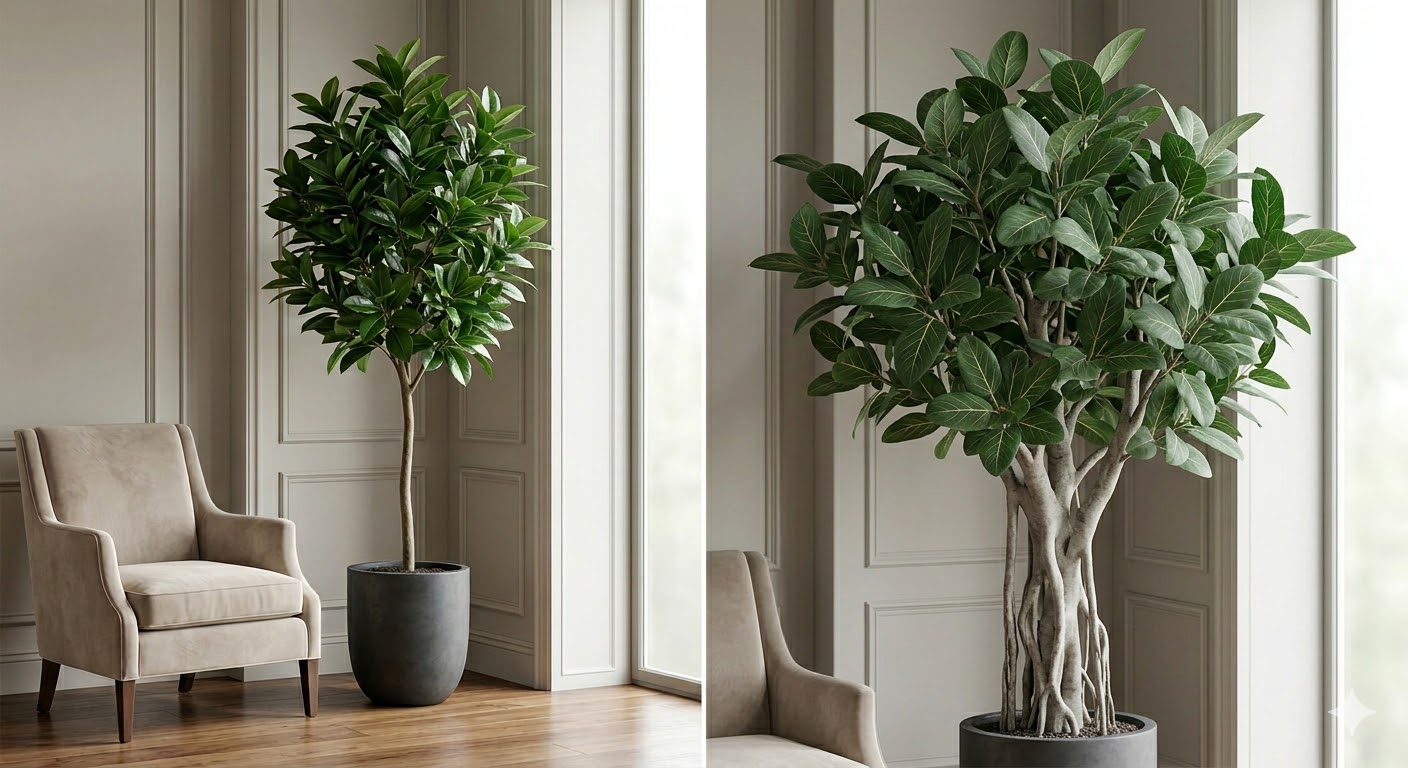
Visual Comparison: Our Ficus Fragrans (Left) features a sleek trunk and dense, glossy canopy, while our Ficus Audrey (Right) showcases a robust, banyan-style trunk with matte emerald foliage.
Within our best-selling indoor tree collections, two specific varieties are dominating the landscape: the elegant Ficus fragrans and the deeply structural Ficus Audrey.
| Feature | Ficus Fragrans | Ficus Audrey |
|---|---|---|
| Foliage Profile | Glossy, deep green leaves with a natural, high-fidelity texture. | Matte, emerald leaves with striking, light-colored velvety veins. |
| Trunk Style | Smooth, slender, and sophisticated. | Thick, robust, and pale, resembling a miniature banyan tree. |
| Growth Habit | Upright and dense; perfect for optimizing corner spaces. | Wide, spreading canopy that fills open floor plans beautifully. |
| Our Recommendation | We recommend this for transitional or traditional settings. | We suggest this as a focal point for modern minimalist designs. |
The Mediterranean Modernism Trend: Olive Trees
Currently, Mediterranean Modernism is a dominant force in global interior design. At the center of this trend is the Olive tree. In our view, it brings a relaxed, sun-drenched coastal vibe to indoor spaces without creating visual clutter.
Why Olive Trees Fit Minimalist Decor
Minimalist home decor demands clean lines and intentional pieces. The olive tree checks every box for large spaces: its slender trunk and muted leaves add a soft, organic texture that balances harsh architectural lines.
- Subtle Color Palette: The sage green leaves with silver undersides blend perfectly with neutral palettes and modern furniture.
- Airy Structure: When we design our trees, we emphasize sparse branching to allow light to pass through, keeping the room feeling open and bright.
- Sculptural Appeal: It acts as a standalone piece of natural art, filling empty voids without adding unnecessary visual weight.
Real vs. Artificial Olive Trees Indoors: The Reality Check
This is the industry reality we always share with our clients: Real olive trees are notoriously difficult to maintain indoors, requiring at least 6 hours of direct sunlight. For most commercial and residential environments, artificial olive trees are simply the superior choice. Our premium trees provide the exact Mediterranean look without the risk of leaf drop or watering failures. To understand how we achieve this level of realism, explore our insights on materials and manufacturing.
| Feature | Real Olive Tree | Our Premium Artificial Olive Tree |
|---|---|---|
| Light Needs | Full, direct sun (6+ hours daily) | None (Suitable for any indoor space) |
| Maintenance | High (Strict pruning and drainage) | Zero (Occasional dusting only) |
| Indoor Lifespan | Often short-lived and prone to mess | We guarantee years of flawless aesthetics |
How to Choose Plant Height for Large Spaces
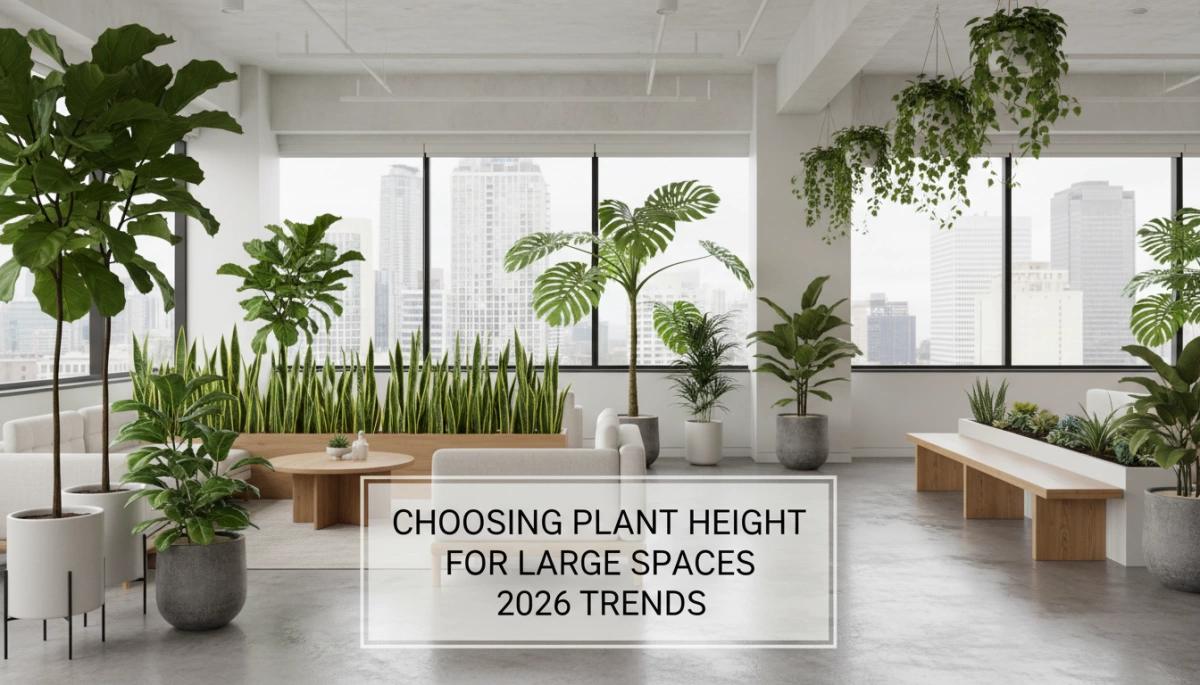
When styling expansive commercial projects or luxury residential homes, scale is everything. We always emphasize that a small plant in a massive room simply disappears. Mastering height is about balancing volume and vertical lines.
Understanding Scale and Room Proportion
Proportion dictates the mood of your space. Our advice is that greenery should command the room without overwhelming it.
- Standard Ceilings (8-9 ft): Aim for floor plants in the 5 to 6-foot range.
- Vaulted Ceilings (10+ ft): Invest in 7 to 9-foot trees to effectively draw the eye upward.
- The “Breathing Room” Rule: Our design team suggests leaving at least 1 to 2 feet of clearance between the top leaves and the ceiling to maintain an airy feel.
| Room Feature | Ideal Plant Height | Our Recommended Strategy |
|---|---|---|
| Standard 8ft Ceiling | 5 – 6 Feet | Pair with a low-profile ceramic or concrete planter |
| 10ft+ High Ceilings | 7 – 9 Feet | Use a deep, heavyweight planter for stability |
| Empty Living Room Corners | 4 – 5 Feet | Elevate with a modern plant stand for added impact |
Professional Styling Tips for Large Indoor Trees
An oversized indoor tree acts as “living architecture.” Based on our project experience, here is how we ensure a successful installation:
- Anchor Bare Corners: Push sweeping canopies into empty corners to soften architectural lines and make the room appear taller.
- Utilize Uplighting: We often recommend placing a small LED spotlight behind the planter. The shadows cast on the walls at night create a high-end, dramatic atmosphere.
- Refined Finishing: For a professional-grade look, we suggest dressing the top of the planter with moss or river rocks to hide the base and ensure a clean finish.
How we support you:
🌿 Performance: 98% Highly realistic, low maintenance, no watering, no seasonal damage.
🛡️ Safety: Fire Retardant & UV Resistance options to meet strict commercial codes.
🏭 Capability: OEM/ODM custom designs with Flexible MOQ supporting projects of all scales.
Looking to elevate your next landscaping or interior project? Connect with us for a consultation. At Meiyi, we specialize in providing high-end, realistic greenery solutions tailored for both residential and commercial real estate.