

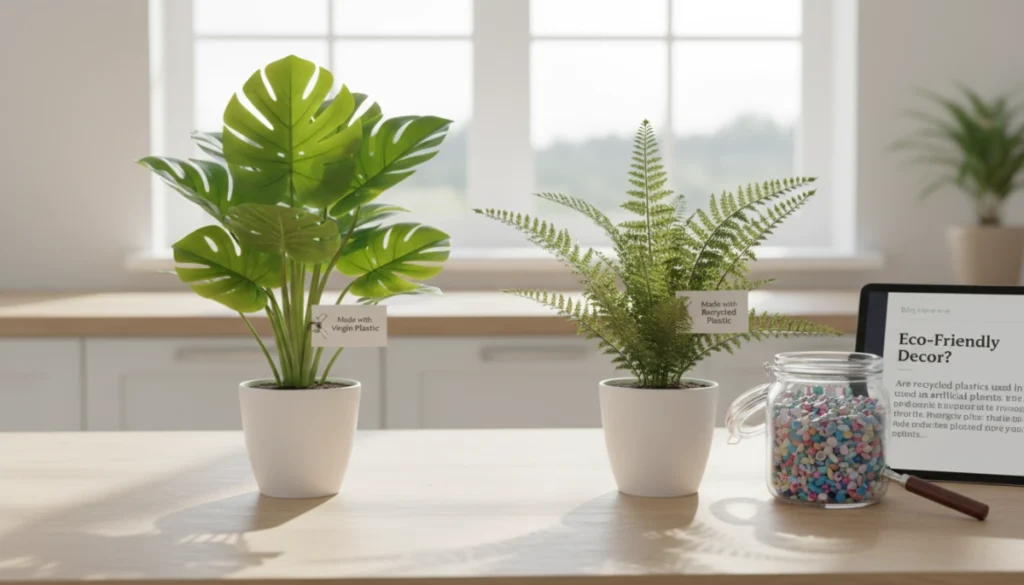
You might already be wondering: are recycled plastics used in artificial plants actually environmentally friendly?
And exactly what impact do they have on artificial plants when it comes to durability, safety, and visual realism?
Well, you’re in for a treat because I’ve put together a complete breakdown of how these sustainable materials affect the planet—and your home decor.
As someone passionate about sustainable design, I know that navigating the world of faux greenery can be frustrating. I’m going to share insights that cut straight through the greenwashing.
In this guide, you’re going to learn the truth about their environmental footprint, the hidden risks of microplastics, and exactly when recycled artificial plants beat out real plants.
So if you want to make smart, eco-conscious decor choices that last a lifetime, this guide is for you.
Let’s dive right in!
Understanding Plastics in Artificial Plants
For decades, the faux botanical industry relied heavily on virgin, single-use plastics to achieve lifelike durability. Today, consumer demand for eco-conscious home and commercial decor has revolutionized our manufacturing processes. Understanding exactly how these materials are sourced and processed is the first step in determining if the recycled plastics used in artificial plants are genuinely environmentally friendly and what tangible impact they have on the final product.
The Shift from Traditional to Recycled Materials
The industry is actively migrating away from raw, petroleum-based plastics. We are aggressively replacing virgin PVC (polyvinyl chloride) and standard PE (polyethylene) with high-quality, repurposed alternatives. This structural transition is vital for the future of modern decor.
- Traditional Manufacturing: Relies on raw petrochemical extraction, carries a massive carbon footprint, and introduces net-new plastics into the global ecosystem.
- Recycled Manufacturing: Utilizes post-consumer and post-industrial waste, drastically lowers greenhouse gas emissions during production, and actively diverts existing plastic waste from landfills and oceans.
By adopting a circular manufacturing approach, our reliance on raw, virgin materials plummets. This shift fundamentally alters the environmental footprint of the product, proving that artificial greenery can seamlessly align with modern sustainability goals without sacrificing structural integrity.
What Makes an Artificial Plant Sustainable?
Simply utilizing a fraction of recycled material is not enough to claim eco-friendliness. An artificial plant is only as sustainable as its comprehensive lifecycle. To determine if a faux botanical is truly a green choice, it must be evaluated across several strict pillars:
- Verified Material Sourcing: The product must contain a dominant percentage of certified, high-grade recycled plastics rather than a token amount mixed with virgin materials.
- Non-Toxic Composition: The manufacturing process must be free from toxic dyes, heavy metals, and harmful chemical flame retardants that can off-gas into indoor environments.
- Extreme Durability: True sustainability requires longevity. The product must feature UV-resistant and structurally robust designs that prevent fading, snapping, and degradation, ensuring the plant lasts for decades rather than seasons.
- End-of-Life Viability: The most responsible products are designed for the circular economy—meaning they can be easily disassembled and recycled again once their useful lifespan concludes.
When artificial greenery is engineered to hit these exact benchmarks, the positive impact of recycled plastics on artificial plants becomes undeniable, delivering unmatched aesthetic realism alongside strict ecological responsibility.
The Environmental Impact of Recycled Plastics
People often ask us: Are recycled plastics used in artificial plants environmentally friendly? The short answer is that they are a massive step in the right direction compared to virgin materials. However, to fully understand the impact they have on artificial plants and the planet, we have to look at the entire lifecycle.
Reducing Greenhouse Gas Emissions and Toxins
Manufacturing standard plastic relies heavily on crude oil extraction and refining. By shifting to recycled plastics, we bypass a huge chunk of that polluting process.
- Lower Carbon Footprint: Processing recycled plastic waste takes a fraction of the energy compared to making new plastic from scratch, significantly cutting greenhouse gas emissions.
- Cleaner Air in Your Home: High-quality recycled materials often require fewer harsh chemical treatments. When we look at the art and science of manufacturing hyperrealistic artificial tree trunks and branches, using purified recycled plastics helps drastically reduce toxic off-gassing (VOCs) in your living room or office.
- Waste Diversion: Every recycled faux plant represents plastic that was intercepted before it could hit a US landfill or ocean.
Resource Conservation: Water and Energy Savings
Creating anything from scratch drains natural resources. Using recycled plastics for artificial plants is a major win for resource conservation across the board.
| Resource | Virgin Plastic Production | Recycled Plastic Production |
|---|---|---|
| Energy Use | Extremely High | Up to 80% Less Energy Required |
| Water Consumption | Heavy (used for cooling and processing) | Significantly Reduced |
| Raw Materials | Requires new fossil fuel extraction | Utilizes existing consumer waste |
By keeping our production energy and water usage low, we help preserve vital natural resources while delivering a sustainable product.
Potential Risks: Microplastics and Ecosystem Health
I want to be completely transparent here: recycled plastic is still plastic. While the manufacturing side is greener, there are still environmental factors to consider during the product’s lifespan.
- The Microplastic Threat: If artificial plants are left outside to bake in harsh sunlight and rough weather, the plastic can become brittle. As it breaks down, it sheds tiny microplastics into the soil and local water systems.
- Wildlife Impact: These microplastics can disrupt local ecosystems if they wash into natural waterways.
- How We Mitigate This: We combat this by treating our recycled plastics with heavy-duty UV protectants, ensuring the material stays flexible and durable for years without degrading. Keeping your faux plants indoors or in shaded patios also practically eliminates this risk.
How Recycled Materials Affect Artificial Plants
When customers ask, “Are recycled plastics used in artificial plants environmentally friendly? What impact do they have on artificial plants?” my answer is a resounding yes—they actually elevate the final product. Using recycled materials doesn’t mean compromising on quality; it pushes our industry to innovate and build better greenery.While recycled material reduces waste, virgin plastic is the gold standard for Botanical Copy quality. For high-end commercial projects, virgin material ensures essential UV resistance and B1 fire retardancy.
Quality is the Ultimate Sustainability.
Sustainability thrives on longevity. Choosing commercial-grade, low-maintenance greenery ensures your space stays vibrant for a decade. By prioritizing high-performance materials with UV resistance and B1 fire retardancy, we offer a durable solution that minimizes the need for replacements.
For designers, it’s not just about decor—it’s about choosing a high-quality “botanical copy” that stands the test of time.
Improvements in Design and Visual Realism
Old plastic molding used to look cheap and obviously fake. Today, advanced processing of recycled polymers allows for incredible botanical detail. We can mimic the exact grain of a leaf, the subtle color shifts in a stem, and the delicate matte finish of natural flora.
- Lifelike Textures: High-grade recycled composites hold micro-molded textures perfectly.
- Vibrant, True-to-Life Colors: Modern eco-friendly dyes bond flawlessly with recycled bases.
- Realistic Details: When we design an artificial fruit bouquet of lemons, using these advanced recycled plastics helps us capture the realistic, dimpled skin of the citrus without relying on virgin plastic.
Impact on Product Durability and Lifespan
You might worry that “recycled” means fragile, but repurposed plastics are engineered for hardcore longevity. They are designed to hold up to the diverse and extreme climates across the United States.
- Maximum UV Resistance: Premium recycled blends are treated to resist fading, keeping their color even under the harsh sun in states like Florida or Arizona.
- Weather Tolerance: They stay flexible and withstand freezing Northeast winters without cracking or snapping.
- Structural Integrity: The enhanced tensile strength ensures branches and leaves hold their shape and won’t droop over time.
Material Safety and Quality Standards
Safety is non-negotiable in the US market. Recycled plastics go through rigorous purification processes to strip out impurities before they ever reach the production floor. We ensure everything we make meets strict safety and quality benchmarks.
- 100% Non-Toxic: Rigorously tested to be free from harmful heavy metals like lead and harmful phthalates.
- Zero Chemical Odors: Advanced recycling removes the harsh chemical smells commonly associated with cheap, low-grade plastics.
- Commercial-Grade Compliance: Items like our artificial eucalyptus and lavender bunches are crafted from these purified, safe materials, making them perfect for high-traffic hotel soft furnishings and residential living spaces alike.
Recycled Artificial Plants vs. Real Plants
When we look at whether recycled plastics used in artificial plants are environmentally friendly, the conversation inevitably turns into a debate between faux greenery and living plants. While real plants naturally absorb carbon dioxide, keeping them alive isn’t always a green process. By analyzing the long-term impact, we can see exactly how recycled faux greenery stacks up against the real deal.
Comparing the Total Environmental Footprint
To understand the true impact they have on artificial plants and the environment, we have to look at the entire lifecycle. Real plants require continuous resources, whereas faux plants made from recycled materials have a fixed, upfront footprint.
Here is a quick breakdown of the ongoing environmental costs:
| Resource Factor | Real Indoor/Outdoor Plants | Recycled Artificial Plants |
|---|---|---|
| Water Usage | High (Requires consistent watering) | Zero |
| Chemical Use | Moderate to High (Fertilizers, pesticides) | Zero |
| Carbon Footprint | Low (But increased by transport and soil prep) | Moderate (Manufacturing, offset by recycled materials) |
| Longevity | Variable (Prone to dying from neglect or disease) | Extremely High (Decades of use) |
Using recycled plastics significantly lowers the initial manufacturing emissions of faux greenery. Once installed, these plants demand no extra resources, making their long-term footprint surprisingly competitive.
When Artificial Plants Are the Eco-Friendly Choice
There are specific situations in the United States where going faux is actually the greener option. Depending on your climate and location, forcing real plants to survive can drain local resources.
Here is when choosing recycled artificial plants makes the most environmental sense:
- Drought-Prone Regions: In areas facing strict water conservation laws, like California or Nevada, watering ornamental landscaping is tough to justify. Swapping out thirsty bushes for a realistic, UV-resistant artificial cypress topiary saves hundreds of gallons of water every year.
- Low-Light Environments: Real plants placed in dark offices or basements often die quickly and need constant replacing. This cycle of buying, shipping, and throwing away dead plants creates unnecessary waste.
- High-Traffic Commercial Spaces: Hotels, restaurants, and retail stores often rely on harsh chemicals and frequent replacements to keep live plants looking perfect. Recycled faux plants offer lasting durability without the toxic runoff from pesticides or synthetic fertilizers.
Ultimately, utilizing recycled plastics gives artificial plants a distinct advantage in environments where real plants struggle, offering a sustainable way to enjoy greenery without straining local resources.
End-of-Life: Disposal and Recycling Issues
Are Recycled Artificial Plants Fully Recyclable?
So, are recycled plastics used in artificial plants environmentally friendly at the end of their lifespan? The reality is complicated. While utilizing recycled materials for the initial production is a massive win for the environment, tossing an old faux plant into your curbside recycling bin here in the US usually doesn’t work.
The primary hurdle is how these products are built:
- Mixed Materials: Most high-quality faux plants permanently bond plastics, fabric leaves, glues, and internal metal wires together.
- Facility Limitations: Standard municipal recycling centers simply do not have the technology to separate these fused materials efficiently.
Because they are difficult to process, most end up in landfills once discarded. To extend their lifecycle, we always recommend repurposing or donating your faux greenery before considering the trash bin.
The Role of Biodegradable Plastic Alternatives
To combat end-of-life disposal issues, the industry is increasingly looking toward biodegradable plastics. Unlike standard synthetic polymers that sit in landfills for centuries, bioplastics are designed to break down.
What impact do they have on artificial plants? * Eco-Friendly Origins: These are often derived from renewable resources like corn starch or sugarcane.
- Easier Breakdown: Under the right conditions (usually in commercial composting facilities), they decompose much faster than traditional plastics.
- Current Limitations: While they offer a massive leap forward in sustainability, bioplastics currently cost more to produce and often face durability challenges compared to high-grade recycled plastics.
Transport, Packaging, and Carbon Footprint
A product’s sustainability is not just about the materials; it is also about how it reaches your front door. Transport and packaging heavily influence the total carbon footprint of any home decor item. For example, when we ship items like our artificial white variegated pothos decorative potted plants to customers across the country, we have to account for the environmental cost of that transit.
To genuinely minimize our footprint, we focus on a few core logistics strategies:
- Eco-Conscious Packaging: We are actively swapping out single-use plastic wraps for recycled, unbleached cardboard.
- Space Optimization: Packing products tighter and designing collapsible stems reduces the volume of each box, meaning fewer trucks on the road and less fuel consumed.
- Strategic US Warehousing: Keeping our inventory closer to major US hubs drastically cuts down the delivery miles required to reach your home.
Tips for Making Eco-Friendly Artificial Plant Choices
When deciding if the recycled plastics used in artificial plants are environmentally friendly for your space, the choices you make at the checkout line matter. Here is how we navigate the market to find high-quality, sustainable options for US consumers.
What to Look for as a Smart Consumer
Finding true eco-friendly artificial plants comes down to reading the fine print. You want materials that reduce waste without sacrificing durability.
- Check the percentages: Look for products that clearly state the exact percentage of post-consumer recycled plastics used in their manufacturing.
- Safer material types: Favor PE (polyethylene) or EVA over traditional PVC. These alternatives are generally safer for your indoor air quality and have a better end-of-life recycling profile.
- Built-in durability: Always check for UV resistance if the plants will be exposed to sunlight. This prevents the plastic from getting brittle and extends the life of the product.
Common Greenwashing Pitfalls to Avoid
We see a lot of greenwashing in the home and event decor industry. Just because a label says “green” does not automatically mean the recycled plastics used in artificial plants are environmentally friendly.
- Vague buzzwords: Ignore marketing fluff like “earth-inspired” or “eco-feel” if the packaging lacks factual details about the actual materials used.
- Zero transparency: If a manufacturer cannot explain what impact their recycled materials have on their artificial plants regarding lifespan or carbon footprint, that is a major red flag.
- Excessive packaging: A sustainably made faux plant wrapped in layers of single-use, non-recyclable styrofoam and plastic film entirely defeats the purpose of buying green.
Best Practices for Responsible Use and Longevity
The absolute best way to lower our environmental footprint is to keep our faux greenery out of the landfill for as long as possible. Making them last is the key to true sustainability.
- Routine maintenance: Wipe down the leaves regularly with a damp microfiber cloth. Heavy dust buildup can permanently stain and degrade the materials over time.
- Smart placement: Keep indoor-rated greenery away from direct, harsh sunlight near windows or heating vents to prevent warping and color fading.
- Buy for the long haul: Invest in high-quality pieces rather than cheap, seasonal throwaways. If you are planning a large setup or need reliable decor that will last through years of use, feel free to contact us to discuss our durable material standards and bulk options. When we finally decide to redecorate, always donate or repurpose our artificial plants instead of throwing them in the trash.
How we support you:
🌿 Performance: 98% Highly realistic, low maintenance, no watering, no seasonal damage.
🛡️ Safety: Fire Retardant & UV Resistance options to meet strict commercial codes.
🏭 Capability: OEM/ODM custom designs with Flexible MOQ supporting projects of all scales.
Looking to elevate your next landscaping or interior project? Connect with us for a consultation. At Meiyi, we specialize in providing high-end, realistic greenery solutions tailored for both residential and commercial real estate.