Stage 1: The Blueprint of Nature – Mold Molding and Structural Coring
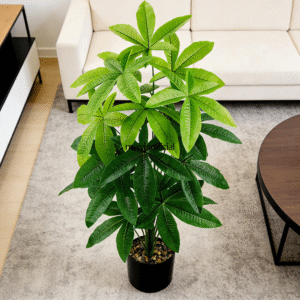
The foundation of The Art and Science of Manufacturing Hyper-Realistic Artificial Tree Trunks and Branches begins long before a single leaf is attached. At Meiyi, we understand that achieving the lifelike realism seen in our 1.2m Artificial Monstera Deliciosa requires a rigorous commitment to replicating the underlying structures of nature. This process is not merely about imitation; it is a blend of botanical study and industrial precision.
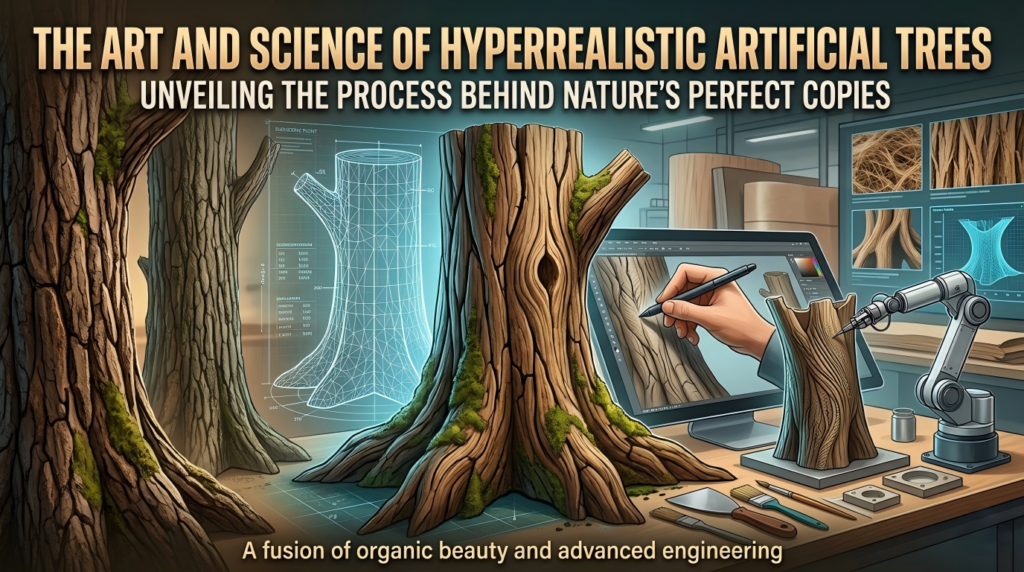
Capturing Organic Textures from Real Tree Bark Samples
To create a product that withstands close scrutiny, we start with the source itself. Our manufacturing process involves studying real plant specimens to capture the intricate details of natural growth. For our Monstera and other large foliage plants, we utilize advanced molding techniques derived from actual organic textures.
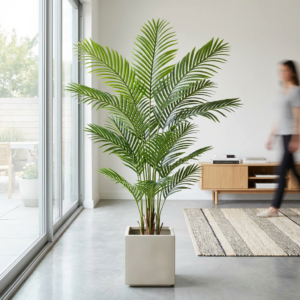
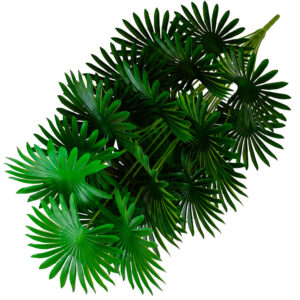
Process of Manufacturing Palm Leaves with Artificial Plant Molds
- Detailed Veining: We replicate the subtle ridges and imperfections found on natural stems.
- Material Selection: Using premium PE (polyethylene) materials, we ensure the surface texture feels as authentic as it looks, moving beyond the smooth, plastic feel of inferior faux plants.
- Visual Fidelity: The molds capture the specific growth patterns of the species, ensuring that the transition from soil to stem mimics the “Swiss Cheese Plant” in its natural habitat.
Engineering Stability: The Internal Steel Framework for Large-Scale Trees
While the exterior provides the aesthetic, the interior ensures longevity and function. A critical component of our manufacturing science is the integration of a robust internal skeleton. Even for a 3.94 ft (1.2m) specimen, structural integrity is paramount.
- Internal Wiring: We embed durable steel wires within the PE fabric and silk stems. This allows for the “adjustable stems” feature, giving users the freedom to bend and fluff the foliage without risking breakage.
- Core Strength: This internal framework supports the weight of the large, split-leaf foliage, preventing the drooping common in lower-quality alternatives.
- Shape Retention: The steel core ensures that once the plant is styled—whether for a minimalist office or a cozy living room corner—it maintains its posture indefinitely.
Stage 2: Precision Branch Assembly – Solving the “Attachment” Challenge
Getting branches to attach to a trunk is simple. Making them look like they naturally grew there is the real challenge in manufacturing hyper-realistic artificial tree trunks and branches. If the joints look manufactured, the entire illusion falls apart instantly. We solve this “attachment” challenge with precise engineering tailored to the size and weight of the plant.
Branch Fixing for Small Plants: Eco-Friendly Adhesives
For smaller indoor plants and desktop arrangements, visible hardware is a complete dealbreaker. The transition from the trunk to the branch must look flawless, even under close inspection.
Trunk and Branch Connection & Fixing Process
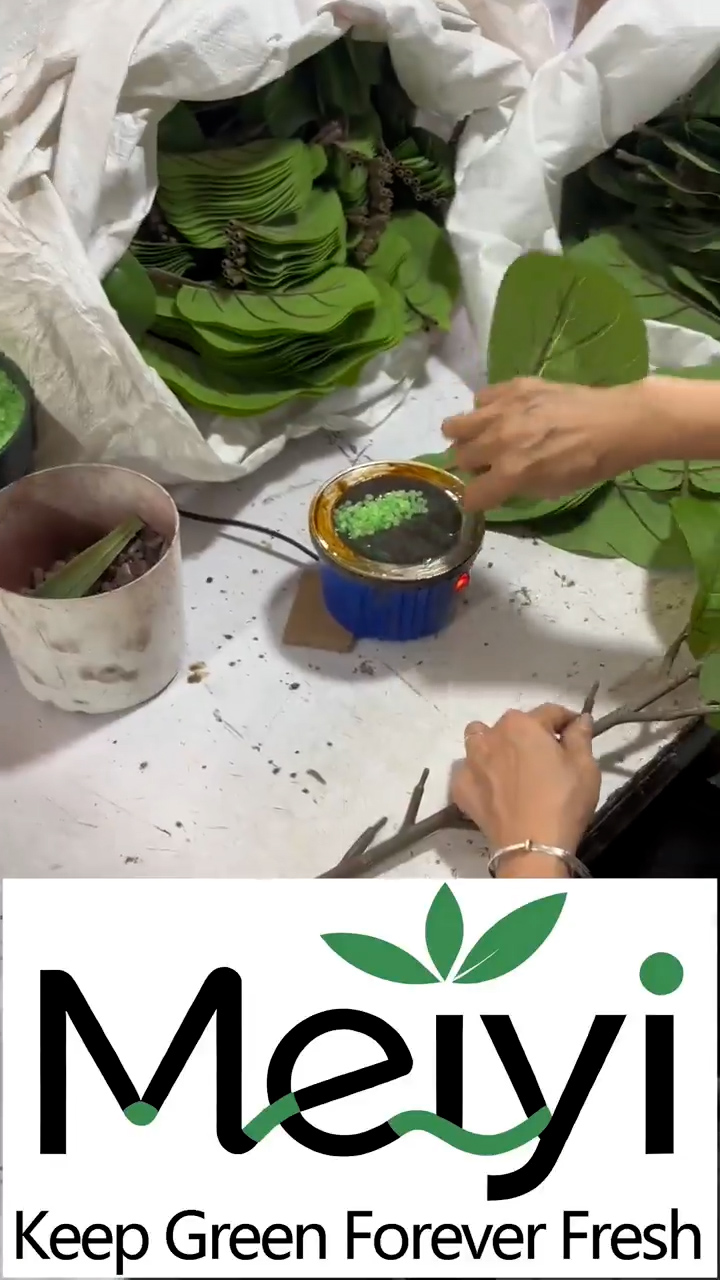
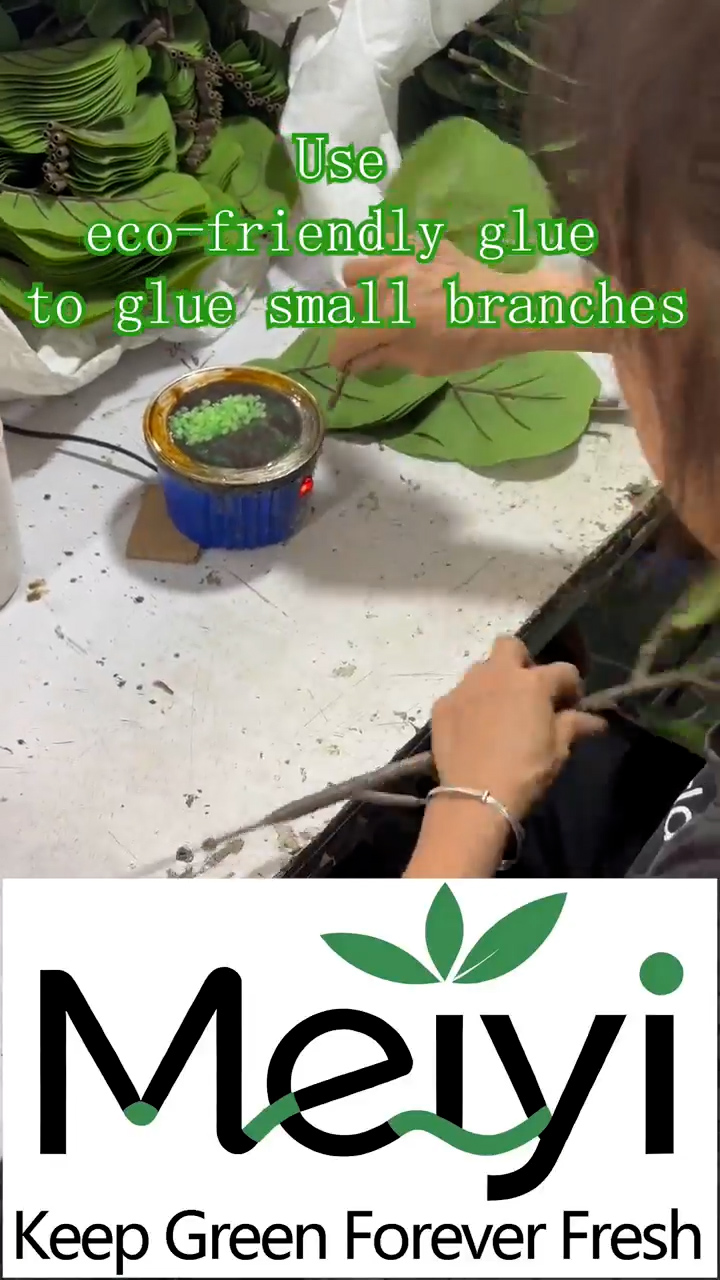
- The Process: Our artisans use industrial-grade, eco-friendly adhesives to carefully bind small branches to the main trunk, ensuring a clean, residue-free application as shown in our production workflow.
- The Benefit: This creates an incredibly strong hold without toxic fumes or messy, visible residue, aligning with sustainable manufacturing practices.
- The Aesthetic: The joint remains smooth and completely natural, with no trace of the adhesive to break the organic illusion.
When looking at the latest commercial plant trends for landscaping, it is obvious that US buyers expect smaller accent plants to feature the same seamless finish as high-end custom installations. Our clean adhesive application ensures we meet that standard, delivering a premium look that rivals live plants.
Structural Integrity for Large Trees: The Steel Nail Method
You cannot rely on glue for massive artificial trees destined for high-traffic areas like hotel lobbies, corporate offices, or shopping centers. Gravity and scale demand serious reinforcement.
- Deep Core Anchoring: We drive heavy-gauge steel nails through the base of the branch directly into the internal steel framework of the trunk.
- Weight Distribution: This method transfers the weight of the heavy artificial branch straight to the tree’s core, entirely preventing sagging or snapping over the years.
- Hidden Hardware: The connections are industrial-strength, but we carefully countersink all steel nails so they can be completely camouflaged during the detailing phase.
| Plant Size | Attachment Method | Primary Advantage |
|---|---|---|
| Small to Medium | High-Strength Eco-Adhesives | Seamless, clean, and residue-free finish |
| Large to Oversized | Steel Nail Reinforcement | Maximum load-bearing stability and safety |
This dual-method approach to precision assembly ensures every branch stays securely anchored while maintaining the organic flow of a living tree.
Stage 3: The Art of the Joint – Erasing the “Manufactured” Look
The biggest giveaway of a cheaply made artificial tree is the awkward joint where the branch meets the trunk. In the art and science of manufacturing hyper-realistic artificial tree trunks and branches, this stage is where true craftsmanship takes over. Our primary goal is simple: eliminate any harsh lines, gaps, or exposed hardware that scream “factory-made.”
Hand-Applied Clay: Achieving Seamless Transitions
We don’t just bolt parts together and call it a day. To capture that organic, uninterrupted flow from the main trunk into the extending limbs, our team utilizes a specialized, hand-applied clay process to erase all traces of manufacturing joints.
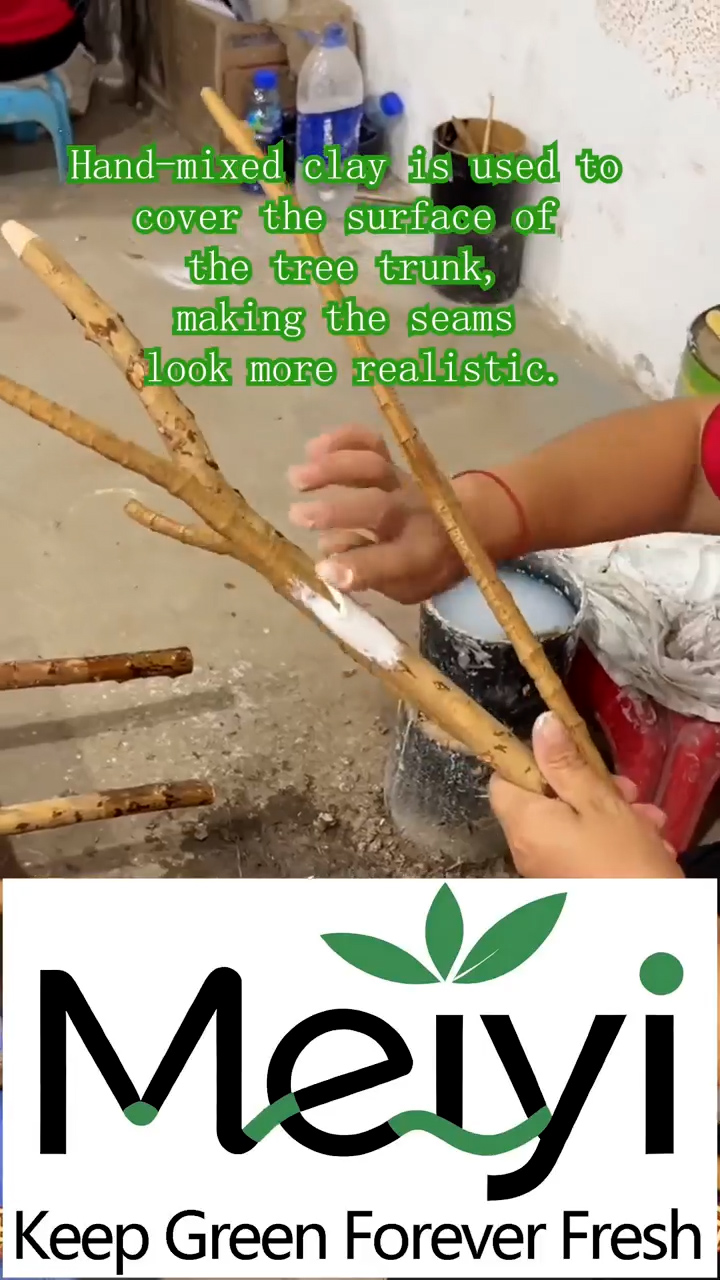
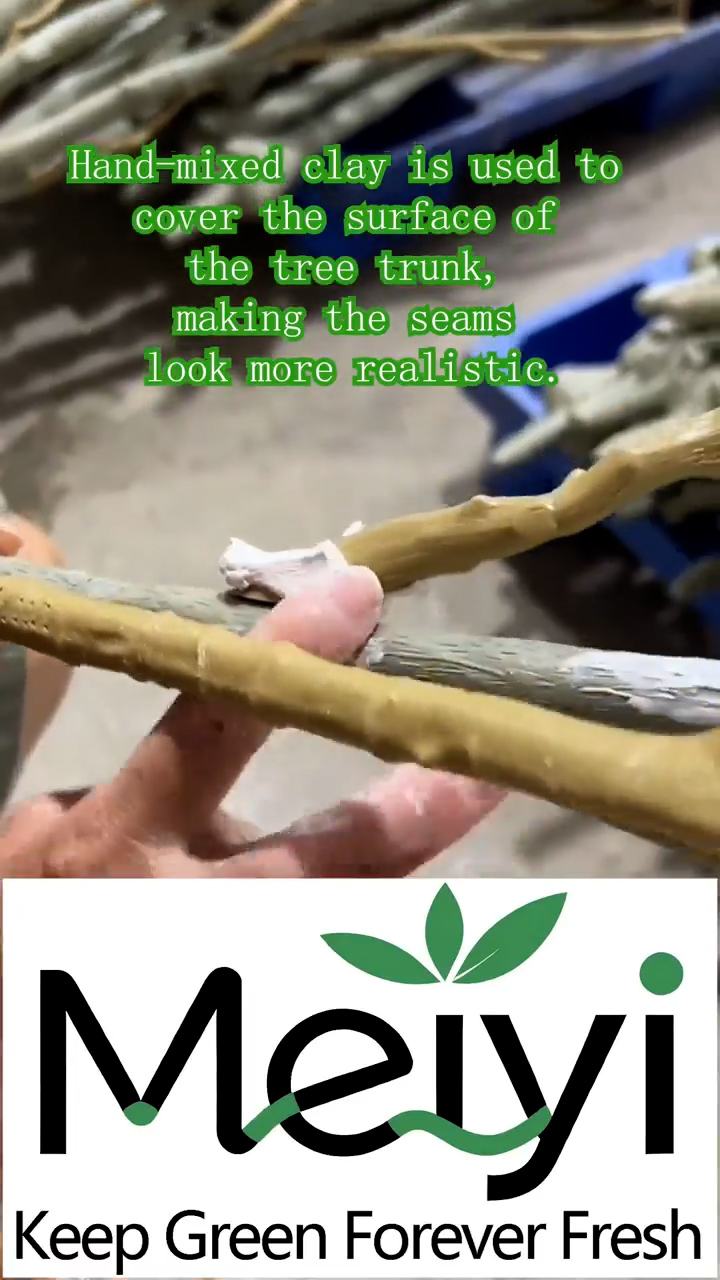
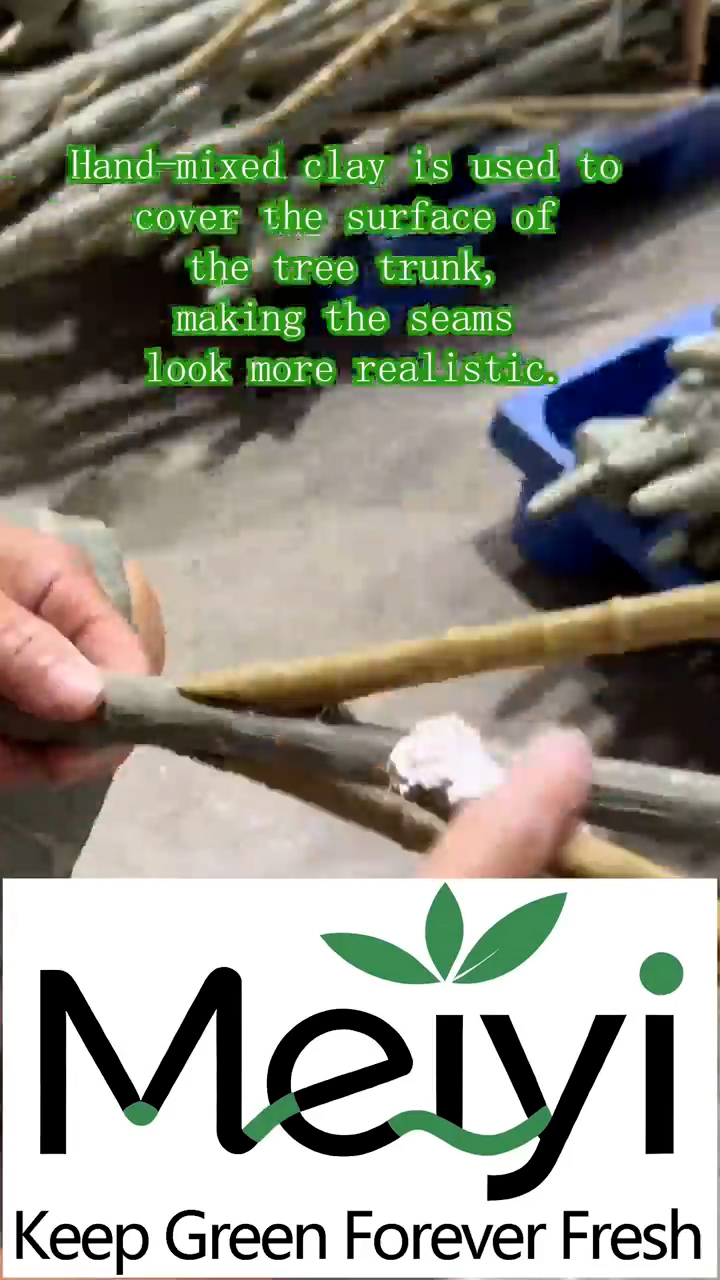
- Custom Flexibility: We use a proprietary clay blend that stays flexible during application but cures into a rock-hard, durable shell, ideal for shaping natural tapers.
- Artisanal Blending: Every single transition is built up and smoothed out by hand, as seen in our workshop, to mimic exactly how a real tree naturally tapers and grows from trunk to branch.
- Complete Integration: This meticulous step ensures the limbs look like natural offshoots rather than attached parts, creating a flawless base that elevates any space when paired with artificial hanging vines and green plants for full landscaping projects.
Sculpting Organic Textures to Hide Fasteners
Commercial spaces across the United States demand ultimate durability. To meet those safety and stability standards, we have to use heavy-duty steel nails, internal plates, and mechanical fasteners. However, the end user should never see them.
- Concealing the Hardware: We meticulously pack our sculpting clay over every exposed screw, nail head, and structural seam.
- Texture Matching: Before the clay sets, we sculpt the surface using specialized hand tools to perfectly replicate the surrounding bark grain, natural knots, and deep ridges.
- Invisible Reinforcement: Once completely cured, the sculpted joint seamlessly blends into the rest of the trunk.
We lock the structural integrity in place while completely erasing any visual trace of the mechanical assembly underneath. The final result is a heavily reinforced, commercial-grade plant that looks 100% organic to the naked eye.
Stage 4: Bringing the Trunk to Life – Artisanal Hand-Coloring Techniques
Understanding the art and science of manufacturing hyper-realistic artificial tree trunks and branches means recognizing that color is just as critical as the core structure. This stage is where raw, molded materials finally transform into lifelike botanical centerpieces.
Beyond Standard Spray Paint: The Multi-Layered Hand-Coloring Process
In our workshop, we skip the flat, mass-produced look of basic factory spray paint. Real wood is never just one solid color. To meet the high aesthetic standards expected in commercial installations across the US, we rely entirely on a painstaking, multi-layered hand-coloring process.
As highlighted in the latest trends and development characteristics of the artificial plants and flowers market, clients today demand absolute authenticity over cheap imitations. We achieve this premium look by building the trunk’s color profile from the ground up:
- Base Coating: Establishing the deep, foundational wood tone.
- Mid-Tone Blending: Adding warmth, shifting hues, and natural color variation.
- Targeted Shading: Hand-painting specific areas to mimic sap lines and natural growth anomalies.
Adding Depth and Patina: Utilizing Washes and Dry-Brushing for Realistic Bark
Physical texture alone isn’t enough; we have to visually highlight it to fool the eye. To make the artificial bark look genuinely aged and organic, our artisans use specialized detailing techniques, refining every inch by hand:
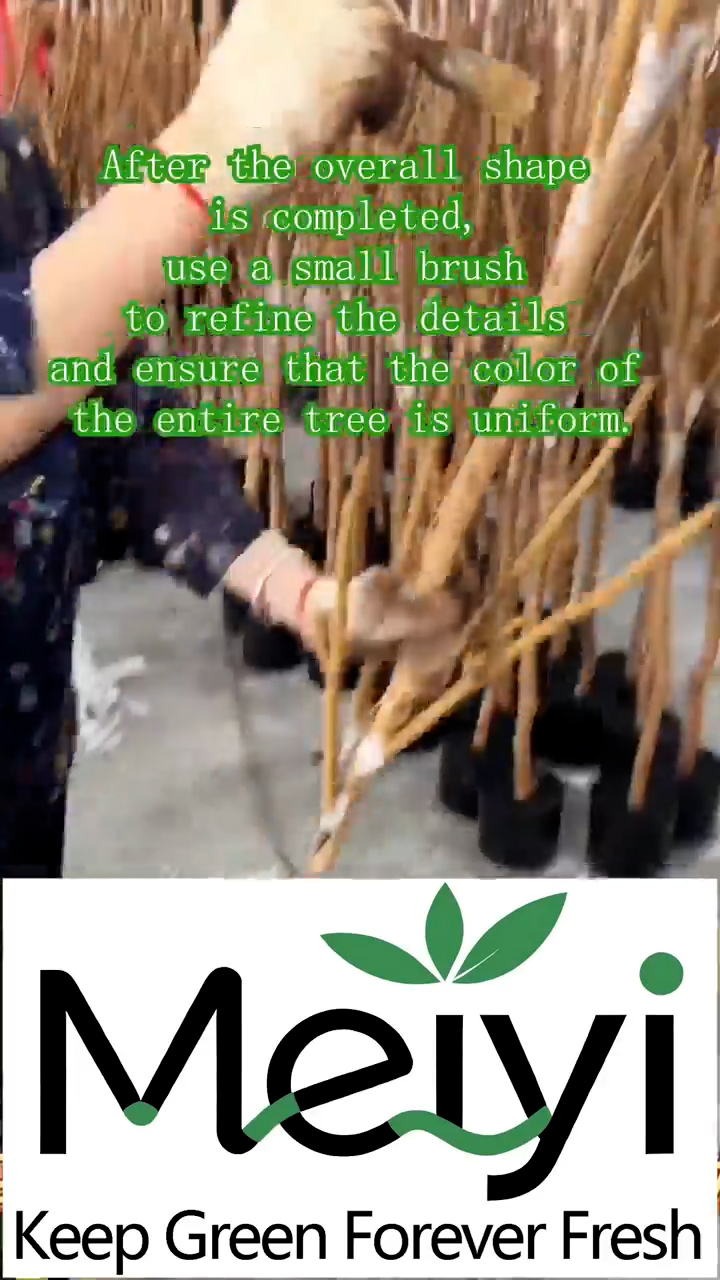
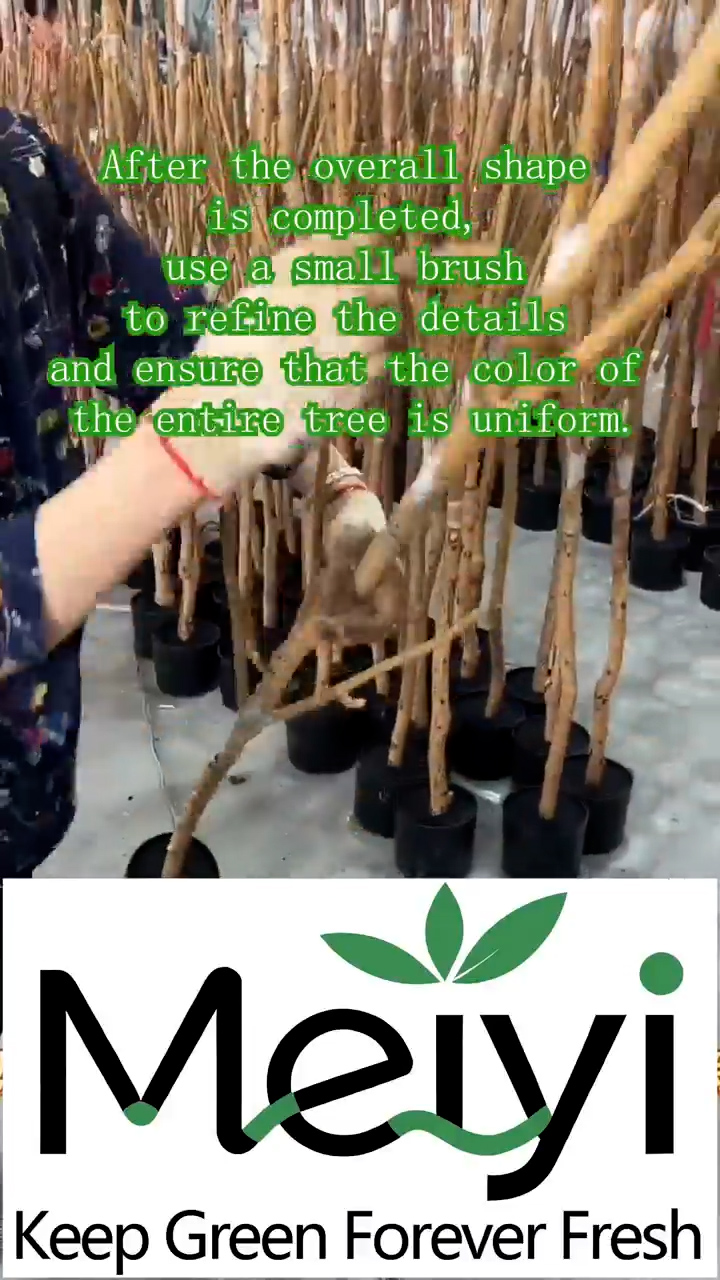
- Dark Color Washes: We apply heavily diluted, darker pigments that naturally sink and pool into the deep crevices of the molded trunk, creating instant, realistic shadows that emphasize texture.
- Precision Dry-Brushing: Using small, stiff brushes (as demonstrated in our production), we lightly drag just a trace of lighter-colored paint across the raised edges of the bark, simulating sun-faded highlights, natural friction, and environmental wear.
- Custom Patina: We dab on subtle, localized hints of mossy green or ashy gray to match specific regional climates and native tree species, ensuring each trunk feels rooted in its intended environment.
- Uniform Color Refinement: After shaping the overall form, we use fine brushes to touch up details, guaranteeing consistent color across the entire tree for a cohesive, natural appearance.
This level of hands-on craftsmanship completely erases the “manufactured” feel, resulting in a tree trunk that looks entirely grown by nature.
Stage 5: The Final Integration – Professional “Planting Pots” for Commercial Spaces
What is “Planting Pots”? Ensuring Natural Aesthetic and Weighted Stability
The final step in The Art and Science of Manufacturing Hyper-Realistic Artificial Tree Trunks and Branches isn’t just about the tree itself; it’s about how it stands. In our manufacturing process, “Planting Pots” refers to the critical integration of the artificial trunk into a base that ensures both visual realism and physical safety, as shown in our production workflow:
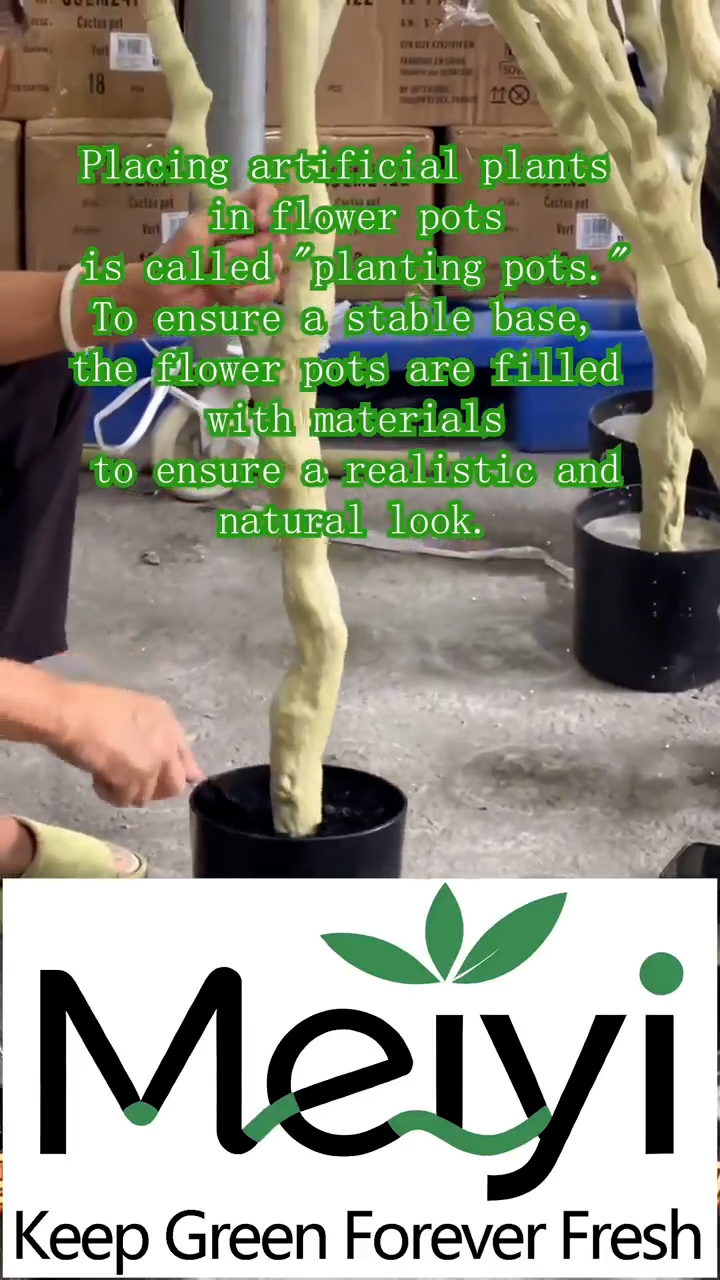
For a 1.2m specimen like our Artificial Monstera Deliciosa, we don’t just stick a pole in foam. We utilize a weighted base, often filled with cement or heavy-duty composite materials, to lower the center of gravity and prevent the top-heavy wobble common in cheaper alternatives.
This engineering prevents the “top-heavy” wobble often seen in cheaper alternatives. To maintain the illusion of a living plant, we finish the surface of the pot insert with texturized faux soil or moss. This detail covers the mechanical anchoring point where the internal steel framework meets the base, creating a seamless transition from the artificial trunk to the “ground.” This attention to detail is essential for interior designers placing these items in high-visibility areas like sleek office lobbies or Nordic-style living rooms.
Meeting Durability Standards: Low-Maintenance Solutions for High-Traffic Projects
For our commercial clients—whether you are a hotelier, a landscape contractor, or a distributor—durability is just as important as aesthetics. The “Planting Pots” technique ensures that our artificial trees can withstand the hustle of high-traffic environments. By securely anchoring the trunk, we eliminate the risk of the plant tipping over if brushed against by guests in a busy corridor.
Furthermore, our focus on premium materials extends to safety compliance. For projects requiring strict safety codes, understanding what is the fire retardant rating of artificial plants is crucial. We design our potting and trunk systems to be robust and low-maintenance, meaning no watering, pruning, or soil cleanup is ever required. This zero-maintenance approach allows businesses to enjoy lush, tropical visuals without the ongoing labor costs associated with live greenery.
How we support you:
🌿 Performance: Low maintenance, no watering, no seasonal damage.
🛡️ Safety: Fire Retardant & UV Resistance options to meet strict commercial codes.
🏭 Capability: OEM/ODM custom designs with Flexible MOQ supporting projects of all scales.
If you are considering landscaping, upgrading residential or commercial real estate, please feel free to connect or message me for a consultation.