
Understanding the Issue: Why Artificial Plants Get Bent
Receiving a new artificial plant that looks slightly squashed or distorted can be disheartening, but it is a completely normal part of the logistics process. To ensure affordable shipping rates and safe transport across the United States, manufacturers must pack these items efficiently. Understanding why this happens is the first step toward restoring your faux foliage to its intended glory.
Common Causes of Bending During Shipping
The journey from the warehouse to your doorstep involves several factors that contribute to temporary deformation. Most artificial plants are constructed with flexible materials like polyester, silk, and plastic, often supported by internal wire structures.
- Compact Packaging: To minimize box size and shipping costs, branches and leaves are often pressed explicitly close to the main stem.
- Compression: Tightly packed boxes can exert pressure on the foliage, causing leaves to curl or stems to bow.
- Temperature Fluctuations: Changes in heat and cold during transit can make plastic components temporarily more rigid or pliable, locking them into a bent shape until treated.
- Transit Handling: The vibration and movement during shipping can shift the plant’s position, leading to awkward angles.
Impact on Appearance and Durability
While a bent plant may initially look underwhelming, the damage is rarely permanent. However, addressing these bends promptly is crucial for achieving a realistic look and maintaining the item’s longevity.
- Aesthetic Quality: Bent leaves and crooked branches disrupt the natural silhouette, making the plant look obviously fake and unkempt.
- Structural Integrity: Deep creases, if left unattended for too long, can weaken the fabric or plastic coating, potentially leading to cracks.
- Resilience: Fortunately, high-quality artificial plants are designed with wire cores, allowing them to withstand vigorous reshaping without breaking.
Essential Tools and Materials for Reshaping
Before you start wrestling with your new faux plants, you need to gather the right gear. Trying to force a cold, stiff plastic stem back into shape can sometimes cause it to snap. Having a few simple tools on hand makes the process of learning how to fix bent artificial leaves or branches after shipping much safer and more effective. You don’t need a professional florist’s studio, just a few household items.
Basic Tools for Gentle Adjustments
For most minor bends, your hands are the best tool available. However, for sturdier stems or precise work, a few extras help protect both the plant and your fingers.
- Needle-Nose Pliers: Essential for bending thick internal wires found in larger branches. They give you the leverage needed to create sharp angles or straighten out kinks without hurting your thumbs.
- Cotton Gloves: Some lower-quality stems might have sharp wire ends or rough textures. Wearing gloves prevents scratches while you manipulate the foliage.
- Soft Cloth: Use this to hold delicate blooms while you work on the stem to prevent crushing the petals further.
If you are working with delicate, thin-stemmed items like realistic Instagram-style artificial chamomile flowers, gentle finger pressure is usually enough, but pliers are a lifesaver for the thick “trunk” of a faux tree.
Heat-Assisted Methods: Steam and Hair Dryers
Heat is the secret weapon for reshaping artificial foliage. Most faux plants are made of polyester fabric, silk, or plastic, all of which have “memory.” Heat relaxes the material, allowing you to reset that memory to the correct shape.
- Garment Steamer: This is the gold standard. The moist heat penetrates fabric leaves instantly, dropping wrinkles and allowing you to curve the leaves naturally. It is perfect for reviving a crushed silk rose flower for wedding decor that has been flattened in a box.
- Hair Dryer: If you don’t have a steamer, a hair dryer works well for plastic plants. Use it on a low to medium heat setting. Hold it about 6 inches away from the plant to warm up the plastic until it becomes pliable, then hold the branch in the desired shape until it cools down and hardens.
Additional Materials for Support and Maintenance
Sometimes a branch is too heavy or the wire inside has weakened. In these cases, you might need to add structural support to keep the plant looking upright and lively.
- Floral Wire: Green paddle wire is great for splinting a stem that feels floppy. You can wrap it around the existing stem to add rigidity.
- Floral Tape: Use green floral tape to conceal any added wire or to repair spots where the plastic coating might have cracked during shipping.
- Weighted Fillers: If your reshaping makes the plant top-heavy, have some river rocks or decorative moss ready to weigh down the base of the pot for stability.
Step-by-Step Guide to Fixing Bent Leaves and Branches
Knowing how to fix bent artificial leaves or branches after shipping is a crucial skill for anyone investing in faux greenery. When your package arrives, the plants are often tightly compressed to save on shipping costs, resulting in a shape that looks nothing like the product photo. Don’t panic; this is standard industry practice. With a systematic approach, we can restore them to their intended glory in minutes.
Unboxing and Initial Inspection
The restoration process begins the moment you open the box. I always advise against ripping the packaging open aggressively, as you might accidentally snip a leaf or stem. Instead, carefully cut the tape and slide the plant out.
Once the plant is out, give it a thorough inspection. Check for:
- Compression points: Areas where the box pressed hardest against the foliage.
- Tangled stems: Branches that have interwoven during transit.
- Loose parts: Check the bottom of the box for any leaves that might have popped off (most can be snapped right back on).
Gently Straightening Stems and Branches
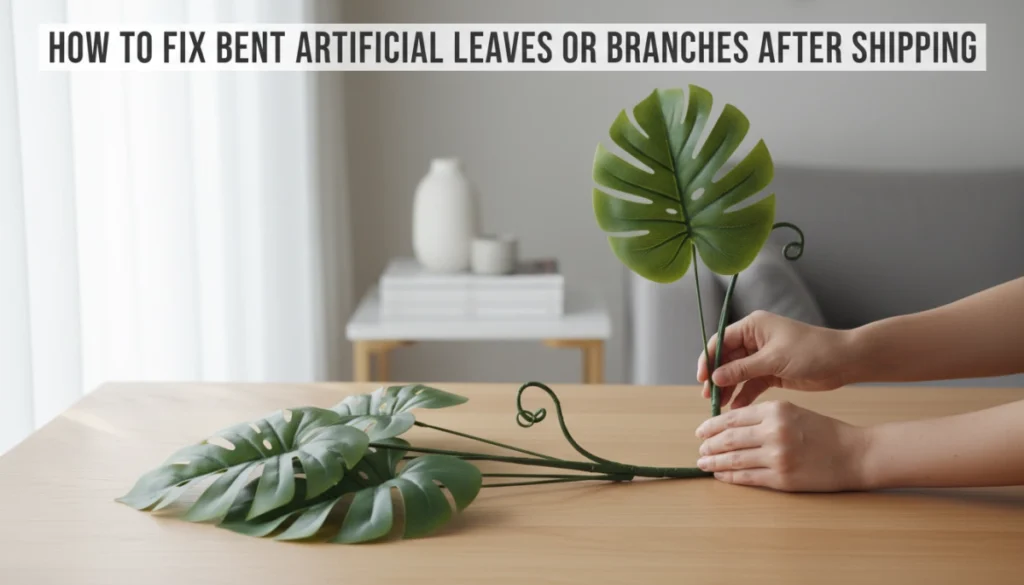
Most high-quality artificial plants feature a wire core running through the stems, which is exactly what makes them pliable. To fix the main structure, start from the bottom of the plant and work your way up. Hold the base of the stem firmly with one hand and use the other to guide the branch into an upright or natural position.
For larger decor items, such as an artificial Monstera Deliciosa plant, the stems are often thicker and require a bit more force to straighten. Don’t be afraid to apply steady pressure; the internal wire is designed to be bent. However, for thinner varieties like realistic artificial eucalyptus stems, use a lighter touch to create a gentle, drooping arch rather than a stiff, straight line.
Reshaping Individual Leaves and Petals
After the main branches are positioned, focus on the details. Leaves often arrive flat or curled in the wrong direction. Using your thumbs and forefingers, run your hand along the length of the leaf to introduce a natural curve.
- For broad leaves: Place your palm under the leaf and smooth it out to remove harsh creases.
- For petals: Gently ruffle them to separate layers that may have stuck together.
- For ferns: Fluff the fronds outward to create volume.
The goal isn’t perfection. Real plants have irregularities, so slightly varying the angle of each leaf adds to the realism.
Addressing Persistent Bends or Creases
Sometimes, a simple manual adjustment isn’t enough for deep creases formed during long transit times. If a leaf is stubbornly folded, try bending it in the opposite direction of the crease and holding it there for a few seconds. This helps “reset” the material’s memory.
For plastic-based stems that feel rigid, you can massage the bent area with your fingers to warm up the material slightly, making it more pliable. If the crease remains visible, don’t force it to the breaking point; we will tackle these stubborn spots with heat techniques in the next stage of the process.
Advanced Techniques for Realistic Shaping
Sometimes, a simple bend isn’t enough to get that high-end, organic look. If your faux plants still look a bit stiff or manufactured after the initial unboxing, you need to use some professional tricks to manipulate the materials permanently. These techniques allow you to fix bent artificial leaves or branches with precision, giving them a natural drape that mimics real botany.
Using Heat (Steam or Hair Dryer) for Flexibility
Heat is the secret weapon for reshaping stubborn plastic and silk materials. When these materials are cold, they are brittle and want to snap back to their original molded shape. Warming them up relaxes the fibers and plastic memory, allowing you to mold them into new positions.
How to use heat safely:
- Hair Dryer Method: Set your hair dryer to medium heat. Hold it about 6 inches away from the bent area. Move it back and forth for 30-60 seconds until the material feels pliable. Bend the leaf or stem into your desired curve and hold it there until it cools completely. The cooling process sets the new shape.
- Steam Method: A garment steamer works wonders for larger foliage. Pass the steam over the leaves to release creases. This is particularly effective for broad leaves that arrived folded.
Wire Reinforcement for Stems and Branches
While high-quality faux botanicals, such as realistic artificial eucalyptus camellia stems, come with internal wiring, sometimes you need extra support for dramatic arches or heavy foliage. If a branch is drooping too much or you want a specific angle that the internal wire can’t hold, external reinforcement is key.
You can use green floral wire to wrap around the stem, extending it to the area that needs support. Secure it with floral tape that matches the branch color. This creates a rigid “splint” that allows you to freeze the branch in a gravity-defying position without damaging the core structure.
Adding Weight or Fillers for Stability
Shaping isn’t just about the leaves; it’s about how the plant sits in its container. If you have bent the branches outward for a fuller look, the plant might become top-heavy and tip over. To maintain that expansive, realistic shape, you need to stabilize the base.
- Base Weight: Place the nursery pot inside a decorative planter and fill the gaps with heavy stones or gravel. This counteracts the weight of the spread-out branches.
- Secure Positioning: For loose stems in a vase, use clear floral tape grids across the mouth of the vase or fill the bottom with sand. This prevents the stems from shifting back together and undoing your careful arrangement.
Post-Fixing Care and Maintenance
Once you have successfully reshaped your greenery, the goal is to keep it looking pristine for the long haul. Proper maintenance ensures you won’t have to constantly repeat the process of fixing bent artificial leaves or branches after shipping or storage. A little proactive care goes a long way in preserving the lifelike appearance of your botanical decor.
Maintaining the New Shape
After the initial reshaping, stability is key. Place your arrangements in areas where they won’t be constantly brushed against by pets, children, or high foot traffic, as physical impact is the quickest way to distort the wire structure again. If you are working with high-quality faux greenery, such as an artificial Chinese Evergreen with adjustable steel wire, the internal structure is designed to hold its form well. However, gravity can cause heavier branches to droop slightly over time.
- Regular Check-ups: Inspect your plants every few months. A quick adjustment to the branch angles keeps the plant looking perky.
- Avoid Direct Heat: Keep plants away from radiators or heating vents, as constant heat cycles can soften the plastic and cause drooping.
Cleaning and Dusting Artificial Foliage
Dust is the enemy of realism. A layer of grime makes even the most expensive silk plant look cheap and fake. Regular cleaning not only improves aesthetics but also prevents dust buildup from becoming sticky and difficult to remove later. Different materials and plants may require slightly different cleaning approaches.
- Weekly Dusting: Use a feather duster or a dry microfiber cloth for a quick sweep to prevent buildup.
- Compressed Air: For plants with intricate textures or deep crevices, a can of compressed air (like those used for electronics) is excellent for blowing away dust without touching the leaves.
- Deep Cleaning: For silk leaves, wipe gently with a damp cloth. For plastic varieties, you can often take them outside and spray them down with a hose or use a gentle shower setting, provided the base is protected.
Proper Storage to Prevent Future Damage
If you rotate your decor seasonally, storing your artificial plants correctly is crucial. Improper storage is the leading cause of bent branches and creased leaves. Never cram a plant into a box that is too small, as the pressure will warp the materials over time, sometimes permanently.
- Store Upright: Whenever possible, keep the plant standing up. If it must be boxed, ensure the box is long enough for the full length of the stems.
- Protective Covering: Use a large plastic bag (like a clear trash bag or a dedicated tree storage bag) to cover the plant. This keeps dust off without crushing the foliage.
- Climate Control: Avoid storing your faux plants in hot attics or damp basements. Extreme temperatures can warp plastic components and weaken the glue used in assembly.
Tips for Making Artificial Plants Look More Realistic
Now that you know how to fix bent artificial leaves or branches after shipping, the final step is styling. Even the highest quality faux botanicals need a little help to look indistinguishable from the real thing. Proper styling elevates the presentation from “fake plastic plant” to a stunning piece of decor.
Strategic Placement and Arrangement
Location is everything. Real plants grow towards the light, so placing your artificial greenery in a dark, windowless corner often gives away the secret immediately. Position your plants near windows or well-lit areas to mimic a natural environment.
When arranging the branches, avoid perfect symmetry. Nature is perfectly imperfect. Rotate the plant to find its “good side” and angle the leaves so they face the light source. For larger statement pieces, like artificial Monstera deliciosa plants, allow the heavy leaves to droop slightly under their own weight rather than pointing them straight up. This relaxation makes the plant look established and healthy.
Combining with Natural Elements
One of the best tricks to fool the eye is mixing faux botanicals with organic materials. This technique, often called “top dressing,” involves covering the base of the artificial plant. The standard black plastic pot or styrofoam base is a dead giveaway.
- Moss: Add preserved Spanish moss or sheet moss around the base of the trunk.
- Stones: Use river rocks or pebbles to weigh down the pot and add texture.
- Real Soil: A thin layer of dried dirt on top of the filler adds grit and realism.
You can also mix artificial stems with real flora. For example, tucking realistic artificial eucalyptus camellia stems into a vase with dried branches or fresh flowers creates a full, lush arrangement that lasts longer and looks incredibly convincing.
Addressing Shine or Dullness of Leaves
Sometimes, new artificial plants arrive with an unnatural plastic sheen. If the leaves look too glossy, you can tone them down to mimic a natural matte finish.
- Matte Spray: A light misting of clear, matte finish spray (available at art supply stores) can remove the “plasticky” glare.
- Dusting: Conversely, if the leaves look dull or chalky, simply wiping them with a damp microfiber cloth can restore their vibrancy.
- Leaf Shine: For plants that are supposed to be glossy (like Ficus or Rubber trees), a specialized silk plant cleaner can enhance the color without attracting dust.
By paying attention to these small details, you ensure your greenery enhances your space effectively, looking fresh and alive for years to come.
How we support you:
🌿 Performance: 98% Highly realistic, low maintenance, no watering, no seasonal damage.
🛡️ Safety: Fire Retardant & UV Resistance options to meet strict commercial codes.
🏭 Capability: OEM/ODM custom designs with Flexible MOQ supporting projects of all scales.
Looking to elevate your next landscaping or interior project? Connect with us for a consultation. At Meiyi, we specialize in providing high-end, realistic greenery solutions tailored for both residential and commercial real estate.