
Faux Flora: Designing Sensory Beacons for the Insect Apocalypse
How material science and “multi-species design” are helping pollinators navigate the chemical fog of modern cities.
In the quiet corners of our ecosystems, a crisis is unfolding. Scientists refer to it as the “insect apocalypse”—a global decline in populations that form the very foundation of our food webs. While habitat loss is a known culprit, a more insidious enemy has emerged: air pollution. In our industrial centers, the “fragrant highway” that bees use to find food is being chemically dismantled, leaving vital pollinators lost in a scentless void.
— Justina Alexandroff, Designer
The Invisible Barrier: Sensory Pollution
Airborne chemicals like ozone and nitrogen oxides do more than just warm the planet; they degrade floral scent molecules upon contact. For a bee, this turns a miles-long aromatic trail into a confusing, short-range scramble. To bridge this gap, British designer Justina Alexandroff has developed “Faux Flora”—engineered flowers that act as amplified visual and olfactory beacons to guide insects back to natural blooms.
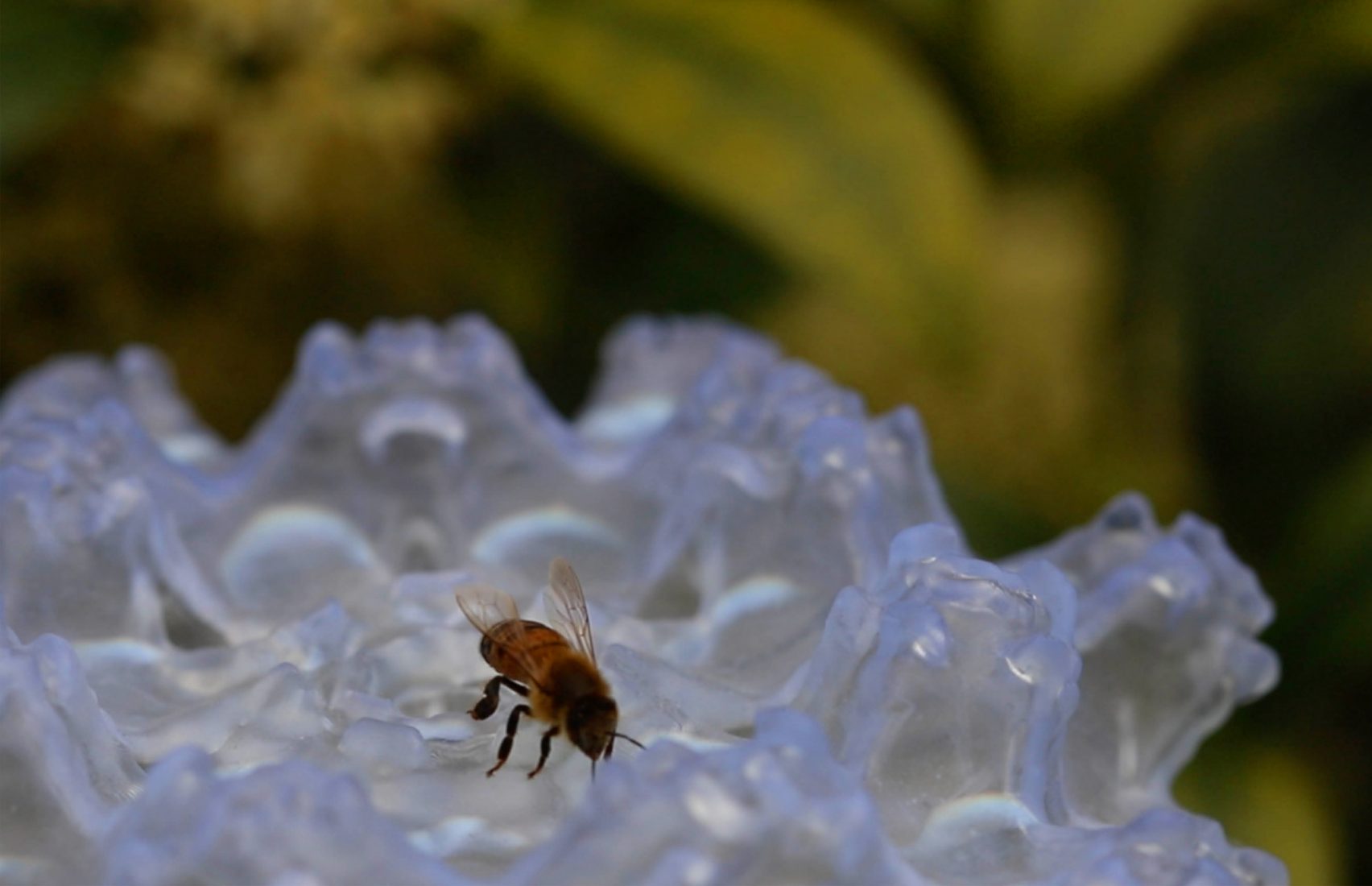
The Faux Flora are intended to draw insects towards nearby flowers.
The Architecture of Attraction
Faux Flora is not a mere plastic replica. It is a sophisticated intervention built on PhD research by biologist Aditi Mishra, which identifies three core traits insects use to recognize life: radial symmetry, sweet scent, and reflective surfaces. Alexandroff’s design “turns up the volume” on these traits to cut through urban interference.
| Design Element | Mechanism | Biological Purpose |
|---|---|---|
| Parametric Fractals | 3D-printed resin or ceramic structures inspired by pollen grains. | Creates the radial symmetry insects instinctively associate with nectar. |
| Structural Color | Micro-ridges in nanocellulose that scatter light (iridescence). | Mimics the shimmering “Blue Morpho” effect to bypass pigment degradation. |
| Robust Olfactory Labs | Embedded jasmine molecules predicted by AI algorithms. | Maintains a potent scent trail even in high-pollution zones. |
Engineering an “Enhanced Flower”
The 3D-printed objects utilize structural colour rather than traditional pigments. By creating microscopic ridges on the surface, the material scatters light to create an iridescent shimmer—a phenomenon seen in butterfly wings—that remains vivid even when air quality is poor.
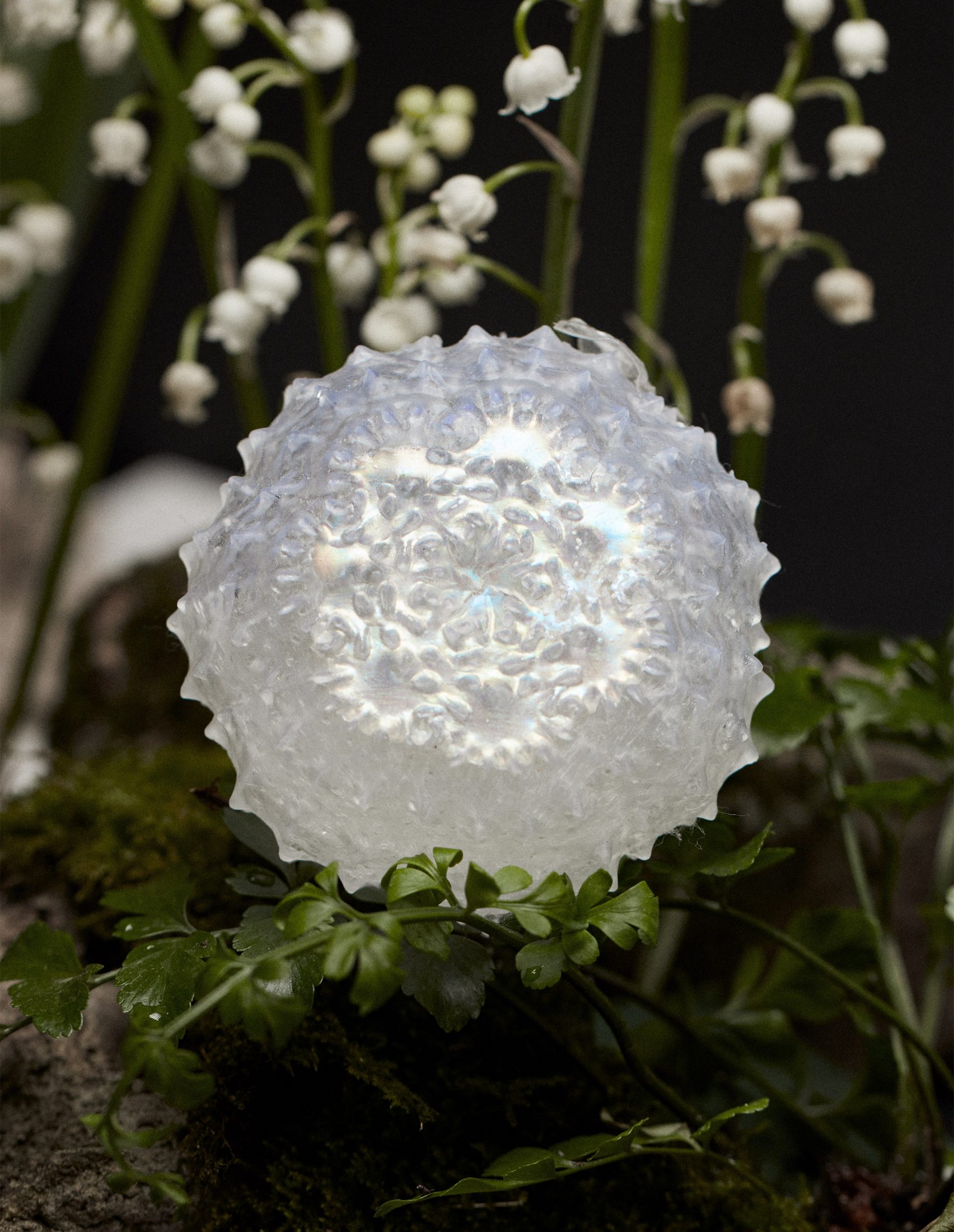
The Faux Flora are intended to draw insects towards nearby flowers.
The Impact of Multi-Species Design
- Sensory Stepping Stones: These devices are strategically placed among real blooms to draw insects toward natural food sources they might otherwise miss.
- Interspecies Empathy: By designing from the insect’s perspective (UV vision and olfactory priority), the project shifts from human-centric to “multi-species” design.
- Citizen Science: Future iterations hope to involve school children in monitoring visitation rates, turning the devices into tools for ecological observation and education.
Future Frontiers: From Resin to Ceramic
Currently developed during a residency at The Mills Fabrica in Hong Kong, the project looks toward sustainable scalability. While current prototypes use resin, the ultimate goal is to move to 3D-printed ceramics. The natural porosity of clay would allow the “flowers” to be “watered” with scent formulas, much like a living plant, creating a self-sustaining network of pollinator diffusers across concrete jungles.
As we face the daunting reality of biodiversity loss, Faux Flora offers a glimmer of hope. It suggests that through the thoughtful integration of material science and digital design, we can begin to repair the sensory threads of our planet, ensuring that even in our most polluted cities, the ancient dialogue between bee and bloom continues uninterrupted.